Review of The Sea Inside (2004) by Ana L — 14 Jan 2010
The primarily earnest talent Javier Bardem bears as an actor lies somewhere in being able to go from the extreme of acting solely by word and face in the most sincere form of expression, then completely stripping down to the most menacing and soulless ('Chigurh' from 'No Country For Old Men').
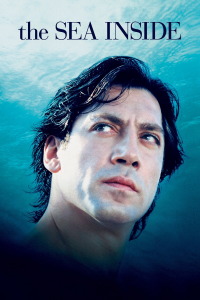
Alejandro Amenabar's biopic of Ramon Sampedro 'The Sea Inside' intertwines the conventional and dreamlike, where Javier Bardem's re-living of the film's paralyzed main character is an endearing spotlight.
The story of Ramon Sampedro consists of a strong-willed man who has been voicing a campaign to end his life with what little dignity he may have, yet the state within Spain in which he lives chose to fight back with its laws against euthanasia with the help and reliance of others.
"When you can't escape, and you constantly rely on everyone else, you learn to cry by smiling, you know", he says in one of the film's most heart-breaking moments. Ramon develops a brilliant tongue for verbal debate, demanding that the State find a rational explanation null of metaphysics and a demand for separation of Church and State, yet the State pathetically refuses any rational explanation.
The film tells through dreamlike flashback of the harrowing cliff dive into a shallow ocean coast which snapped his neck at a young age. At the film's present-day, where he's around the age of 50, he has some people on his side ready to publish books and interviews helping his foundation promoting justice in helpless euthanasia: Julia, a supportive lawyer who frequents heart failure from a degenerative disease, and Rosa, a caring, lonely, and beautiful single mother who deals with struggle and abuse from the workforce.
Both women find a sincere inspiration from Ramon, and Ramon finds strong romantic interest in both women; in Julia, a love he can relate with and who can understand him; in Rosa, sensational looks and youth.
I do personally question the filmed Eros in Ramon's character - having perverse dreams and making suggestively sexual remarks to both girls without being able to feel the sensation of a hard-on, yet Amenabar may be trying to invoke sexual desire through mind and eyes.
The film also lacks any pivotal moment of what birthed his passion to debate - everything from the concept of love, to his current state of vegetated being. Verbal debate is a passion of his, and we're only left knowing that he loves it, but nothing prompting the love.
The film's dream sequences are enigmatic and optimistic, and the entire tone and feel of the film plays on cinematic optimism when we know obviously there's barely anything uplifting about this story.
It's a bland kind of trickery, yet the film makes up for it in thought-provoking and crystal-clear intelligently-opinionated dialogue through Ramon's few scenes of debate, as well as flashing back scenes of the innocent youth and passion for the ocean and travel he loved so much.
'The Sea Inside' is remarkable, yet having seen another similar, more artfully expressive and profoundly gut-wrenching approach on an obscure true-life account of a paralyzed revolutionary figure Jean-Dominique Bauby in Julian Schnabel's 2007 film 'The Diving Bell and the Butterfly' makes this feature considerably less important and memorable.
This review of The Sea Inside (2004) was written by Ana L on 14 Jan 2010.
The Sea Inside has generally received very positive reviews.
Was this review helpful?