Review of The Saddest Music in the World (2003) by Wut S — 30 Jul 2007
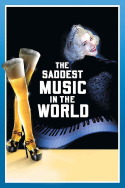
Not the saddest film by any chance, but definitely enjoyable. The film features a worldwide competition for "The Saddest Music in the World," sponsored by the double-amputee beer magnate named Lady "Helen" Port-Huntly. She intends to broadcast the competition to boost alcohol consumption, but little did she know it would also draw near several figures from her past. The film revolves around five characters: Helen, 3 members of the Kent family (a father and two sons), and a girl named Narcissa. Chester Kent, one of Fyodor Kent's son, a broke, sociopathic broadway producer allegedly from New York, is attracted by the $25000 prize. Taking pride in immunity to sadness, Chester yearns for superfluous lifestyle. While an unlikely candidate for the competition, he exploits past affair he had with Helen to seduce her into supporting him. Before Helen lost her legs, she was dating Fyodor, Chester's father, but cheated on him with his own son. Fyodor, unknowing to his lover's secret, enters the competition, representing Canada, as a mean to acquire Helen's forgiveness--Fyodor was responsible for Helen's double amputation. As an act of amendment, Fyodor intends to present Helen a pair of allergy-free glass legs filled with Port-Huntly beer at the the moment Canada is claimed as the winner. Chester Kent, on the other hand, enters the contest solely for materialistic pleasure. He cheats his ways by offering naive foreigners into joining his American team, and he glorifies sadness with epic stories. Meanwhile, Roderick Kent, now recognized as the Serbian cello maestro, enters the contest hoping to use the prize to search for his long lost wife. After reuniting, Roderick tells his father about his dead son and shows the picture of the missing wife. To much of Fyodor's surprise, Narcissa, an amnesiac nymphomaniac living with Chester, is actually Roderick's wife. This, the entwining relationship of the main characters, is one of the film's strongest points. The style and designs are also interesting. The film imitates and combines the black & white graininess of early 30s depression-era films with occasional two-strip Technicolor (red & blue), resulting in a old-fashioned yet distinguishably modern visuals.
Musical, tragedy, comedy, drama, Neo-realism, satire... all in one.
This review of The Saddest Music in the World (2003) was written by Wut S on 30 Jul 2007.
The Saddest Music in the World has generally received positive reviews.
Was this review helpful?