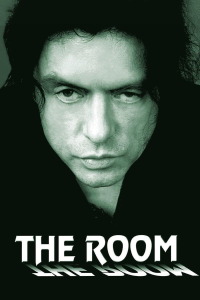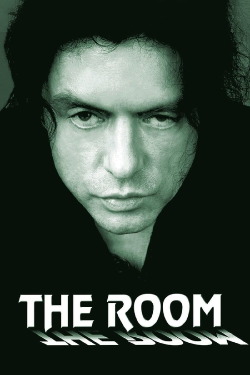
Review of The Room (2003) by Mitchell N — 25 Mar 2014
You're Tearing Him Apart Lisa:
A critical review of Tommy Wiseau's The Room.
Every film is made with purpose, every director has a story to be told. From wealthy geeks with a voracious need for an explosion fix to underpaid intellects with a knack for storytelling, all filmmakers have a personal tale they must express, and I have never seen a film with as much soul and sheer, unadulterated heart put into it by the director as Tommy Wiseau's famous cult hit, The Room. Not only does the production carry with it a clear, almost tangible amount of passion, but this motion picture, nay, masterpiece, is one I can say is possibly the best example of extraordinary filmmaking I have had the pleasure for experiencing fully.
Where to begin? I could write for hours about the outstanding acting, the tremendous soundtrack, the superb plot, or the NFL level athletic ability, however, for the sake of brevity I must focus my time on Wiseau's writing, writing that rivals any holy text, and delivers as powerful a message as any biblical passage. For those less informed, The Room was written, directed, and acted primarily by Tommy Wiseau, who by himself can be seen as a modern hero, but truly shines with this masterwork; the movie shifts between a dark comedy to softcore pornography to romantic drama like a football is passed between players who cannot play football. Part of the charm of The Room and its writing is that the film can be interpreted in so many ways, but I will focus on three specific and especially prominent views on this many-leveled cinematic art. The first is a story of struggle and disadvantage, the second is a tale of heartbreak and mental stability, and the third is an illustration of delusion.
Struggle and Disadvantage.
If you subscribe to this view of The Room, you see the film as an expression of shortcomings. The movie focuses around the story of Johnny, a mentally handicapped man who struggles to cope as his sexually addicted transvestite girlfriend, Lisa, suddenly decides to create mayhem by becoming a common whore. With a list of other troubled characters ranging from the clinically disturbed Man-Boy Denny, to Johnny's best friend the memory-challenged Mark, to a Florist who is too quick to throw love around, Wiseau's movie clearly sets out to illustrate the simple truth that no one is without flaw. I will admit, in a group of only ten named characters, the odds of all of them having this many issues is low, but then again that may be Wiseau's message, that social challenges are only ever extinguished by other problems. If you watch the film hoping for an uplifting message about overcoming all odds, you will be disappointed. Instead, Tommy takes a much darker tone, expressing the inevitable triumph of adversity, the slow build-up of pain leading to a climactic acceptance of total defeat.
Every character is plagued with severe social disabilities, which often lead to greater challenges. Johnny not only suffers from dominating mental retardation, but must slowly learn that Lisa, his fiancé and the woman he thought was perfect, is sleeping with his best friend Mark. Lisa is a sex addict whose only hobby other than copulating is to create chaos and leave a wake of destruction. She is incapable of true love. Mark, though handsome in every way, is all around confused, and has a hard case of short term memory loss, for he forgets he is in a sexual relationship with Lisa every time she makes an advance. The only way to describe Denny, Johnny and Lisa's neighbor and essentially adopted son, is bizarre. Johnny pays for Denny's college tuition, yet he never seems to be in college. He accepts Lisa as his new mother, yet falls in love with her. He always wishes to watch Johnny and Lisa have sex, and never learns that is not socially acceptable. He gets into trouble when a low IQ drug dealer with a DJ name Chris R. confronts him for owing money, and puts a gun to his head. Denny is essentially a 40 year old sexual predator stuck in the body of a 14 year old, who masquerades as a college student. Lisa's mother Claudette also suffers from short term memory loss and can never retain any conversation she has with her daughter, and is stuck in a perpetual loop of dialogue, even when she copes with her breast cancer. Peter, Johnny's friend and psychologist, seems to be the only sane member of the cast, but cannot perform his job even half decently, for he does not muster the courage as a friend to tell Johnny about Lisa's affair, nor does he have the ability as a psychologist to help Johnny through troubled times. No words can be said to express just how perfectly the cast portrays such disadvantaged characters. The acting is so great, I fully believed the characters to be disabled or confused. Yes, this is a dysfunctional group which never seems to catch a break. Sadly, troubles mount further as Johnny learns more about Lisa's promiscuity, and the audience must watch as Johnny and Mark's friendship falls apart and Johnny loses his already lose grasp on his life.
Ending in an intense emotional climax, the film leaves the audience with one message. Troubled people will always be troubled, and cannot cope with social challenge, for eventually all adversities lead to destruction. Even Johnny, someone who everyone loves, who has so many great friends and supporters helping him through life, cannot see past his destruction. To Tommy Wiseau, A man born troubled dies troubled.
Commitment and Betrayal.
A second, more common view of The Room, views the events with a much softer and more general lens. For audiences who see only the surface, the movie follows Johnny as he deals with a girlfriend who cannot love him. Here Tommy Wiseau's message is clear; cheating leads to pain, and only the wicked find comfort in the hands of adultery.
It is clear early on the Johnny is in love with Lisa. Very much so, and their relationship is characterized by constant lovemaking, and their connection becomes even more apparent when we see they share a similar Belly-button fetish. While she may seem as attractive to most people as a wet banana peel stuffed inside a dirty condom in July or a pair of a strangers underwear left in your apartment, Johnny sees angelic beauty. While most people would view her as a manipulative snake, he sees her as his rose. We see Lisa as a Knife, a sharp tool to cut at our skin, Johnny sees a Spoon, a soft vessel to carry life to his lips. But Lisa cannot love Johnny. One day, possibly because the bank refuses to give Johnny a much needed promotion, Lisa with the caprice of an impatient drug dealer decides that her life as it is can kill her, and that in order to fully live, she must create total destruction. She creates a plan to sleep with Mark and tells herself that she loves him. She is entirely open about the relationship with everyone but Johnny, waiting to see how long it would take for her fiancé to blow up. Not long, she learns, because soon Johnny finds out about the affair. He first tries to overlook it, but at his birthday party Lisa and Mark decide to reveal to everyone their affair minutes after Lisa lied to Johnny, telling him she is pregnant. Johnny has a powerful emotional breakdown, reliving past moments in their romantic history, and proceeds to destroy his home, and makes a choice that would stay with him for all his days.
Tommy Wiseau's statement is strong, illustrating his beliefs on romance translucently. Those who take company in this view of The Room see one truth: Commitment is virtue, Betrayal is poison. Johnny has poured his very being into his fiancé, he is fully committed to Lisa like a manager to their favorite customer, like a dog to its master, fully prepared to do anything for her. Yet Lisa does not love Johnny, and betrays him, his trust, and his love. In doing so she is chaos; Johnny's life is ruined forever, and Lisa must live with her villainy. Johnny, perhaps Wiseau, and maybe all men, cannot come back from such treachery. Commitment is virtue, betrayal is poison.
Delusions and Reality.
Much like the delusion that the characters can actually play football, The Room exposes a greater theme, the power of changing reality through delusion and fantasy. Possibly the most far-out outlook on The Room focuses around the belief that most of the scenes actually take place within Johnny's imagination. While all the characters are real, their identities are in reality much different than what we see.
Johnny is actually a man with crippling mental deformities who lives in a nursing style insanity ward along with other patients, including all his "friends." In the movie, the audience is presented Mark, Lisa, Denny, Claudette, Michelle, Peter, and Mike. But that is Johnny's fantasy. In reality, we see Mark, the memory disabled. We see Lisa, the sex addict. Denny, a young man whose identity has not grown since he was a small young boy. Claudette, an elderly woman who was put in the home by a daughter who never visits. Mike, a teenager with autism. Peter, the ward's psychologist, and Michelle, the institution's head nurse. Here, possibly because they are insane, possibly because they are treated so poorly, the patients all develop ways of dealing with reality, all through self-illusion. Johnny creates for himself a fantasy where his life is perfect, where he is a successful banker, where he has a great fiancé, Lisa, and many friends, and is everyone's favorite customer. Lisa creates a fantasy where she can sexually dominate anyone she wants, feeding her addiction. Claudette, who only wants a visit from her daughter, decides to believe that Lisa is her new daughter, and follows her. She even tries to daughter Denny, but she is "not [Denny's] fucking mother!" Denny believes he has a family, a college career, and big plans to marry an imaginary Elizabeth. Mark thinks he is Johnny's best friend, but in reality just a pawn in Lisa's game. Michelle is bored as a nurse, so creates in her mind the delusion that it is okay to engage in sexual activity with patients, and uses the autistic Mike as a sexual plaything when no one knows. Peter the psychologist enables all these delusions even when he sees all of them, so he may be the sickest of them all.
The audience learns, along with Johnny, that some fantasies are incompatible, and Lisa's sexual advances on another person destroy Johnny's idea of love. When Johnny confronts Mark, the staff at the ward does nothing to intervene, and so everyone's various illusions crash and shatter in a chain-like domino effect. With this sudden destruction of imagination, everyone must immediately cope with the true reality of the situation. Johnny's mind is not strong enough for this shift, and is overwhelmed with truth. He throws a psychosomatic tantrum, destroying the ward and possibly injuring workers. The audience watches as Johnny's mind wrestles with reality, experiencing vivid flashes of Johnny's illusion, his false love, his false life, between fits of rage.
Tommy Wiseau has much to say, but in this scenario all that can be said is painful. Just as facing reality is too much for Johnny, I believe the same is true for Wiseau. His statement is that the Human mind is fragile, and in order to deal with problems people just create a fantasy world where nothing can hurt them, but eventually everyone must face reality, everyone must destroy their illusions, and they can either emerge a stronger, better man, or be consumed by their own destruction.
Whatever outlook you take on The Room, it is clear that the film has many levels, and speaks out about many important aspects of human life. I can say I have learned a lot from Tommy Wiseau, he explained it all. In a way, The Room is life; it is complicated, confusing, dark, but you can take from it what you will. You can see a dark comedy, you can see a tragedy, you can see a romantic tale of friendship. Like life, we choose how we watch this film, and however you decide to react to problems affects you as a person. Five stars over and over again.
This review of The Room (2003) was written by Mitchell N on 25 Mar 2014.
The Room has generally received negative reviews.
Was this review helpful?