Review of The Road to Guantanamo (2006) by Bianca G — 03 Jul 2006
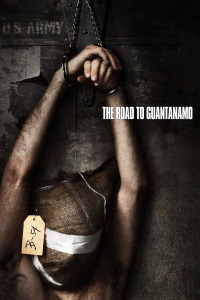
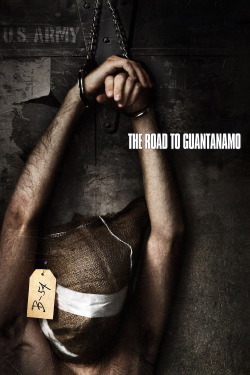
If you ever wanted to feel really good about your own life, there's always been the movies - hunt hard enough, and you'll find a movie that makes pretty much anything you're going through feel like a summer carnival. (See, for instance, [i]Dancer In The Dark[/i].) Co-directors Michael Winterbottom and Mat Whitecross have created a similar type of movie with [b]The Road to Guantanamo[/b], a political docudrama that traces the path of three British Muslims as they stumble through Pakistan, Afghanistan and finally end up in the US' blatant human rights trap of a shady holding facility, Guantanamo Bay in Cuba. Rather than merely focusing on interviews with these three men, the co-directors have decided to present the horrific tale in more visual terms; the harrowing journey of Asif (Afran Usman), Shafiq (Riz Ahmed) and Ruhel (Farhad Harun) is re-enacted using mostly unknown actors, while the three survivors of a world turned inside out by its own paranoia provide sobering commentary for the events that transpire onscreen.
The plot, if that's the word for it, is starkly simple - three friends from the UK, together with another buddy Monir (Waqar Siddiqui) travel to Pakistan for Asif's arranged wedding. Once there, they decide to visit neighbouring Afghanistan, despite signs of an impending war and cultural implosion that turbo-charges an already tense security environment. Through a series of mishaps and misunderstandings, the trio lose track of Monir even as they accidentally fall in with a crowd of ragtag Afghans who have been, unbeknownst to them, tagged as Taliban fighters. Believing they are being brought back to the Pakistani border, they are, unfortunately, treated by Afghanistan's security forces like so much worthless cattle, herded into cargo trucks, which are quickly, summarily riddled through with bullets in a senseless hail of gunshots - for apparently no reason other than to randomly get rid of extraneous human beings wasting oxygen in a confined space. As if this wasn't quite enough, the US army soon gains access to this lot of alleged al-Qaeda sympathisers. If Asif, Shafiq and Ruhel thought they had it tough cooped up in the back of a truck lying on someone else's dead, bleeding body, they didn't know about the sheer emotional wringer they were about to be put through when transferred to Guantanamo Bay. There, for month after interminable month, they are subjected to the hardnosed bullying and blackmailing tactics of American and British army and intelligence officials. And when each one resolutely refuses to admit to terrorist crimes and affiliations of which they are not guilty, they are forced into isolation cells or beaten, thoroughly, invasively searched and generally treated like dogs. (The prisoners are, for instance, not allowed to look their jailors in the eye, and frequently get roughed-up, or yelled at for praying.).
As a story of the horrors that have been wrought upon our world - often by ourselves, and by our own governments - after the spectre of modern terrorism first exploded onto the scene on September 11, [b]TRTG[/b] is a stirring cautionary tale more frightening than any horror movie playing in the cineplexes at the same time. If not so brutally resurrected for the silver screen, you would never believe the sheer emotional trauma and torture that these three men are put through, all because they were accidentally identified as al-Qaeda sympathisers by hard-nosed US soldiers who refuse to take seriously their fervently reiterated avowals of innocence. As an expose, the film works quite well - illustrating as it does how easily those in positions of power can slip quite easily into abusing it, perhaps without ever meaning to, as the endless parade of interrogators try tactic after tactic (lies, forged documents, random elbows to the stomach) to get the hapless trio to 'confess'. Shades of Abu Ghraib, of course, colour the entire picture, as well as it should - if true, it's proof of how dark human nature can become, even when far removed from a war zone where one might argue that normal standards of decency and sanity don't apply. One of the most telling moments comes from the artful intercutting of US Secretary of Defense Donald Rumsfeld's offhand comment from a press interview, in which he says that the Guantanamo Bay holding facility adheres to the Geneva Convention... "for the most part".
Some critics have felt that the film is too one-sided, and I can certainly see where they're coming from. The tale seems a little unbalanced - everything bad thing that could happen, every bad person they could meet (all reduced to characterless 'bad guys'), they do. The story is relentlessly downbeat in how minutely it tracks everything that happens to Asif, Shafiq and Ruhel, and after the umpteenth scene of one of them being forcibly brought back to their cage (for that's what their cells effectively are), thrown onto the sand and told not to look into their captors' faces, it becomes almost numbing, and you just want Winterbottom et al to just get [i]on[/i] with it already. Nor does it help that the protagonists seem to have been met with intractable, brick-wall bureaucracy at every turn - the film becomes so relentlessly depressing that, again, it's a struggle to remain engaged with it. I'm not saying this to detract from their horrible experience, because I have no doubt it was terrible. Watching the movie was bad enough - living through months, [i]years [/i]of it must have been hell. But it's also true that the trio are not themselves entirely guilt-free - yes, they are caught up in a mess of circumstances and misunderstandings for which they [i]are [/i]mostly blameless, but - and more credit to the directors for being honest about it - it's also clear that these were three fairly oblivious fellows who decided to embark on a fairly dangerous course of action without understanding the situation in which they were about to get speedily embroiled. Re-enacted scenes showing them bantering about the size of the [i]naan[/i]s they expect to find in Afghanistan, or an admission from one of them that they didn't think a war was going to happen so they thought they would take a jaunt over the border... the frivolity is in stark contrast to the rest of the film. There is, of course, the argument to be made that this only makes the hell in which they land themselves all the more horrific - but I personally simply couldn't shake the feeling that these three men should have known what they were getting into. They didn't deserve the outcome, and certainly not the months and months of torture in Guantanamo. But they certainly should have [i]known better[/i]. The film is made even more hollow, I feel, by its final moments, in which Asif, Shafiq and Ruhel ruminate on how their sojourns in Guantanamo changed them. One after the other spouts a platitude, showing no hint of how emotionally scarred they must and [i]should[/i] be after what they've been through. All of them are remarkably composed through every interview, and one even admits to not having changed much as a result.
In all these ways, for its stated purpose of showing up the paranoia that cloaks US foreign policy for what it is, and for its accidental revelation of the fundamental shallowness of human nature, [b]TRTG [/b]is a worthy, albeit flawed, watch. There are even brief moments of hope - notably a surprisingly funny, real scene in which a prison guard uncharacteristically bonds with one of the prisoners by asking him to rap - but these are few and far between. What the film really is is a timely reminder of how global misperceptions of Islam and a Huntington-scale clash of civilisations can impact individual lives in truly terrible ways - even as it trots out a showcase of human behaviour at its most crass, shallow and depraved.
This review of The Road to Guantanamo (2006) was written by Bianca G on 03 Jul 2006.
The Road to Guantanamo has generally received positive reviews.
Was this review helpful?