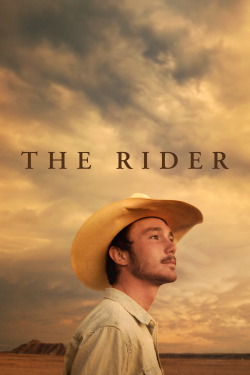
Review of The Rider (2018) by Bertaut1 — 23 Sep 2018
Honest, raw, and respectful.
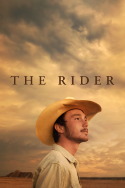
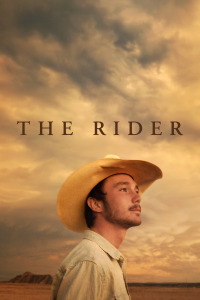
Partly an elegy for a dissipating way of life, partly an examination of the self-destructive components of contemporary masculinity, and partly a deconstruction of the iconography of the American frontier, The Rider is the second film from Chinese-American writer/director Chloé Zhao. The film tells the loosely fictionalised story of rodeo rider Brady Jandreau, who sustained a serious cranial injury in a rodeo accident, and was told by doctors that he must give up the only way of life he had ever known, as another blow to the head could kill him. Working with an entirely non-professional cast, including the real Jandreau, his father, sister, and several of his friends, all playing versions of themselves, The Rider is a kind of semi-fictional docudrama, and one of the finest films of the year.
In depicting Brady's struggle with trying to lead a 9-to-5 life, Zhao is able to simultaneously romanticise and demythologise the role of the cowboy in the contemporary United States, and as the story progresses, the film comes to express a sense of disillusionment with the lifestyle. Part of this is the theme of the rodeo itself. So eloquently panegyrised in the early parts of the film, it is also presented as leading to physical ruin and mental anguish. Brady and his friends are personifications of the ruggedness of the American West, and the film uses them to facilitate a deconstruction of contemporary masculinity. They see themselves as modern day-cowboys, but in an era where cowboys serve no function. In relation to this, it's extremely telling that literally every male Brady meets expresses desire that he start riding again, although many know why he stopped. On the other hand, one of the few female characters tells him, "problem with you boys, you don't like to get your pride hurt".
However, whilst the film leaves the audience in little doubt that this lifestyle can lead to ruin, so too Zhao has the deepest respect for these guys, depicting, as it does, the kind of desperation and limited choices that leave a young man with only one route forward in life. Never once does it feel like she is looking down on or satirising them. Rather, she is criticising the situation in which they find themselves.
The most telling example of this is Lane (Lane Scott). As with the real Brady, Lane was a celebrated rodeo and the embodiment of machismo, with a devil-may-care attitude. However, as in the film, the real Lane is now almost completely paralysed, capable of communicating only by signing with his left hand. The only difference between the real-life Lane and his fictional counterpart is that in reality, he was paralysed in a car crash, whereas in the film it was via riding. This differentiation is telling as it speaks to Zhao's thematic intent.
In a sense, whilst the film partially recalls The Misfits (1961), its real thematic precursor is The Wrestler (2008), an examination of male pride working against common sense, of professional dedication, of machoism gone awry. As with The Wrestler, the story of The Rider is archetypal. The Wrestler could have been about any sport, and The Rider is even more universal; it could have been literally about any environ in which a young man tries to balance the dangers of what he does with the possibility of a reward at the end of it all.
Aesthetically, the film opens with a shot of a horse during a storm, followed by loud thunder. The immediate impression is one of elemental forces. This is immediately contrasted with Brady waking up and heading into a dingy bathroom to pluck off the staples holding the bandage on his still raw head wound. Thus, in just two shots, Zhao sets up the entire thematic purpose of the film - poetic rhetoric and romantic myths are all very well and good, but the day-to-day is so often ugly and mundane.
Elsewhere, the centrepiece of the film is a single-take shot where Brady breaks in an "untrainable" horse. The gentle approach he employs, the constant reassurances to the animal, the way he holds the rope, how he gets the horse used to someone on its back without actually getting all the up, his grace and intuition, his confidence; the totality is achingly perfect. You can't teach this kind of natural skill. Indeed, his gentle approach itself is completely at variance with such scenes in other westerns, where we're usually shown someone breaking in a horse by forcing it to respect them.
Bleak but incredibly beautiful, honest but deeply respectful, realistic but profoundly poetic, Zhao's depiction of a dying culture - the adrenaline-junkie bronco riders, America's modern cowboys - is easily one of the finest films of the year. And how ironic is it that one of the best examinations of American masculinity that you're likely to see is written and directed by a woman? And a woman born in China to boot.
This review of The Rider (2018) was written by Bertaut1 on 23 Sep 2018.
The Rider has generally received very positive reviews.
Was this review helpful?