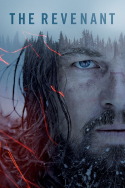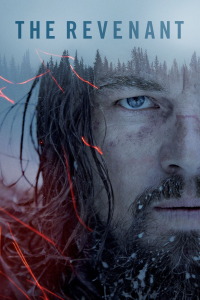
Review of The Revenant (2015) by Moviemastereddy — 06 Apr 2016
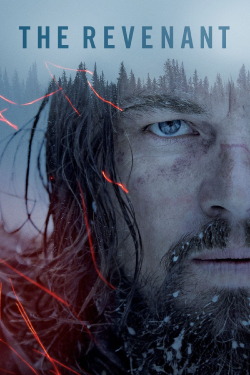
Leonardo DiCaprio stars as a man struggling to survive in the wild in Alejandro G. Inarritu's bloody, bruising frontier epic.
A traditional Old West survival-and-revenge tale assumes the dimensions of a harrowing voyage to the American frontier's heart of darkness in The Revenant. Pushing both brutal realism and extravagant visual poetry to the edges of what one customarily finds in mainstream American filmmaking, director/co-writer Alejandro G. Inarritu, cinematographer Emmanuel Lubezki and a vast team of visual effects wizards have created a sensationally vivid and visceral portrait of human endurance under very nearly intolerable conditions; this is a film that makes you quite glad to have been born in a century with insulation and central heating. The combination of stars Leonardo DiCaprio and Tom Hardy, the director and critical enthusiasm in most quarters will make this Fox release a must for audiences in search of cinematic red meat (something the story offers up in abundance, and mostly uncooked), although vegetarians and viewers with otherwise delicate constitutions could spend half their time squirming with their sweaters pulled up over their eyes.
For a director who normally takes several years between films, Inarritu has remarkably turned around his most ambitious physical production within just one year of his awards-laden Birdman. Even the untutored eye would quickly recognize this as the work of the same key talents; The Revenant may use plenty of cuts and is set nearly entirely outdoors, but the fluid, prowling, sometimes gasp-inducing camera moves, along with the great depth of field, are the same. And both films are about men on the brink, in severe extremis, a condition that helps justify and sustain Inarritu's artistic high-wire act. It's Jeremiah Johnson meets Apocalypse Now.
Set in 1823 in the Rockies, less than two decades after Lewis and Clark led their map-altering, continent-opening expedition through the territory, the story is based on actual people whose real names are used in the film as well as in Michael Punke's 2002 novel, upon which the script is quite accurately described as being "based in part." In a way, the biggest difference between the novel and the film is that the former is aided by a map, very specific descriptions of the proximity of rivers, forts and other landmarks, which provide clear indications of how far the gravely injured hero must travel to get to what might pass for civilization in this context but certainly not in any other.
Inarritu shares screenplay credit with Mark L. Smith, whose prior creative endeavors lie in the realm of low-budget horror (Séance, the Vacancy duo, The Hole), and the script immediately ups the story's existential ante by deliberately not revealing how long a journey mountain man Hugh Glass (DiCaprio) might be facing, or whether he has any realistic hope of finding any place with a roof over it. On top of this, any temptation to provide the central character with interior monologues to reveal his anguished thoughts and feelings has been resisted; for most of the running time, he is limited to expressing himself via painful grunts and cries and very heavy breathing.
Their ranks decimated and with winter closing in, the white men decide to head back, which brings on the scene, 25 minutes in, that which no one who sees it will soon forget (and which will certainly pass through the mind of any viewer who in future takes a hike through bear country). While taking a rest in the forest, Glass is charged by a mother grizzly bear. The man injures her with the one shot he gets off from his long-barreled rifle but then can do nothing as the incensed creature slaps, claws, bites, rips open and steps on him with her giant paws before retreating. Beyond the sheer terror she provokes, the bear's behavior is fascinating to observe; for a good while, she sniffs and assesses her adversary closely, both in the manner of a cook judging the seasoning of a dish and a kid deciding about whether to play with a toy any longer. She retreats ... and then comes back for more.
The score by Ryuichi Sakamoto and Alva Noto, with additional music by Bryce Dessner, is effectively ominous and grim.
It has been noted before, but The Revenant indicates, more than any film Lubezki has shot, the influence of the Russian team of director Mikhail Kalatozov and cinematographer Sergei Urusevsky on his work.
A brutal and gripping pre-Western.
This review of The Revenant (2015) was written by Moviemastereddy on 06 Apr 2016.
The Revenant has generally received very positive reviews.
Was this review helpful?