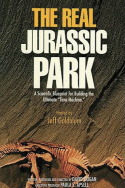
Review of The Real Jurassic Park (1993) by Jesus C — 20 Jun 2015
Considered one of the most iconic blockbusters of all time, Jurassic Park sounded like a masterful combination of high budget visuals and Steven Spielberg's directorial abilities.
When you really break it down, Jurassic Park is simply a disaster film. The plot is a simplistic one which mainly serves as a front for the chance for Steven Spielberg to spend $63 million on the best visual effects available to mankind. In that regard, the film delivers pretty much what you would expect, but by modern standards it does so for better and for worse. Better in the sense that it attempts to be a serious film with educational subtext and legitimate charactrers, but worse in the sense that this approach slows down the experience.
The number one factor in Jurassic Park is that it is a blockbuster and that it serves as a powerful exercise in visual effects. Since the narrative is essentially a basic disaster film one combined with minor script elements which educate viewers on the concept of dinosaurs, the visual style of Jurassic Park is its most demanding and ultimately appealing element. The film is rather slow for the first half and doesn't become a disaster film until just before the second hour which is where the story really takes off. Up until then the film spends time building the plot up for execution and establishing its context, but it has a tendency to get sidetracked in attempting to build characters out of the disaster film archetypes. The level of success in doing so is superior to the average disaster film, but at the same time it detracts from the real value of the film. The ensemble cast is packed with talented actors who are very dedicated to the characters, but the viewers are dedicated to the exhileration of the film more than anything in the end. And as standards have changed, the demand for exhileration has increased. The film must be judged for both its modern day value and the timeframe of its original release, and it comes up successful in both areas ultimately. But with the former, it is easier to pick up on the slower nature of the film. Ultimately, as Jurassic Park is predominantly built on the effectiveness of its visual effects which have come a long way since the release of the film in 1993, it is hardly likely to have the same sense of effective on any other viewers that it did upon its original release. As well as that, the disaster film genre was one which was thriving back in the 1990's due to the popularity of director Roland Emmerich among other things, and the situation is different these days. The disaster genre is largely one which viewers watch for the purpose of a guilty pleasure in the modern age, but a film like Jurassic Park really takes itself seriously and desires to be something more. In all honesty it finds success at doing that, but the result is not always perfectly entertaining.
Nevertheless, the power of the experience that is Jurassic Park is undeniable. The screenplay in Jurassic Park provides the ideal story for the film because it balances the simplistic disaster film narrative with a screenplay determined on educating audiences on dinosaurs. The dialogue in the film breaks down the paleontological concepts to a level which is simple enough for viewers of many ages to understand. The dialogue may be dull occasionally, but that's not what you'd be watching a dinosaur movie for in the first place. Even then there is a light tough of comedy written in which occasionally lightens the mood nicely.
But it is ultimately the production values more than anything that determine what the film is worth. And with Steven Spielberg helming the project, the experience is brilliant. The first sign of the incredible visual style of the film comes into play when the characters journey to Jurassic Park and the wonderful scenery is capitalised on through the high profile cinematography techniques with extensive tracking shots that illuminate the large scale of the narrative, and this plays out against the backdrop of an iconic and beautiful musical score by none other than John Williams. The cinematography proves to mix it up overall throughout the film as there are both large scale techniques and intense close shots to emphasize the dramatic mood of the film, and all the while the musical score remains effectively high profile and intense. Jurassic Park plays with music and sound effects to build atmosphere while the production values are consistently high. Perhap the most powerful moment of the film is when the Tyrannosaurus rex first reveals itself, and this is partially because there is no sound. The story has developed to the point that it reveals the characters as being isolated, and visual palette has substititured its colour friendly style for a grim and dark one, and there is no music. There is only silence tampered by the sounds of rain and the slight rustling in the bushes and fence until the distinctive roar of the great beast is heard. This is brilliant atmosphere building, and when the Tyrannosaurus rex enters the screen we are immediately drawn in by its size and detail. This is the moment in the film which fully captures the value of everything practical, and one of the finest examples that make use of the visual effects. What this ultimately proves is that Steven Spielberg brings along the same level of skill that he put into creating Jaws in 1975 but with a significantly bigger budget. To quote the man himself "I was really just trying to make a good sequel to Jaws, on land". By that standard, he easily achieves what he set out to.
There is a lot to boast about with the visual effects in Jurassic Park. Combining both animatronics with animation, the design of the dinosaurs and their movements in Jurassic Park is incredibly detailed. Revolutionary for their time, the special effects in Jurassic Park still hold up today for their integration of both practical puppetry with computer generated imagery with the extensive level of detail put into them. The detail in all this remains amazing to this day because the dinosaurs are really brought to life by the extensive quality of effects intergrated into the film, fulfilling the prophecy of the story itself. The visual effects are brilliant in Jurassic Park, and the stunning level of detail and creative use of them throughout the story effectively proves to carry the entertainment of viewers on their shoulders.
And even if the characters in Jurassic Park are all disaster film archetypes, there is some really powerful dedication from the cast.
Sam Neill's performance is powerful. He pretty much summarizes the level of depth in his role when he delivers a powerful monologue regarding educating a cocky child on the existence of velociraptors in the intro scene to the film before he gets thrown into the disaster film nature. In that sense, he develops from an intelligent paleontologist into an adventure hero along the lines of a more modern day Indiana Jones while maintaining his own touch of occasional comedic charm . He speaks with such passion and involvement on both an internal and physical level, capturing the sense of intelligence within the character and the adventurous spirit of him at the same time which really proves his value as the leading man in a blockbuster. He maintains the charismatic edge of a western hero and a real sense of passion for the paleontology of the story, as well as the fact that he interacts with both the younger cast members of the film and the dinosaurs themselves with an unflinching level of dedicated realism while restraining his charisma to a modest level. Sam Neill provides just what the story needs in Jurassic Park, and he evokes nostalgia to Steven Spielberg's work on the Indiana Jones series while standing on his own two feet as well.
But for me, Wayne Knight is the actor who stands out. Considering Wayne Knight's legacy for portraying Newman on the 1990's sitcom Seinfeld, it is awesome to see him transitioning into such a big budget blockbuster where he plays a character who is heavily the same archetype but with slight changes. The character is such a heavy archetype, but Wayne Knight's natural comic charisma ensures that he absolutely nails the role. He manages to bhalance a sense of genuine intelligence with a goofy sense of incompetence, ensuring his value to the story as both an antagonist and source of comic relief which any fan of Seinfeld would find appealing. Consdering that Seinfeld is the funniest show I've ever seen, I was ecstatic to see Wayne Knight bringing the same essential character along to a blockbuster like Jurassic Park. His screen time ultimately proves to be brief, but he stands out as one of the more memorable characters of the film as a cheesy disaster film archetype which is succesfully milked to full effect by the sitcom talents of the actor. Seeing the man who played Newman attemping to interact with Dinosaurs in what is essentially a battle of wits is one of the funniest sights of Jurassic Park, and his humourous toch is.
Jeff Goldblum has to spend most of the film sitting around and talking about things instead of actively getting himself in on the adventure, but his articulation of line delivery.
Laura Dern provides an effective performance for Jurassic Park because of the fact that she perfectly embodies her role on a physical level as a woman who steps up to the plate with dedication to the emotional state of the role and passion for swift movements. The presence of Samuel L. Jackson is also welcome because of how much of a legacy the actor has built in the decades since the release of Jurassic Park, particularly considering his Academy Award nominated role in Pulp Fiction the following year.
Lastly, although the young Ariana Richards and Joseph Mazello are confined to playing cheesy child characters for Jurassic Park, they manage to really work hard during the more intense scenes of the flm to capture the fearful nature of the innocent young beings.
So Jurassic Park is a slow moving film which attempts to sustain itself with thin-characters and a reliance on spectacle for most of the film. But when the film enters its second hour and the full quality of the production values and atmosphere is embraced, there becomes little to complain about.
This review of The Real Jurassic Park (1993) was written by Jesus C on 20 Jun 2015.
The Real Jurassic Park has generally received very positive reviews.
Was this review helpful?