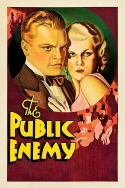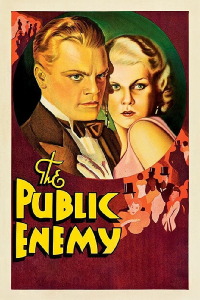
Review of The Public Enemy (1931) by Everett J — 29 Feb 2008
[i]The Public Enemy.
[/i]dir. William A. Wellman.
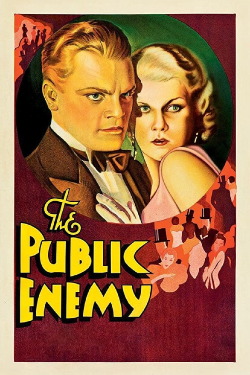
[i]The Public Enemy[/i] is a first-rate gangster picture that propelled James Cagney into the stratosphere of super-stardom. It captures the nuances of the slippery slope of mob-life with a decided flair for rich, elegant aesthetics.
Cagney is Tom Powers. He's brash and a bit crude but he knows how to achieve his aims and won't let anyone step in his way. It's the classic would-be gangster archetype. Cagney is dynamic in every scene as a ruthless badman who is nevertheless fiercely loyal and possessed of a certain integrity. There is a decency about Tom despite the horrible things he does throughout the course of the film. It suggests an idea that this particular way of life is a corruption of normative clean and honest living. At core these men still pray, they still worship their mothers. Tom is a dutiful son who is in turn treated like a little boy. Indeed, the women in his life all treat Tom with the same mild scorn. He is never a full-blooded man to these women but it isn't clear if this proves to be a motivating factor regarding the brutal persona he adapts.
Tom's right hand man is Matt Doyle (Edward Woods). Woods plays Matt as something of a pretty boy. He's more elegant than Tom, more assured around women. Matt is the perfunctory trusty sidekick who does everything expected of him and remains closely by the side of the hero, in this case the anti-hero. Jean Harlow plays Gwen Allen, a fast-talking platinum blonde siren type who is filmed so that she seems to glow. Harlow brings an entirely different dynamic to the picture. Her diction, her movements all seem to come from another place far outside the world of Tom and Matt. Gwen is not more sophisticated, necessarily. She simply possesses qualities that the boys have never encountered before.
As Tom and Matt's boss Paddy Ryan, Robert Emmett O'Connor is frightfully decisive and physically present. Paddy is a sympathetic figure who nevertheless runs a tight little bootlegging racket with solid direction. The sociological aspects of this film are clear. Prohibition contributed madly to the rise and eminence of gangsters who merely filled a galling lack. Tom is presented as cocky, virile young soldier with high-end aspirations and a fearlessness that propels him forward. He's driven in the same way that the typical executive is driven and the only difference between them is perceived opportunity. Leslie Fenton plays the mysterious Nails Nathan with a strange knowingness that informs every scene he's in. He's dapper, worldly, and essentially everything that Tom is not. He's also just the kind of role model that Tom needs. Indeed, each of the men in Tom's life seem to work as replacements for his dead Father. In many ways this is a film about the father-son dynamic and the difficulties that Tom faces in his relationships with his various father surrogates.
Overall, this is a dynamic film filled with tense actions and exquisite photography. There is plenty of violence but all of it is off camera which makes it spookier and more problematic than if it were shown on film. Ultimately, the film belongs to James Cagney who brings a tightly-wound, hypnotic quality to the role that is simply impossible to ignore. It's clear in watching this picture that he has all the makings of the type of star that endures. As Tom Powers, he solidified himself in that role and remains one of the most notable film actors of this or any time.
This review of The Public Enemy (1931) was written by Everett J on 29 Feb 2008.
The Public Enemy has generally received very positive reviews.
Was this review helpful?