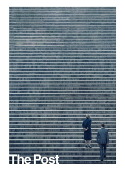
Review of The Post (2017) by Trevorsview — 09 Feb 2018
One time in high school, a student in my class sent me an article on the declining chocolate in chocolate mines, signaling the eventual end of chocolate. As you figured, he proudly wanted to give me an example of a fake news article since our class at the time was focused on said topic. Now, aligned against such relevant topics, Steven Spielberg initiates his masterful silent storytelling skills once again alongside his ability to grip the viewer right away as he elucidates the US Government’s pinnacle point in The Post.
First, a little trivia: did you know the name “Spielberg” is Hebrew for “play city?” Actually, no; it is a German-Austrian name for “play mountain,” inspiring his first film production company, “Playmount Productions.” If I didn’t tell the truth, you would’ve believed my fake news. In the same way, the script by Liz Hannah and Josh Singer (Spotlight) allows each character a chance to distinguish reality based on the given resources. The narrative format here complements the piece, starting off with a gritty, desaturated look of soldiers in Vietnam that suddenly turns into a dark bullet storm in the misty rainforest. After this tense first scene, terrific efforts come out by every player involved, big or small, a proper amount of time given on each to shine in their talent.
Although, Spielberg’s hard efforts ultimately lead to a bland inconsistency. The promising style established in the first scene, including the incorporation of old news footage and old movie posters such as Butch Cassidy and the Sundance Kid, later gets abandoned. Consequently, the dialogue builds up forced unemotional moments until a cringeworthy so-called-emotional monologue by Meryl Streep shuts off most viewers.
Only three women carry significant roles, one a useless, pathetic wife who encourages her husband, one an employee in the Washington Post who barely contributes anything important, and the main female lead, reporter Katharine Graham, who falls along the line of a notion for women overcoming the impossible rather than a plausible human. If instead told from the perspective of Katharine Graham’s partner, Ben Bradlee, then the script might have been able to spot precisely which political agenda to focus on, rather than attempting to cover everything that causes Twitter to crash.
Yes, Barack Obama’s lies about the doubling fuel efficiency were horrible, but guess what’s equally horrible? When a recreated historical DC moment in a period of Civil Rights and a War in Vietnam leaves out non-White people. Why ignore the perspectives of Blacks and the Vietnamese? They matter too! Beside the cultural impacts it glazes past, this ordinary Oscar bait ends up #FakeNews, exactly contradictory to its supposed attempts!
The Post concocts several false facts, proving its small level of care toward fake news compared against its reliance on a relevant issue to gain sympathy attention. Instead of acknowledging how The New York Times actually published the story before the Washington Post, the narrative points pull a Fox News mindset by an exclusive cafeteria selection process to pick which accurate events will best complete the dramatic story they think would interest above the truth.
Of all history’s Best Picture nominees, Amblin Entertainment’s godlike depiction of the Washington Post trumps in its hypocrisy over the rest—even the Washington Post itself lied before: look at its story on Russian hacking the power grid. These Democratic filmmakers intend to brainwash you into thinking the people deserve the ultimate power, except they should not worship themselves if they rely on inanimate print and ink.
On the other hand, we must understand Spielberg’s warning signs of the ugly head of fakeness: in the news, on your prescription medications, and amongst your friendships. The flaws cut deeper knowing our current president has told six times more falsehoods in his first ten months in office than Obama told throughout his entire presidency. Thus, The Post causes us to ponder the realities: Government today must say no to fake news.
I admit I too pick often the daily highlights to share on Instagram. Just a few weeks ago, a green element parked right in front of my own green element; I had to decide whether it deserved a spot on my Instagram feed: does it fit my selective online identity? Such tiny moments turn us into modes of selective identity, much like The Post’s selective identity that the Washington Post saved America. Chiefly: truthfulness starts with the choices you make.
This review of The Post (2017) was written by Trevorsview on 09 Feb 2018.
The Post has generally received positive reviews.
Was this review helpful?