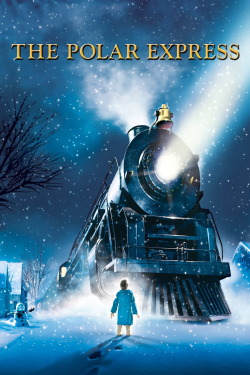
Review of The Polar Express (2004) by Filmclub — 27 Mar 2016
Robert Zemeckis and Tom Hanks appear to have taken an ambitious misstep. Straining with all the elaborate new-fangled wizardry at its disposal to become an instant Christmas classic steeped in old-fashioned storybook charm. Warner release is strictly for young children and looks unlikely to challenge Disney/Pixar's "The Incredibles.".
Given that this $165 million gamble is more interesting as a technical achievement than as storytelling, there is additional curiosity value in its IMAX 3D release, which will occur simultaneously on Nov. 10 with the standard-print rollout. Even on a regular screen, the action often displays a tangible, at times visceral 3D quality, so the giant screen format and immersion in the action may help give the unsatisfying film more audience immediacy and excitement.
While digital animation has made considerable strides in the past decade, the trick of creating emotionally vivid, realistic human characters has yet to be achieved. Pixar’s “Toy Story” movies got by with peripherally featured humans, but attempts to move beyond that, like Sony’s 2001 interactive computer game-derived “Final Fantasy: The Spirits Within,” have been cold and distancing.
“The Polar Express” may succeed via the motion-capture process in replicating human movement by digitalizing the performances of live actors, but it fails to capture the subtlety of facial expressions or to fabricate sympathetic, evocative figures, particularly of the children that are key to this adaptation of Chris Van Allsburg’s beloved fairy tale.
In fact, the three dead-eyed tykes who lead the action here resemble nothing so much as Stepford children, giving the film an at times creepy feel, amplified in the later reels by spindly, hyperactive elves (who perform stereotypical Jewish shtick, including Yiddish) and a Santa who descends on the North Pole town square like some kind of yuletide Mussolini hitting Piazza Venezia.
Adding to the emotional remoteness of the three kids is the fact they don’t have names. While small children are perhaps less likely than adults to find the strange unintended subtext of the film off-putting, it’s hard to imagine them empathizing much with such stock figures: a middle-class boy from suburban Middle America in whom the first signs of doubt about the existence of Santa Claus have begun to manifest themselves; a smart black girl with incipient leadership qualities; and a poor boy from the wrong side of the tracks, whom Christmas has always passed by.
While the story chronicles the kids’ journey toward life lessons — the importance of friendship, courage, magic, trust or simply belief in the spirit of Christmas — there’s surprisingly little flesh on the narrative bones. Instead, action covers a series of brushes with danger that create the illusion of a propulsive narrative but never really develop into a satisfying fable.
The main girl’s momentary loss of her train ticket prompts a hair-raising scramble along the roof of the moving train where a hobo (Hanks) camps out; a mass caribou crossing brings the engine to a screeching halt just in time; the iced-over tracks send the train sliding out of control, narrowly avoiding catastrophe when the ice cracks.
There’s a curious lack of the quintessential characteristics of wonderment, joy and childhood reaffirmation that might have made the completion of the kids’ journey of self-discovery register with more emotional warmth. Despite unrelenting use of an aggressively heart-tugging score by Alan Silvestri, the story merely plays out as an inflated spectacle with not much to tell.
Voice work is of secondary importance here to the visual action, much of which is exhilaratingly muscular and rich in movement. The ice episode is spectacularly illustrated, as is the dizzying flight of the girl’s lost ticket, snatched up by an eagle and then let loose again to flutter back down to the train.
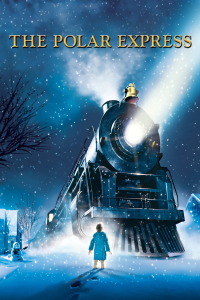
The story’s imposing landscape of snow-covered mountains, vast plains, thick forests and skies electrified by the Arctic lights is faithful to the style of Van Allsburg’s illustrations and often exhibits the painterly look of vintage children’s books.
This review of The Polar Express (2004) was written by Filmclub on 27 Mar 2016.
The Polar Express has generally received positive reviews.
Was this review helpful?