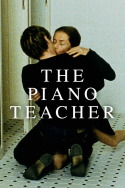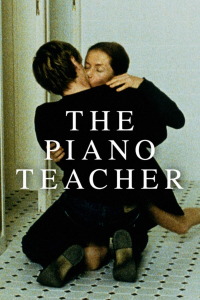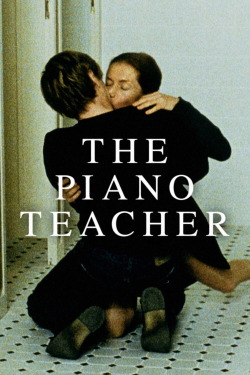
Review of The Piano Teacher (2001) by Antonia W — 09 Oct 2007
Based on the movie's critical success, i'll assume that i'm the one missing something.
In which case i'll need to take everything I found flawed in the movie and consider that it is actually i, not it, that is flawed, and that what I found weak, trite, illogical etc was in fact brilliant and intentional.
So explain to me the woodenness of the dialogue. the theatricality of the intonation. in an otherwise steadycamed soundtrackless blandly lit bleak realist film. Dialogue like that in a film like this doesn't make sense to me. So what am I missing? All parties involved are very talented and intelligent (no irony there) so why would they go along with dialogue that comes out like teleprompted robots? To illustrate the highly formalized stuffiness of bourgeois interaction in the world of classical music? the repressiveness of it? if you're made to study piano for 8 hours a day, you can only end up like Prof. Kohut? (Though granted, there is a difference between formal realism and realism of content. What makes this type of movie enjoyable is often their formal realism. Their sensory world is our sensory world. But the chracters and their interactions are mostly allegorical, metaphorical, theatrical, illustrative, what have you, and NOT realistic, so maybe I should amend that sentence about it being a realist movie.).
Anyway, so she takes a razor blade to her private parts, gets off on urinating in public and patronizes an adult bookstore's video booths, and then finally thinking she has found love, trusts one of her students with her deepest secret desire, which is essentially to be bound, gagged and humiliated. And all of this because she was made to sacrifice everything for her music, her father died when she was young, and her mother is an overbearing infantilizing controlling b... -i mean- woman, and so she has all this, um, pent up frustration, and an acute need to be loved, and stuff. Whew.
Anyway. The movie ends in a predictably franco-euro manner, i.e. midscene, i.e. "we've walked you through this for two hours and ten minutes and honestly you sort of see where this is going and there's no logical way to simply wrap this all up neatly (oh how lifelike!) and so we'll just call it a day -what do you say?- and go for a drink. Cut!".
The thing is, character arcs make sense. not that the arc itself must end somewhere pleasing. it makes sense for the character to have an arc. because we are all perfectly clear on the fact that life does not come to some satisfying neatly tied up conclusion. However, when you invest your time and energy in tracking a character's progress, it is because you expect this character to have an arc. And confounding expectations may have some value as an intellectual exercise, but makes for poor storytelling. The thing is, without an arc, or with an incomplete arc, it boils down to this: "So this woman, she's a mess" "Ok" "No really, she's like, fucked up" "Yeah... and...?" "Well she does this really crazy shit" "Fine. And so?" "Well, nothing, just check it out man, she's a mess and it's fucked up.".
This review of The Piano Teacher (2001) was written by Antonia W on 09 Oct 2007.
The Piano Teacher has generally received very positive reviews.
Was this review helpful?