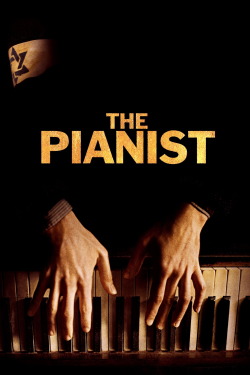
Review of The Pianist (2002) by Cameron J — 05 Jan 2013
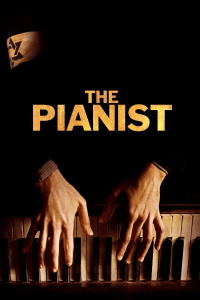
"Oh, sing us a song, you're the... pianist; sing us a song tonight, because we're all in the mood for a melody and you've got us feeling alright", which is good, because we're talking about a Roman Polanski film about Nazi invasions here, so we're definately gonna need a pick-me-up, and preferably one from a Jewish pianist... who was baptized and ended up atheist. Well, in all fairness, Billy Joel is from the New York Bronx, a region that is about as Jewish as the entire country of Poland, only not as miserable in the '40s, which should tell about how bad the Nazis hit Poland and, by extenstion, about how brutal this film is, as Roman Polanski isn't exactly one to mess around when it comes to telling things as they are. Seriously though, I do think that Roman Polanski is perfect to direct this, not just because he's of Jewish descent, Polish and with a name that is just begging for the pun "Roman Polandski", but because he makes good Oscar bait when he's not doing a biopic about a Polish Jew trying to survive from the Nazis. I certainly don't think that this film was 2002's best, though it is a wonder why this film didn't take home Best Picture with the rest of its haul of Academy Awards, or at least it would be a wonder if this film didn't have the misfortune of coming out the same year as "Chicago". Granted, "Chicago" might not be quite as good as this film, but it won Catherine Zeta-Jones an Oscar for a do-nothing performance that didn't even get a Golden Globe nod, so you know that the Oscar weren't messing around with its overrating of "Chicago", which makes it all the more frustrating that Best Original Song went to a hip-hop "song". Yeah, those darn Oscars don't appear to know good bait when they see it, but hey, at least they had the right idea when they gave Adrien Brody the Oscars, because, woah boy, can that man act. Still, as much as Brody delivers as one of this film's many sharp notes, the final product isn't entirely innocent of striking some false keys.
Roman Polanski has made some lively efforts, but when he slows down, - as he still very often does - he knows how to make it count, as this film firmly reminds you, or at least after a while, because although the film is consistently slow, the body that succeeds the lengthy development segment plummets in pacing, and continues to drop as it progresses, taking on a dry atmosphere that isn't completely disengaging, as it goes compensated for with thorough dramatic resonance, but nevertheless gives this film a kind of atmospheric unevenness that particularly emphasizes this film's aimlessness, because with all of its layers, or at least potential for layers, the final product flows, if not meanders along its plot with excess and overdrawn material that, after a while, converts major plot layers into focal unevenness. This aimlessness may not be able to battle back the film's being ultimately rewarding, but it alone proves to be enough to hold the final product back quite a ways from its full potential, which further takes damage from story structuring issues that are hardly of a slow nature, because as slow and padded as the film gets to be, many a happening feels a touch jarringly abrupt, going flung into the film with limited exposition, whose limitations are not just over simple plot points at the body. Gradual flesh-out in this film is certainly fairly firm, but immediate development is lacking, failing to fully inform you of the subjects of this heavy character study, whose exposition issues go compensated for, if not counteracted by potently handled areas of exposition, but still stand and loosen your full grip on the characters and story, neither of which were likely to ever be truly exceedingly engrossing, as they are perhaps too familiar for their own good. Yes, this film is based on a true story and all, rather than just some library story they plucked from an archive of unused scripts, but when they say that the story of, say, Anne Frank was one that was faced by many a poor soul faced by the dreaded Nazis, they aren't kidding, because as important as this subject matter is, to where most any story concept it stands over will find immediate intrigue, this film's story is one that has been tackled time and again, not necessarily to the point of sparking predictability, but certainly to the point of reminding you a bit too much of this film's subject, while subtlety issues remind you a bit too much of this film's intentions. Needless to say, the times portrayed in this film were harsh and blunt, with only so much in the way of potential for subtlety, but really, with all of its depth, this film gets a bit carried away in its portrayals, overemphasizing flawed humans as not too much more than mere components to a central theme that is made palpable through broad strokes that strike emotional chords, rather light graceful touches that could have produced a symphony of emotional resonance. Roman Polanski has every right to want to put his heart in this project, yet I find it hard to deny that he gets to be overambitious, as well as problematic in other fashions, tainting his worthy vision with shortcomings that hold back a film that could have been as upstanding as they say. In spite of this, the film accels through its shortcomings enough to engage much more often than not and ultimately reward, as a moving character drama, commendable acting piece and, yes, even a medium for some darn good tunes.
Even outside of the pin-drop silence that takes up much too much of the film's body, music usage is sparce, but when it does arrive, it goes quite a ways, because while Wojciech Kilar especially underused score work is nice and all, even if it is mild and generic, it's this film's clever usage of the excellent classical efforts, particularly those of the legendary Frédéric Chopin, that truly stands out, as Janusz Olejniczak's and the undoubtedly heavily trained Adrien Brody's fine, occasionally phenomenal renditions of soulful classical compositions both color up the film with beautiful music and elegantly stand as one of the more relatively subtle reflections of thematic value, having a wealth of emotional range that, when bonded with the film's atmosphere, compliments the layered dramatic substance with striking artistry. Tonal range goes further artistically emphasized by Paweł Edelman's consistently gritty, often handsome and sometimes truly stunning cinemaotgraphy, whose striking tastes in somewhat drained coloring and stressed lighting sparks a gritty visual style to compliment a bleak tone, with enough elegance to reflect the tone's more hopeful notes, while Allan Starski's realistically somewhat restrained, yet still intriciate production designs sell you on the setting with a degree of handsomeness. Of course, what most needs to be gracefully sold is this film's story itself, which is undeniably familiar, but as important as any other of its type, being a portrait on humanity and how far someone is willing to go to survive, and when it comes down to the final execution of this important story, well, as I said throughout the last paragraph, there are many storytelling issues that throw off full engagement value a bit, and a kind of overambition that emphasizes more natural shortcomings and overemphasizes dramatic range with only so much in the way of subtlety, yet, on the whole, the crafting of this film is inspired, not just within Ronald Harwood's overblown yet inspired script, but within Roman Polanski's direction. A Pole of Jewish descent whose childhood and family were plagued by the dreaded grip of the Nazi's, Rajmund Roman Thierry Polański is close to this film's subject matter, and, as you can imagine, such closeness sparks a bit of overambition that, combined with Polanski's usual storytelling flaws, holds back Polanski's worthy vision, yet not to where Polanski's inspiration fails to accel more often than not, because as flawed as Polanski's direction is, directorial shortcomings go compensated for by depth and color within the fleshing out of this story and subject matter's thematic value, both of which stand to be handled a bit better, but are still powered compellingly by Polanski's noble and ultimately rewarding efforts. I wish I could say that Polanski picks up the pace as much as he should and is a restrained as he should when tackling this film's subject matter, as a more balanced directorial performance stands as a potential key to this film's would-be excellence, but Polanski still compels, recieving quite a bit of help from his acting performers, especially the Oscar's youngest Best Actor-winner, Adrien Brody, a very talented actor whose breakout performance in this film is nothing short of revelatory, featuring a sharp accent and electric charisma that, through emotional range and expert presence manipulation, takes on many a layer that shifts throughout and defines Władysław Szpilman's worthy story. Watching Szpilman face and undergo horrors as he struggles to survive, and defines himself along the way, is an experience that owes much of its compellingness, not simply to Polanski, but to Brody, who taps into his role with human range and emotional depth that leave him to bond with Szpilman's being and carry much of this film, both as an audience avatar and compelling human with vulnerability and the power to persevere. Now, with all of my praise, Brody's performance gets to be underwritten, but Brody nevertheless delivers a performance that is key to this film's survival as rewarding, with many unfortunate shortcomings, but enough compensation to compel consistently.
In closing, the film initially faces slow spells, then begins to creep into dryly quiet - dare I say it? - dullness during the body, facing excessive material and aimlessness that, with storytelling missteps of a more heavy-handed nature, sparks a kind of unevenness that, alongside exposition issues, story conventionalism and even many a lapse in subtlety, dilute the full bite of this overambitious project, which still, even with its problems, sinks its teeth into you firmly enough to sustain your investment, delivering on fine musical tastes, cinematography and products designs as compliments to a worthy story, brought to life by the many moments of effectiveness within the inspired performance of Roman Polanski, and the consistent effectiveness within the upstanding performance of Adrien Brody, thus leaving "The Pianist" to stand a flawed, but ultimately movingly rewarding testament to survival during dark days in humanity.
3/5 - Good.
This review of The Pianist (2002) was written by Cameron J on 05 Jan 2013.
The Pianist has generally received very positive reviews.
Was this review helpful?