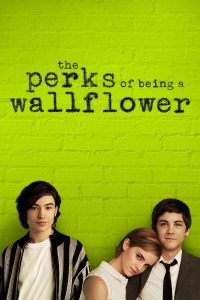
Review of The Perks of Being a Wallflower (2012) by Shiira — 11 Dec 2012
Seated at a cafe table for one, a beautiful, young woman, unaccountably lonely, peruses and pines over a comic book, and its handsome male hero. The music video for A-ha's "Take on Me" is the ultimate geek fantasy: the blond seems to have a fondness for an illustrated world over the real one, just like any introverted fanboy.
The protagonist, as it turns out, a Norwegian protagonist, without explanation, blinks at the Londoner single, as the comic panel loses its static purpose, when the graphic hero reciprocates the customer's **** of the crush object with a crush of his own, and extends an open invitation to the startled reader, who nevertheless, grabs the hand protruding from the ephemeral page, and enters the diegesis of pencil sketches, suddenly made fluid by the alchemic properties of synth-pop music.
In 1985, every sad, maladjusted boy wanted to be A-ha frontman Morten Harket, because that's how a wallflower could be heroic, by saving a damsel in distress from rival motorcyclists armed with pipe wrenches from the safety of a debauchery-free bedroom, alone with his Martha Quinn sex fantasies.
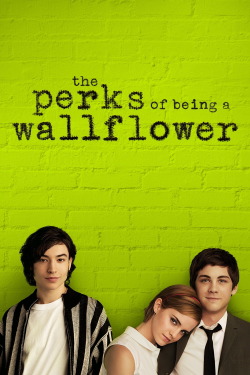
Wallflowers get older. Some survive their awkward teenage years, and bloom, like Charlie undoubtedly will, in The Perks of Being a Wallflower, while others, such as Jorge, a morbidly shy dishwasher, will not, ever, in Steve Barron's Choking Man, a micro-indie that shows how ostracized children grow up to be ostracized children.
Barron, the filmmaker who helmed "Take on Me", references his music video past, in a scene where Jorge's enemy, the restaurant manager, who delights in torturing the monosyllabic dishwasher about his aloofness, breaks into a mocking rendition of Kajagoogoo's "Too Shy", another early MTV classic.
Again, animation is employed, but this time, the optimism, in regard to love, found in "Take on Me" has given way to resignation, and finally, vehemence. No wallflower, struggling through his adolescence, would want to co-opt Jorge's constipated ideas about love.
His cartoon bunny rabbits won't even rub noses. Jorge doesn't dare, perhaps, since he knows the cute Chinese waitress could never love him back. For sure, the schizophrenia doesn't help, but the real reason that prevents him from competing with Steve for Aimee's heart is his ramshackle appearance, whereas Charlie, despite being saddled with PSTD, earns Sam's love because the unformed freshman more than offsets his emotional problems with an appealing visage.
Charlie is less a nerd than unathletic. At the outset, he suffers the indignity of eating alone in the school cafeteria, but you're never worried for him. That's why the budding writer comes off as whiny and disingenuous when he expresses a concern about not making friends to his teacher.
He's good-looking.. Soon enough, Sam, and her half-brother Patrick, take Charlie under their wing, and introduces him to people, self-described as castaways on "the island of misfit toys", wallflowers all.
He finds his tribe. The film, and the Steven Chbosky novel it's based on, thankfully, avoids the shortcut of outfitting the nerd with glasses, like, for instance, Dawn Wiener, the president of the Special People Club, in Welcome to the Dollhouse.
Whereas the misfits find each other and stick together at Charlie's school, in the Todd Solondz film, the estranged outcasts at Dawn's junior high estrange themselves from each other, choosing to go it alone rather than garner strength in numbers.
Here, the weak pick on the weaker, like when Troy, pinned against his locker by the resident 7th grade bullies, lashes out at Dawn for defending him. "Leave me alone, Wiener Dog," he grumbles, humiliated, doubly, since the girl who saves him is perceived as ugly.
But even the consensus school pariah, the plucked to death wallflower, has a cruel streak, evoking Groucho Marx's famous quote: "I don't care to belong to any club that will have me as a member," when Ralphie, a charter, and only member of Dawn's social organization, hears himself being called an "a**hole" and a host of other obscenities, as Missy tries to get her older sister to take his phone call.
Unlike Charlie, there is no midnight screenings of The Rocky Horror Picture Show" with friends, or being told by a girl that your first kiss should come from somebody who really loves you. Dawn has to settle for a sad night in her clubhouse with a boy, who in the way of introduction, tells her that he's going to rape her, as they stare at the night sky while Debbie Gibson's "Lost in Your Eyes" plays on a cheap tape recorder.
Sam kisses Charlie because he has a naif-like animal magnetism. His predecessor, Lucas(from the 1986 film starring Corey Haim), does not, and as a result, Maggie, a cheerleader, rebuffs the younger boy's clumsy attempt at romance, by turning her lips away from his.
When you're a wallflower that often gets confused for a weed, there are no perks.
This review of The Perks of Being a Wallflower (2012) was written by Shiira on 11 Dec 2012.
The Perks of Being a Wallflower has generally received very positive reviews.
Was this review helpful?