Review of The Nines (2007) by Maggie P — 02 Jul 2011
The Nines is a brilliant portrayal of metaphysical fantasy. The director's plan is executed almost without flaw as the actors are able to capture the intricacies of his design. However, such extensive detail could easily be lost in translation, making it easy to see why some might view the film as confusing and undeveloped; and while the former is an accurate description, the latter is not. As Peter Sciretta of Slashfilm explains, "Everything and anything would be giving something away. The Nines not only escapes classification, it escapes explanation. Like last year's film by Darren Aronofsky (The Fountain), it's one of those movies that people will either love or hate." As is true of all dealings in metaphysics, understanding comes with time and attention; you can't watch it just once.
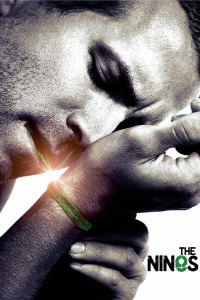
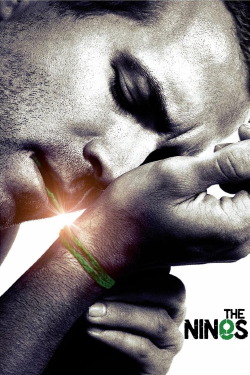
Ryan Reynolds proves his ability as an actor in John August's directorial debut. Hope Davis, Melissa McCarthy, and Elle Fanning also star in this story of a demigod who, through a drug-like addiction to the human world, has lost sight of his true self. The Nines is divided into three interconnected "realities" in which each character takes on a different role. AMC Film Critic Jesse Hassenger poses the question, "Are the two seemingly benign women in his life actually part of something greater or more sinister?" The relationships between Reynolds, McCarthy, and Davis could be viewed as a very liberal interpretation of those of God, Mary, and Satan. Perhaps more appropriate to their roles as nines, Reynolds and Davis could also be non-literal depictions of the archangels Gabriel - who sometimes functions as the guardian angel and a manifestation of God's judgement - and Sariel - an angel of healing and of death who was often responsible for leading people to the truth. For this aspect, McCarthy could embody all of mankind. These relationships can be detected through the characters' names, which always begin with the same three letters - G, M, and S. Fanning takes on the role of Noelle, which means "birth," and, in Christian tradition, signifies the birth of Jesus Christ. During the opening credits, we see green yarn being fashioned into a bracelet, which Reynolds wears throughout the movie.
The sequence in which the stories take place is significant to Reynold's comprehension of his true role as a nine. In "The Prisoner," Reynolds plays Gary, an actor who is placed on house arrest after being caught with crack, along with a few other mishaps. This role is symbolic of the part he plays in the human world, imprisoned in a reality that is not his own because of his "addiction." Margaret is a publicist who is assigned to his case so that she may prevent the incident from ending his career. Her purpose is similar to that of Mary's when she is chosen to be the mother of Jesus, so that he may spread God's word to the people. Because he burned down his own house, he must serve is punishment in the home of a television director who is currently in New Zealand to shoot the pilot for his new show. Here he meets the neighbor, Sarah, who plays the role of a temptress - much like Satan - by bringing him wine, although drinking violates the conditions of his house arrest, and later by telling him that she can help him escape as long as he trusts her. After finding a post-it that reads "look for the nines" and a surreal encounter with what appears to be himself, he runs away and ends up on a bench next to an advertisement for the show Knowing. Fanning makes her first appearance, urging him in sign language to come with her. When he asks where her parents are, she points to him. After learning the meaning of the nines, Gary exercises his power by crossing the line which Margaret referred to, quite literally, as the edge of his world, which ends that phase of his creation.
In "Reality Television," Reynolds is now Gavin Taylor, a TV director who has just finished shooting the pilot for his new show Knowing and is now in the process of trying to have it aired. This role symbolizes his power in that he controls the people and their circumstances. He designs the lead role for his most cherished friend, actress Melissa McCarthy (played by herself). Their allegorical relationship is more apparent now that he has already chosen her to carry out his plan and her value to him is much more visible. Davis plays Executive Producer Susan Howard, who already knows that Gavin's show will not be aired but convinces him otherwise in order to lure him way from Melissa. Again, she performs as a temptress, this time with much more deceit. Perhaps the most crucial scene of "Reality Television" occurs when Gavin and Susan are overseeing a focus group for his show, during which one of the members approaches Gavin and yells "oblivio accebit." Afterwords, Gavin explains that "other than the world coming to an end, oblivio can mean forgetting, forgetfulness" which he states is what he plans to do, alluding to his unremembered identity. As this episode ends, avatars can be seen indicating all humans as sevens and Gavin as a nine, followed by an exit screen that ends this phase.
Everything comes together in "Knowing," the third and final chapter of The Nines. Reynolds' ultimate embodiment is that of a video game creator named Gabriel. Undoubtedly his most significant incarnation, this role indicates his status as the creator of this world. In this last version of his universe, McCarthy's importance manifests in her role as Mary, Gabriel's wife and Noelle's mother. The relevance of this is unmistakable, as she has now brought his child into the world. Davis' purpose becomes explicit as she takes on the identity of Sierra, who leads the unsuspecting Gabriel deep into the woods for his intervention. Her temptation turns into blatant seduction, and once he is incapacitated, she doesn't even attempt to hide her deceit. With the help of two others, who have played small but vital roles in every phase of his creation, Sierra is finally able to awaken Gabriel - who she refers to only as "G" - to his true reality, saying, "You're a crackhead, G. Thing is, this planet - these people - they're your drug of choice. It wasn't that hard to make a universe; at first you just checked in every once in a while ... But then you got more into it, started playing a couple characters of your own ... Pretty soon you were playing 24/7." Instead of leaving immediately, he returns to Mary and Noelle so that he may have the chance to say goodbye. He explains to Mary that this is the last of ninety versions, and, before removing his bracelet to leave, tells her that she was his favorite. However, he leaves behind one more version. McCarthy awakens to find her husband from "Reality Television" in the kitchen with Noelle. She calls Noelle to her and asks what her name is, to which Noelle responds "Mommy." She then repeats her infamous line, "he's not coming back", but says that it's okay because "he put all the pieces together." McCarthy finishes Noelle's thought, saying "the best of all possible worlds.".
While the acting and writing for this film was excellent overall, there were some scenes that, however necessary, were melodramatic. For example, when Sarah begins to sing in "The Prisoner," I can't help but feel a tinge of unsolicited embarrassment - especially when showing the film to others. Also, the two unnamed characters in "Knowing" cause the scene to be - for lack of a better word - a little cheesy, perhaps evidence as to why their roles were as small as they were.
The allegory within The Nines is but a small contributor to the movie's potential for confusion. In fact, with such a labyrinthine plot, many fail to ever notice the symbolism. Such complexity may explain why this was August's first and last time as a director; however, for those who were able to grasp his vision, that complexity serves as a testament to his ability as a fantastical innovator that places him among the ranks of such minds as Richard Linklater, Michel Gondry, Richard Kelly, and David Lynch. As for Lou Loumenic of the New York Post, who writes, "Ryan Reynolds plays God - I think - in The Nines, the clever but pretentious, New Age-y directing debut of prolific screenwriter John August", well, he obviously didn't get it.
This review of The Nines (2007) was written by Maggie P on 02 Jul 2011.
The Nines has generally received mixed reviews.
Was this review helpful?