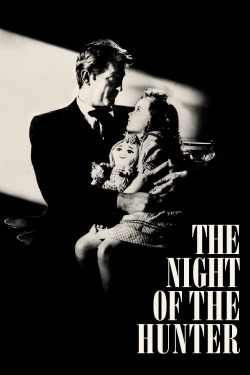
Review of The Night of the Hunter (1955) by Robert D — 12 Apr 2011
This is a hard film to categorize. It's part thriller, part morality play, and part character study, with abundant symbolism and strong religious overtones. From the very beginning, as we see the faces of children against a backdrop of stars, and hear a woman reading to them from Scripture about the danger of false prophets, there's an eerie, disquieting feeling to it.
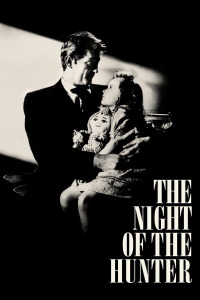
The plot follows two young children, John and Pearl. When we first meet them, they witness their father returning home- from a bank robbery! As sirens blare in the distance, he hides the money, and then makes his children promise to tell no-one where it's hidden, before police arrive and drag him away. What the children don't know is that their troubles have only begun. They're about to run afoul of one of the slimiest most menacing villains in the screen's history: "Brother" Harry Powell; played by George Mitchum in a truly spectacular performance.
His first appearance, earlier in the film, immediately follows the exhortations to "Beware false prophets," not a good sign. From his words and deeds over the next few moments, it's clear that he's a self-serving conman who preys on young ladies and widows, seducing them so that he can part them from their money. What's more, he's clearly deranged. He not only uses his guise as an itinerate preacher to deceive his victims, he's deluded himself into believing that he is carrying out God's will, and that his actions are therefore righteous. He also holds a deep hatred for women. He hates their clothes, their curly hair, and the smell of their perfume- and he has convinced himself that so does God.
Every time he appears onscreen, the music and lighting become ominous. It's not long before even the slightest hint of him- his distant silhouette, his whistle, even the hymns he sings- become sinister in the minds of the audience.
And by some strange twist of fate, he finds himself sharing a cell with the children's father, from whom he overhears talk of the money. The moment he's released, he finds the man's widow, and begins working his magic on her. Before long, and with the blessing of the townsfolk, the two are married. Not long afterwards, the mother lies dead at the bottom of the river, and nothing but the two children stand between him and the money.
What's truly alarming is the ease in which he wins over, and then manipulates, those around him, especially the women. From the moment he introduces himself as a minister and spins his bogus tale about having been a prison chaplain, he gains the town's complete trust. From this point on, he barely has to make any effort at courting the children's mother; the townspeople to the work for him, telling her that she'll be lucky to find another man like him.
Even when she begins to glimpse his dark side, she continues to believe that he loves her. When he condemns her for wanting to consummate their marriage on their wedding night, she breaks down and prays for forgiveness. Soon he has her confessing how her constant demand for fancy clothes and perfumes led her husband to commit his crimes, as the townsfolk provide amen's and hallelujah's. Even after she hears him threatening her daughter over the money, she deludes herself that he only seeks to free them from the money's taint. But even this faith in him is not enough to save her from his hatred and paranoia.
Now, with their mother out of the way, Powell can unleash his full wrath on John and Pearl. The film's most frightening scene follows, when he takes the children down into the basement in search of the treasure. After a narrow escape, John leads his sister to their father's skiff, and they set off down the river, beginning the film's second act.
Their trip downriver is eerie and surreal. In some shots they to be drifting through the sky or outer space rather than a river; with only their boat and a backdrop of twinkling stars visible. At other times the pass characters out of old children's stories, such as a tortoise and hare, or a spider spinning its web. The music, and Pearl's singing only add to the strangeness. And throughout their travels, we are constantly reminded that they are being pursued.
As I watched, I was struck with how the children's innocence contrasted starkly with Powell's villainy. John, the older sibling is honor and duty personified. Throughout our tale his goals and motivations are to honor his father's last wishes, and to protect his younger sister. He also shows the wisdom and discernment of someone beyond his years. Among the townspeople, he is the only one to see Powell for who he truly is. Pity that no one listens to him.
Pearl, for her part, is too young to really understand what's going on around her. She has had no experience with evil, and therefore cannot yet understand that anyone would have impure motives or wish her harm. When Powell marries their mother, she thinks that it's ok to tell him the secret because he's their daddy now. She also believes Powell's repeated claims that "John is bad" for opposing him. Only when she is threatened does she begin to understand the danger.
Their journey- but not their adventure- comes to an end when they reach the farm of Rachel (Lillian Gish) Gish has unquestionably earned her reputation as a queen of the silver screen, from her early work for WEB Griffith to her appearance in Titanic, and this is surely one of her best performances. Her character may be headstrong and sometimes judgmental, but she is a paragon of kindness, love, and good sense.
She is Powell's opposite in every way. Where he sees the children only as a tool to be exploited, she views them as charges to care for and give a good upbringing to. He misquotes Scripture to justify his actions, and twists it to suit his purposes. Cooper uses it to give her strength, and to comfort her adopted family. And while he would have condemned Ruby, her eldest child, for having secretly dated the boys in town, and then used her shame to gain power over her, Cooper reassures her that although she has done wrong, she is still a good person, and will make a fine young woman someday. It is in her that Powell may have finally met his match.
I won't spoil the ending, save to say that there's a tense contest of wills and that the villain gets what he deserves in the end. I would also like to say that this movie does an excellent job of showing how easily -and violently- the mob can be swayed. I'll close by saying that this movie is a bit strange, but it succeeds at being both chilling and heartwarming, and contains two of cinema's greatest heroes and villains. This one is definitely worth checking out.
This review of The Night of the Hunter (1955) was written by Robert D on 12 Apr 2011.
The Night of the Hunter has generally received very positive reviews.
Was this review helpful?