Review of The New World (2005) by Bereal M — 31 Aug 2015
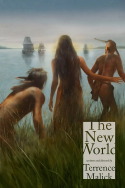
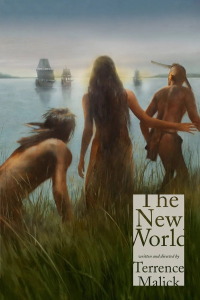
How do you begin to tell the story about a love so true that it killed? The movie breathes meaning to the phrase "love kills". Pocahontas lost her first love, Captain John Smith ("the Captain"), twice over. First when he left her to find the passage to the Indies without telling her of his departure. And, a second time when she was told, per his instructions, that he died two month later, on this expedition.
The story is the saddest romantic tale I have ever seen. I cried each time I saw the ending when Pocahontas and the Captain see each other for the last time during a meeting arranged by her husband, John Rolfe, and father of their son, Thomas. When Pocahontas learned by chance that the Captain was actually alive, she told her husband that she can longer have conjugational relations due to being married to the Captain just prior to their voyage to England. When Pocahontas and Rolfe arrive in England for a reception in her honor as the New World Princess, he told her that he believed that she still loves this man and that she will not find peace until she sees him again. As they walked through the large estate garden the Captain taunted Pocahontas: who would have thought that people would refer to her as "her ladyship" and that he heard that the King and Queen received her. He also tells her that what they shared in the forests of her homeland was not a dream; it was the only truth. Pocahontas realizes that she did not belong to the man who showed her that love can lie and accepted that Rolfe was the man who loved her as a husband.
The kindness that Pocahontas showed the Captain and the starving colonists the first winter in Virginia was repaid with kindness by the pioneers of Virginia when they brought her to their fort as a hostage, the people of England, and John Rolfe. At that time, she was given the name Rebecca as she no longer could identify with any of her Indian names having been exiled by the Chief, who was also her father. Although the Captain cared for Pocahontas, he wrestled between giving up the name "Smith" to be able to live freely with her and grabbing on to the promise of charting new territory of his own.
Before Pocahontas died 10 years after the landing of the ships in Virginia, at age 22, she came to know where her mother, who predeceased her, lived in her afterlife. Her asking "mother where do you live?" was a thread weaving through the story. She told her husband that it was enough that our child lives.
The actress, Q'orianka Kilcher, only 14 year old did a remarkable job dramatizing the intrigue that Pocahontas had for the Captain and the contrasting hysteria she suffered when she awoke to find herself abounded by him without warning and when she was told that he drowned at sea. Their relationship was an emotional rollercoaster for her. When she brought food in the dead of winter to the dying fort, the Captain told her not to trust him because she did not understand who he was. It seemed as though her innocence and kindness lead to circumstances that put a thorn in her happiness for most of her life.
Two different types of men were attracted to the young Pocahontas. For one it was a matter of survival. The Captain confesses he let her love her and made her love him. The other was domesticated choosing freely to be with her and to shelter her like a tree.
Colin Farrell played the lead of Captain John Smith well, never upstaging his stunning co-star in the scenes in which they appeared together. In the movie commentary, he seemed impressed by her acting ability as a teen actress and intrigued by her darkness more than her light.
The film, nominated for an academy award, beholds a piece of history that reflects on the brutality the Indians suffered as the whites, knowing tyranny themselves having escaped from their motherland, encroached upon the native's space, lifestyle and culture. The film does explain that the problem between the pioneers and Indians was that peace was not negotiable for either side once the fair-skinned foreigners used fire arms to deal with their "visitors". Although the Captain was his own homeland security operation, the pioneers ended up starving even after the Indians gave him a conditional release from captivity. Why did the pioneers starve when they found an abundance of oysters and fish when they first landed their ships? The Indians hunted animals for food and the pioneers had firearms to do the same. They could have strategically traded their possessions for corn or find edible roots and berries. The "big hole" in the movie is that the Captain learned their fighting tactics when he lived with the Indians during his captivity, but he seemed to have failed to learn how they managed to live off the land. (Was the Captain too in love that he "forgot" to think about how food was obtained?) If not for Pocahontas, they surely would have perished.
This review of The New World (2005) was written by Bereal M on 31 Aug 2015.
The New World has generally received positive reviews.
Was this review helpful?