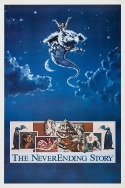
Review of The NeverEnding Story (1984) by Filipeneto — 29 Nov 2020
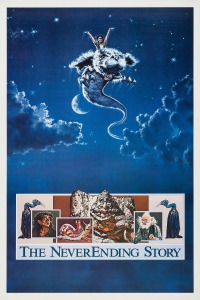
For me, this is a film that takes me back to my childhood, in the Nineties. It was a film that I watched whenever it was shown on television and therefore, due to the emotional burden of memories, it is difficult to make an impartial assessment, but I will do the best I can. I do not know if we can consider this film a classic of recent German cinema, but it is certainly a film that was successful, won cult status and a legion of admirers.
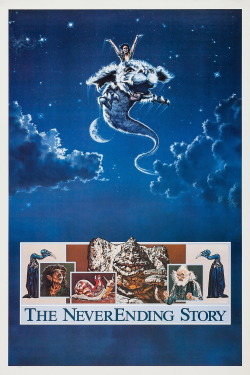
With its own style, it is far from the visual marvels of today's CGI, but it was incredible at the time and it was stupidly expensive to make (it was even the most expensive film ever to be made outside the US and the Soviet Union). The script is based on a part of a fantasy book by Michael Ende and tells how a child, through reading a book, will enter the universe of Fantasia, a place that is threatened by an invisible force called Nothing. I didn't read the original book, but it is public that the film basically ran over it so that the author himself refused to have his name in the initial credits and even demanded that the name of the film be changed. However, despite this, the story is good and is as naive and delicious as it is creative. For a child or teenager, it is a pleasant and funny film. For adults, it depends on how comfortable they feel with this kind of material.
The cast is full of actors who were children at the time and today have either stopped working or almost do not. Barret Oliver gave life to Bastian, the boy who reads the book. He really did a good job and is credible. Noah Hathaway played very well in the role of Atreyu, the protagonist and the main agent in the story that Bastian will read. Equally good was the participation of Tami Stronach, a young Iranian actress who gave life to the role of the Empress, the sweet but wise ruler of Fantasia. The film also features a short and honorable appearance by Thomas Hill as a bookseller.
Technically it is a great film, although limited by the resources and technologies of the time. To our eyes, used to the beauty and realism of CGI, cinematography and effects will seem very dated and there are a series of scenes and fantastic creatures that today even seem too naive and devoid of realism. This is the case of the creature Nighthob, and of some scenes that show the destruction caused by Nothing and that look just like a gale or a very violent storm. When Nothing destroys the Ivory Tower it is quite clear that it is just a set of styrofoam and painted cardboard. Some scenes were also not done and edited in the best way, mainly in the final half of the film: the scene where Bastian gives the Empress a new name is unconvincing and the final duel of Atreyu and Gmork is hurried and anti-climactic. But despite the flaws that really exist, it is a very good film even at a technical level, insofar as it knew how to make good use of what was available: the clouds that announce the presence of Nothing, for example, were very well-made and some creatures, such as the Rock Biters or Falcor, which looks like an adorable giant dog, are iconic. The entire makeup and costume department deserves applause for a job well done, and the construction of the sets was also generally happy. But what many will not forget is the excellent epic soundtrack, including synthesizers and pan flutes, which was composed by Klaus Doldinger, and which for me is better and more cinematic than the song composed for the film by Limahl.
This review of The NeverEnding Story (1984) was written by Filipeneto on 29 Nov 2020.
The NeverEnding Story has generally received positive reviews.
Was this review helpful?