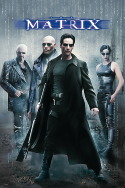
Review of The Matrix (1999) by Gaspar O — 11 Jul 2013
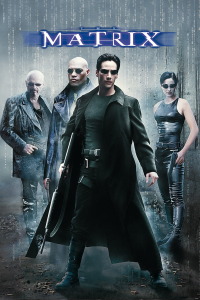
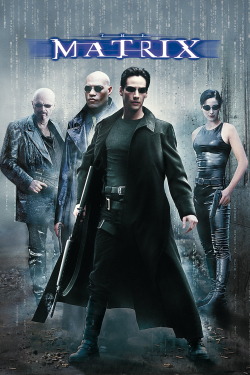
GREG: Periodically Scott and I review a classic movie that we feel embodies the Hero's Journey and is a great viewing experience. Ths week we're looking at The Matrix, the 1999 movie from the Wachowskis that put Bullet Time on the map.
SCOTT: Greg, after rewatching The Matrix this week, I'm struck by how beautifully it was filmed and choreographed. It was truly ahead of its time. And you're right, the hero story is chock full of many classic elements that today's filmmakers can take a page from.
GREG: We start off with a story prologue. This is something I warn my writers against. So often prologues are just a lot of backstory and are homework for the reader. In movies this usually comes in the form of a voice-over explaining where the hero comes from. This is a bad sign - it means that the screenwriter lacked the imagination to trickle the backstory into the body of the script. Happily, we don't see that here.
In The Matrix, the prologue introduces the Special World by starting with Trinity () on a mission. The police are sent up to capture her. But that is a big mistake because she has unusual abilities to fight and defy the laws of physics. She can run faster and jump farther than her counterparts. This is a great peek into where the hero will go and is a contrast to his Ordinary World. But it comes before we first meet our hero and starts with action, drawing us in to the world of the Matrix.
SCOTT: The universe in which The Matrix is set is revealed to us slowly, and as viewers we're immediately drawn to our hero Neo () upon first meeting him. We relate to Neo's good nature and genuine confusion about the nature of reality, and we soon learn from Neo's mentor, Morpheus (), that Neo is The Chosen One who is fated to save the world.
We are witness to an obvious (yet rare in today's movies) reference to Greek and Roman mythology with an oracle or prophecy that sets in motion a great hero story. The Matrix taps into several timeless mythological patterns -- an oracle, a man born and fated to be a hero, and hidden, untapped powers that the hero possesses, is unaware of, and must somehow awaken from within.
GREG: We meet Neo at his desk. He's a computer hacker and goes to a party where he meets Trinity who tells him that she knows what he's been searching for - the truth about the Matrix. She can take him to Morpheus the man who can reveal the truth to him. Neo follows and Morpheus offers him a choice - take a blue pill and stay in his ordinary world, or take the red pill have the truth revealed. Neo takes the red pill and wakes up in a submarine with new friends: Trinity, Morpheus, Tank, Dozer, and others.
Scott, the movie follows the classic mythical Hero's Journey. The hero experiences the "call to adventure" and "crossing the threshold" from the ordinary world into a special world. Neo learns that everything he knows is false. The world he has been living in is a dream and the real world is occupied by AI - Artificial Intelligence. Morpheus believes Neo is The One who can control the Matrix and fight the evil Agent Smith (). But like any good hero, Neo doesn't believe he is the chosen one and will need convincing. It's up to his mentor, Morpheus, to teach him the rules of the special world.
SCOTT: Greg, I'm struck by how the filmmakers didn't miss a beat in creating a character who is destined to be transformed in ways he cannot imagine. The key elements from Joseph Campbell's monomyth of the hero are all in place: as you mentioned, there is the call to adventure, a mentor, a love interest in Trinity, characters who assist Neo, supernatural assistance from the oracle woman, and a compelling villain in Agent Smith.
Interestingly, I got the sense that Morpheus also plays a father figure to Neo. The relationship between Morpheus and Neo is crucially important, as Morpheus believes in Neo when Neo does not, and we are witness to them each being somewhat over-protective toward each other. The film also succeeds because we're never quite sure ourselves, as viewers, whether Neo is the chosen one and how, if at all, he'll transform himself.
GREG: You're absolutely right. They held the revelation of Neo being The One until the very end. It was an effective reveal. We watch Neo go from being completely skeptical to gradually understanding what his limits and powers are in the Matrix. And we grow with him. This is the mark of a great story - the viewer becomes the hero and feels the successes and failures of the hero.
So, everyone in the audience has had the feeling of not belonging and can identify with Neo. And we've all had the experience of starting out weak as children and gradually growing into our adult strengths. It's a great allegory to the coming-of-age story.
SCOTT: Well said, Greg. We recently reviewed a current film, Oblivion, that was just as beautifully filmed as The Matrix but featured a hero character who was essentially an unchanging piece of cardboard. The makers of the Matrix first and foremost cared about their hero story and made the hero's remarkable journey the centerpiece of the screenplay.
The Matrix's terrific hero, coupled with astounding CGI fight scenes that still dazzle to this day, earn the movie 5 Reels and the hero 5 Heroes.
GREG: The Wachowski's forced their actors to train hard and perform a lot of their stunts to give the film as much reality as possible. You will rarely get the kind of realism from a film as you find in The Matrix. It gets 5 Reels for outstanding acting, stunts, choreography, filming and even sound. And we have a classic mythic tale replete with archetypal mentors, helpers, shapeshifters, and shadows. I award 5 Heroes for an uncommon hero's journey.
This review of The Matrix (1999) was written by Gaspar O on 11 Jul 2013.
The Matrix has generally received very positive reviews.
Was this review helpful?