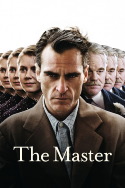
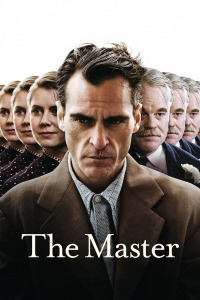
Review of The Master (2012) by Johann_Cat — 03 Mar 2013
This film plays more like a fevered dream than like realist history, so people expecting some sort of conventional narrative may quickly lose patience with this movie. They may also be missing something special.
In addition to being glowing symbols more than they are conventional characters, neither Freddie Quell (Jochain Phoenix) or Lancaster Dodd (Philip Seymour Hoffmann) is especially likable. But the performances suggest emotional and historical truth in ways that are often moving, without pretension or sentimentality.
Freddie Quell is a figure of the American male id, post World War II: violent, sensuous, insatiable. He's driven to drink drafts of American industry to quench his burning: the fuel of torpedoes, the fluids of photography, institutional cleaners, all mixed with the fruits of the earth.
Dodd, "The Master," is a new-model super ego who might tame and direct Quell. Dodd is smug as a baronial magnate, as full of literary pretensions as Tom Sawyer; his resolve is borrowed from his steely wife (Amy Adams).
Hoffman's Dodd, contrary to rumors about the film, is not a charismatic, psychological autocrat, but is wounded, defensive, and dreamy. He lives out a fantasy of priestly insight and command, but few people really believe him; he gets the benefit of many doubts.
As Quell is drawn to Dodd's fantasies of mind over history, Dodd is drawn to Quell's energy and chemical inventiveness. Together they suggest different means of achieving atomic-age versions of the old American goal of obliterating the past and standing alone in a new present.
They also suggest the polar tensions of raw animal desire and magisterial fantasies of triumph present in many American men. Quell's desire to consume, dominate and love the earth (Quell is obsessed with a woman sculpted in sand) meets a rhetoric of platonic self-mastery in Dodd.
The preposterous incongruity of the men and their desires does not result in a drama of control and exploitation, which audiences may expect, but in inchoate attempts at mutual understanding in several scenes that are more humanly intimate and dramatically resonant than most sexual episodes in movies.
The 70mm "real film" photography in this movie is amazing; many of the film's strongest moments, including those with people, are wordless. An irony of the film is that lush and magnificent nature (the Pacific ocean, the Arizona desert, the San Francisco Bay) is often overlooked by Quell and Dodd in their self involutions.
Nature in American writing often becomes a symbol of self; it automatically is for these two. But nature may have the last word, in an ending that is unexpectedly funny and tender. I rate this as one of the best American movies.
This review of The Master (2012) was written by Johann_Cat on 03 Mar 2013.
The Master has generally received very positive reviews.
Was this review helpful?