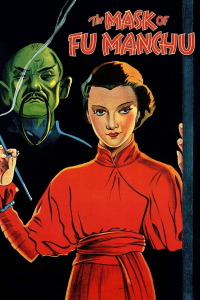
Review of The Mask of Fu Manchu (1932) by George J — 22 Feb 2016
The overtly racist portrayal of the East is only exacerbated by the simplistic characters and lack of character depth. I'm not even sure why this movie was critically acclaimed; all the characters are static and one-dimensional; Fu is the archetype of evil, Fu's daughter is the archetype of female oriental hypersexuality, and the white men are stereotypically masculine, interested in defending justice, your typical saving the world complex.
There's no character development. No one changes due to the events that happen, and there's no nuance to any of the characters-- Fu and his daughter remain alien throughout in their inability to feel any remorse whatsoever, and the white protagonists are superhuman/inhuman in their utter inability to acknowledge anything more than the black-and-white, good v evil, east v west nature of the encounter.
It's significant that Fu is cut down in his moment of triumph-- lifting the sword up, evil victorious-- immortalizing and freezing his character as one of pure evil, with no possibility of regret, remorse, repentance, or salvation.
Salvation is not a possibility extended to the irreligious East in this film, and that is deeply problematic.
This review of The Mask of Fu Manchu (1932) was written by George J on 22 Feb 2016.
The Mask of Fu Manchu has generally received mixed reviews.
Was this review helpful?