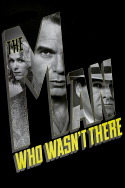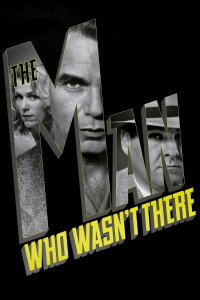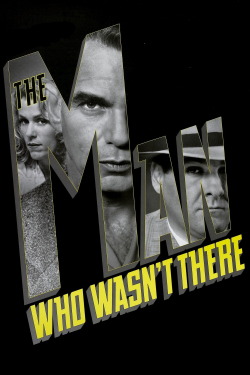
Review of The Man Who Wasn't There (2001) by Makkom M — 30 Aug 2009
I am hesitant to say that the Coens pulled a Tarantino by making a film essentially as an homage to a beloved and influential film genre, but that would trivialize the impact of The Man Who Wasn't There. It is one of the most entrancingly atmospheric films I can remember, and it's merely about a suburban barber who takes a few liberties in an effort for money to invest in dry cleaning, and life doesn't seem to get much better. We follow him at his pace through this abstruse composite of film noir of the 1940s and '50s.
Film noir seldom concerns gallants or exemplars, but about people of minuscule consequence, who are seduced out of their humble patterns by reveries of fortunes or lusty intrigue. Their transgression is gall: These imperceptible mites dare to think of themselves as affluent or satisfied. As the title hints, The Man Who Wasn't There pushes this one step further, into the dimension of a man who only just breathes apart from his transgressions. Billy Bob Thornton has no problem with the low, laconic voice and the dazed look with a slow-burning cigarette from which he smokes none but two or three hits. And he doesn't even do harm how, or to whom, or when the world gathers he does. This is a crime drama on such a realistic, everyday level, an intimate noir involving all the quiet mundanities of 1949.
Everyone looks so antiquated and true to the embodiments of the era, from Frances McDormand's bored wife with a drinking problem to James Gandolfini's loud, boisterous boss, who constantly brags about his combat adventures in the Pacific Theatre during World War II where he claims to have served as a crack infantry trooper, from Michael Badalucco's motormouth sidekick of sorts to Tony Shalhoub's expensive D.A. who arrives and takes up residence in the best and most expensive hotel in town, from Jon Polito's almost always persuasive barbershop customer and Richard Jenkins' father to Scarlett Johansson, who is overwhelmingly virginal and magnetic as a 17-year-old piano student.
Roger Deakins' entrancing cinematography is simple and classical. Most shots are at eye level, with normal lensing, standard lighting and a long depth of field. The cinematography, combined with the steady, detailed niceties of its period props and sets, could make even a painstaking observer feel that the film was made 50 years ago. When Ed appears, he is pretty much invariably seen smoking an unfiltered Chesterfield, another fine point authentic to 1949. And the soundtrack's weaving together of Beethoven piano sonatas makes these images mesmerizing and ethereal.
Joel and Ethan Coen are classicists before all else. This neo-noir, almost so genuinely antiquated that one could legitimately refer to it formally without the "neo" prefix, is so clear-cut and sensitive in its style, so affectionate, so deeply becoming, that if you can endure that rhythm, the film is like a sensual refreshment. Yes, it might of course have been shorter. But then it would not have been this film, or automatically a superior one: It's such a clear idea to make a black and white film in which the black and white doubles as both spectacle and mundanity. Looking at the images seems to almost change them.
This review of The Man Who Wasn't There (2001) was written by Makkom M on 30 Aug 2009.
The Man Who Wasn't There has generally received very positive reviews.
Was this review helpful?