Review of The Madness of King George (1994) by Sarah L — 23 Jun 2011
Every Tyrant Is Also a Man.
You must remember that it is notoriously difficult to diagnose historical figures, often because the people collecting information didn't have the same diagnostic tools we use today and weren't looking for the same thing anyway. Therefore, when you are told by, oh, IMDB that this particular historical figure is now "known" to have suffered from porphyria, you must remember that the word is really "believed." And unfortunately, the Wikipedia article on the disease, both in the intermittent form which is relevant here and the overarching term, is one of those written by experts for experts. (The Simple English version is so oversimplified as to be equally useless.) However, it does reflect the historical consensus, and the fact that one of the king's ancestors was diagnosed with the disease in the twentieth century lends weight to the belief. However, it is still just a belief for all that.
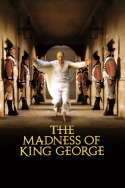
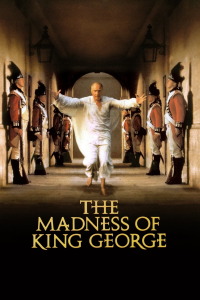
George III (Nigel Hawthorne) is King of England. His queen is Charlotte (Helen Mirren); the eldest of their eleven children is also George (Rupert Everett), but Prince of Wales. George III has ruled England for nearly thirty years, and it is becoming apparent that the king is no mere harmless eccentric. He may have been before, but what he is now is a raving loon. Part of the problem, but only part of it, seems to be that he has lost the power of internal monologue. What's more, what he is thinking now is far beyond what he had thought before. And, worst of all, he is in the care of eighteenth century medicine, which hasn't the slightest idea what's wrong with him. He is, of course, bled and purged and so forth, and eventually, he is given over to the care of Dr. Willis (Ian Holm), who has gotten pretty good results in caring for the insane in ways which don't actually hurt them much at all. Meanwhile, various forces want the Prince of Wales on the throne, and not just because his father is nuts.
The Prince of Wales says repeatedly that he doesn't have anything to do. I don't know how true that is historically, but it's certainly true that, to a varying degree, George III reigned longer than any English monarch before him. I'll admit that this is not a period of British history I know much about, but it strikes me that it might have been a good idea for the royals to actually put in effort over something. George III says smugly that he is called Farmer George, which wasn't necessarily a compliment to the people who called him that, and he is possibly even more smug about what he knows about his kingdom. Even in the depths of his madness, he is capable of commenting on the superiority of Lincolnshire sheep. It strikes me that if the Prince of Wales had been sent about to learn his country, he might not have been such an intensely disliked git. Indeed, the worst error in the Hugh Laurie [i]Black Adder[/i] portrayal so far as I know is that he's too thin, and Rupert Everett manages to dodge that as best he can.
I am infuriated that this movie lost both Best Actor and Best Adapted Screenplay to [i]Forrest Gump[/i]. This is in part because I really hated [i]Forrest Gump[/i], but it's also because of the relative merits on a less emotional level of the two films. We start with actor; Nigel Hawthorne played a much more complex role than Tom Hanks. George III is more than a raving loon, after all. There are several different characters which must be captured here, from As Normal As He Ever Gets George III to George III Raving and Going "Wibble." He must go from passion to fury toward his wife. He must show disdain toward his son which grows into disgust. And through it all are those vicious, cutting lines one toward the other, the fierceness of British politics. People think politics have gotten mean, but in many ways, this is the tamest they've ever been. This is, after all, not just the story of one man losing his mind. It is the story of how it changes a kingdom.
The story, as I'm sure you've heard, is that the title of the play [i]The Madness of George III[/i] was changed for American release on the grounds that we'd all think, "Well, I haven't see the first two, so I'll give this a miss." It is generally acknowledged that it's more along the lines of Americans don't necessarily think of kings first. It is true, of course, but only a little less insulting. On the other hand, the events of this movie take place after the Thirteen Colonies aren't anymore. We as Americans don't have to know what the Regency is. I took, under the last Presidential administration, to referring to "Bush the Elder" and "Bush the Younger." Once I explained that the Younger isn't technically a Junior, people got it--but they didn't get that it was a reference to Pitt the Elder and Pitt the Younger (Julian Wadham). Because we don't know that kind of thing in this country. I do not advise this movie as a way to learn unless you're already of a fairly serious nature. But I do wish we'd learn.
This review of The Madness of King George (1994) was written by Sarah L on 23 Jun 2011.
The Madness of King George has generally received very positive reviews.
Was this review helpful?