Review of The Lost Weekend (1945) by Paul Z — 21 Jul 2008
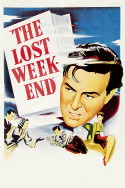
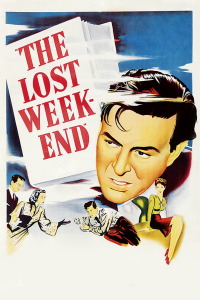
The Lost Weekend is a film about an alcoholic writer who goes on a four-day drinking binge, and it's dark, creepy even, the way hardly any old films ever are. It's grungy, edgy, emotional, and inherently violent. The music is very off-putting at first, using fluctuating female high tones as if it were a film about UFOs, but it works to the advantage of the movie's feeling.
I've hardly seen a film for a long time that has had so many highlight scenes, standing out to be remembered specifically. There's the scene where Ray Milland, who delves into the dark, pressure-filled depths of the angry, powerfully self-destructive alcoholic character and projects a haunting performance, is sitting in a performance of La Traviata, seeming somehow to be cramped without really being, a mysteriously abstract claustrophobic feeling, and is hardly able to contain himself during the first act when they perform "Libiamo," and everyone on stage has a glass of wine. Another scene has him in a bar, drunker than I'm sure I've ever been, boosting ten dollars from the purse from the lady sitting next to him while she's busy giggling with her boyfriend. What happens next is something we've only imagined in our heads as something we'd ever see ourselves do. The key scene in the film takes place in the ward, with a sadistic little man named Bim as the nurse, played very effectively by Frank Faylen, where we learn in a scene more frightening than anything I've seen in a movie before the 1960s, brilliantly lacking any lighting, that one would much rather be an alcoholic than be in that place.
I think each of these scenes stands out so much and glues to the memory because each scene is written and directed as effectively as it could ever be. No scene is a token scene and every scene is treated with hard concentration and interest by director Billy Wilder.
Milland carries the entire cast. The fact that he's English helps his performance. Look at the man in The Lost Weekend and tell me you would ever guess in a million years that he's English. However, Jane Wyman doesn't even come close to matching him. She doesn't seem comfortable on screen at all. For instance, in one scene, her gestures are either very visibly planned or very indecisive. Doris Dowling, who plays the woman in the bar who asks Milland for a date, gives a very unusual performance for a film from the 1940s in that she has a latently manic physical side that one doesn't often see in films from that time. And Phillip Terry is very likable as Milland's very grounded brother.
Billy Wilder is perhaps the greatest director who spanned the decades from the '40s to the '60s, because his films are consistent with this one, a very diverting, uncompromising telling of the darkness and lack of self-control existent in the human condition.
This review of The Lost Weekend (1945) was written by Paul Z on 21 Jul 2008.
The Lost Weekend has generally received very positive reviews.
Was this review helpful?