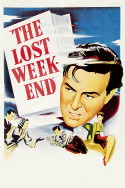
Review of The Lost Weekend (1945) by Tim R — 20 Mar 2012
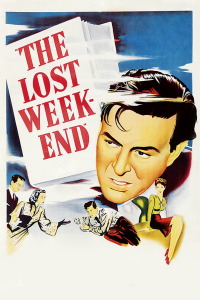
"The Lost Weekend" is an extraordinary film that thoroughly explores the overwhelming consequences of alcoholism. Its essence is the deep, cynical world of the alcoholic victim; a world characterized by his weakness, misfortune, horror, and his psychological decline as he steadily sinks into a dark hole of tragedy.
Ray Milland stars as Don Birnam, a talented, but struggling writer whose only real source of companionship is the bottle. Don's brother, Wick (Phillip Terry), and girlfriend, Helen (Jane Wyman), have been incredibly patient with him as they have continuously tried to help him overcome his obsession. Don is about to spend a weekend in the country with Wick, who thinks that Don has finally kicked his addiction. That is, until Wick finds a bottle hanging from the window of the apartment.
From then on, it's all uphill as Don repeatedly gives in to his temptations and selfishness. Wick can only stand so much of it, but Helen refuses to give up on Don. A local bartender, Ned (Howard Da Silva), also tries to encourage Don to lay off the booze, but Ned, too, is tolerant as he pours shot after shot and listens to Don's rambling.
Don's addiction stems from the fact that he never made anything for himself as a writer. He does have a promising idea of transferring his experiences to paper and creating a novel, but he can't seem to proceed past the title. After awhile, his drinking worsens and so does his health.
Milland's performance is sensational. He boldly projects feelings of devastation, desperation, and hostility through his character. Despite the disturbing subject matter and the fact that the movie spotlights alcoholism and its effects for one hundred minutes, it's amazing how Milland never gets carried away. Just watch the scene where he hallucinates. It impresses me how he screams so vigorously without being ridiculously overwrought. A scene like this is a true test of an actor's ability to be convincing to the audience. Any actor can scream, but can an actor scream and genuinely express the excruciating inner pain and suffering that elicit the screaming? Milland sure as hell can.
Beneath it all, Milland occasionally shows some humor. When he's in a good mood, (which isn't often here) he can be amusingly sarcastic. And sometimes, when he throws a fit, he comes across more like a child ("I want my coat!").
There's a solid supporting cast. Phillip Terry and Howard Da Silva give their characters a nice touch of compassion and patience (as well as impatience) when it comes to dealing with Don. In a story like this, it's nice to feel hope for the victim. Jane Wyman successfully provides that aspect to the film especially when Milland's character is at wits end. Beneath her frustration, she shows concern and determination. She may be the only thing that prevents Don from meeting his demise.
Alcohol could almost be considered an actual character in this film because it makes its presence known in nearly every scene. Sure, beverages are present in many scenes, but in the scenes without them, alcohol is present in an emotional sense. It brings out the worst in Don in more ways than one: He searches aggressively for alcohol in the apartment; he gets irritated when he doesn't get his way; he hopelessly staggers across town; and he hallucinates. (I could name more behaviors, but I think you get the point.) It's as if the liquor goes from being a pleasurable drink to an evil presence with strong, influential tendencies that easily exploit Don's weakness. This isn't just a story about a man obsessed with alcohol. The alcohol is obsessed with him too.
"The Lost Weekend" was directed by Billy Wilder, who directed many classic films such as "Double Indemnity," "Sunset Boulevard," "Ace in the Hole," and "Some Like It Hot" (just to name a few of his credits). The screenplay for "The Lost Weekend" was based on the novel by Charles R. Jackson and written by Wilder and Charles Brackett. Together, they have made the kind of film that can grip an audience with something other than an involving plot. They have a way of bringing a common addiction to film and creating a cinematic work that is astounding in its verisimilitude and the sad yearning it reveals.
This review of The Lost Weekend (1945) was written by Tim R on 20 Mar 2012.
The Lost Weekend has generally received very positive reviews.
Was this review helpful?