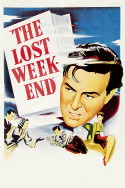
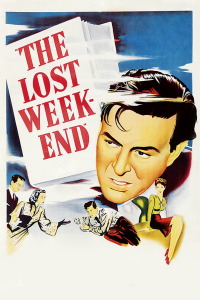
Review of The Lost Weekend (1945) by Brian H — 11 Feb 2014
The Lost Weekend is a true masterpiece; undoubtedly the best movie of 1945. Ray Milland, as failed author Don Birnam, gives one of the most powerful and sympathetic portrayals of alcoholism ever to grace the screen. And what an alcoholic he plays!
He's the kind of drunk who can't stand a single minute without booze. For him, waiting till nine for the bars to open is torture. He downs shot after shot of whiskey until he's broke and the bartender is begging him to stop. There's not a bar in town that will give him credit .At home, he can down an entire bottle in one night. And he doesn't care what he drinks either.
"Two bottles of rye", he tells the clerk at the liquor store.
"What brand?".
"The cheapest, you know that.".
He drinks with the sole intention of getting drunk, which he is nearly half the time. He's smart, ambitious and witty when he's sober, but that never lasts long. He's never finished a novel or held a steady job. For the last five years, he's lived on the charity of his brother Wick (Phillip Terry). And in his moments of lucidity, he understands all of this.
On of the film's best scenes is the flashback to when his girlfriend Helen first discovers his condition. He couldn't stand to meet her parents because he knew that his past would come to light. Now he lays it all out for her in no uncertain detail. He pretty well sums things up when he tells her "I'm nothing, I've never been anything, and I'll never be anything.".
That was three years ago, but she's still with him. His advice to her is dead on- If she were smart, she'd run away as fast as she can. Yet she refuses to give up on him.
But now, left alone for the weekend after he misses a train to the family farm, he hits rock bottom like never before. With no-one to stop him, he drinks like there's no tomorrow, both at home and at his favorite bar. After recounting his past to his bartender Nat, he decides he's finally going to do it. He's going to start- and finish- a novel.
But he can't even write the first line before he's desperate for a drink. Still completely wasted, he sets out do the unthinkable: hawk his typewriter for money to buy more booze. But every pawn shop he comes to is closed. Before his odyssey is over, he'll have spent a day and part of a night in the hospital drunk ward and pulled off a daring liquor store robbery without a weapon. And once he's finally home, that's when the hallucinations start, just like the nice man at the hospital told him they would.
And from there it gets worse. He finally reaches the point where he doesn't want a drink anymore. He just wants it all to end- forever. In the movie's tensest scene, Helen tries to talk him out of it any way she can, even encouraging him to have another drink. At this point, I didn't see any way that this could end in anything but tragedy. But it's here that the director, Billy Wilder, did the impossible. He not only ended the movie on an uplifting note, he actually did it without making me feel cheated. That is why I give The Lost Weekend four stars.
This review of The Lost Weekend (1945) was written by Brian H on 11 Feb 2014.
The Lost Weekend has generally received very positive reviews.
Was this review helpful?