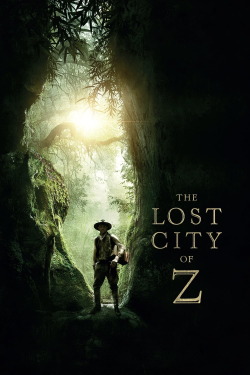
Review of The Lost City of Z (2017) by Glenn G — 22 Apr 2017
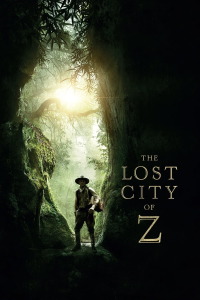
BURDEN OF HIS DREAMS - My Review of THE LOST CITY OF Z (4 Stars).
Writer/Director James Gray (THE IMMIGRANT, TWO LOVERS) has been slowly and steadily building an astounding career that would be similar to that of Francis Ford Coppola if people cared about movies now the way they did back in the 1970s. Instead, his films remain little seen despite garnering much respect. I doubt things will change with his latest, THE LOST CITY OF Z, based on the biography by David Grann, but he has made a stunning, thoughtful adventure epic nonetheless.
Charlie Hunnam, in a role originally marked for Brad Pitt and then Benedict Cumberbatch, plays Percy Fawcett, an undecorated Major in the turn-of-the-century Royal Army, who has difficulty rising in the ranks due to his father's reputation. One character casually remarks, "He's been rather unfortunate in his choice of ancestors," which is a particularly well-written line that sets the stage early for the bigotry, misogyny and class divisions this film explores so well. Opportunity knocks when the Royal Geographical Society (RGS) plucks Fawcett to lead a map-making expedition along the disputed border between Brazil and Bolivia. He leaves behind his wife Nina (a terrific Sienna Miller) and their newborn son for years and is joined by a crew that includes an almost unrecognizable and wonderfully understated Robert Pattinson as Henry Costin. Their trip through the Amazon proves harrowing, but when they stumble upon some artifacts and learn of a Lost City, Fawcett gets a fire in his belly. If he can prove to the world that the inhabitants of the Amazon are wise artists instead of the stereotypical savages his fellow countrymen would have the world believe, then he could change the world.
As depicted in the film, when he returned from his first tour, Fawcett became a crusader against his society's ills. In a thunderous sequence, he takes on the entire RGS with the news of his findings. Their white privilege won't allow them to believe him, but he insists on returning to find that elusive city. In addition to the jungle conditions, many other obstacles get in his way. Chief among them is World War I, depicted briefly but effectively. He also battled his wife and children, who resented his absence and his patriarchal insistence that Nina stay home instead of joining him on his adventures. They have an incredible showdown when Nina makes it clear that his adventurous life has come with a cost.
It has been said that Fawcett inspired the Indiana Jones character, but those expecting a RAIDERS OF THE LOST ARK saga will be disappointed. This stately, patient, glorious film feels more like the love child of APOCALYPSE NOW, EMBRACE OF THE SERPENT, and a little FITZCARRALDO thrown in for good measure. Yes, there are some exciting action set pieces, but Gray seems more interested in Fawcett's internal journey than in crafting whiz-bang action. He even welcomes some surreal imagery, courtesy of the phenomenal cinematographer, Darius Khondji, as this mostly traditional story unfolds and it's what elevates the somewhat standard material to something that approaches art.
Hunnam gives a confident, commanding performance, and all I kept thinking was how far he's come as an actor. Even from the first time I saw him in the original QUEER AS FOLK, he exuded star quality, but this film truly puts him on Brad Pitt's level. In fact, it's a good thing Pitt dropped out of the project yet retained his title as Producer. We see Fawcett for a 20 year period of time, from his 30s to his 50s, and it's easier and more credible to age up and actor like Hunnam than it is to age down Pitt. In a film filled with wonderful performances, Tom Holland (THE IMPOSSIBLE, SPIDER-MAN) also stands out as Fawcett's resentful son Jack. Since the times wouldn't allow for Nina's feminist aspirations to bear fruit, the dreams get transferred to Jack, and I found his point of view tremendously moving despite very limited screen time.
For many, this film will feel too episodic, too much like a rambling novel, and at 140 minutes, I can understand that. For me, however, I loved the traditional three-act structure and the multiple returns to England. The stark contrasts between the two civilizations kept reminding me of what's at stake. Fawcett, to some, was an obsessive with blinders on, but in THE LOST CITY OF Z, he fought against social tyranny and an ordinary life. He risked the great unknown so that we could open our minds a little, and that is worth celebrating with this powerful, vivid film.
This review of The Lost City of Z (2017) was written by Glenn G on 22 Apr 2017.
The Lost City of Z has generally received positive reviews.
Was this review helpful?