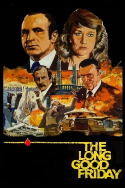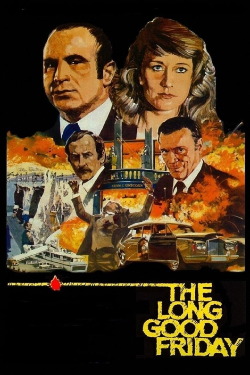
Review of The Long Good Friday (1980) by Jake R — 27 Jul 2009
After 'Get Carter' heralded a distinctive grittiness into mainstream entertainment with its bleak detailing of gangster life, the British underworld was made the battleground of choice for the classic cop shows of the '70s, none more famously than in 'The Sweeney'. However, it's one thing to make a movie about gangsters and to simply fill it with sleaze and violence; 'The Long Good Friday' returns to 'Get Carter's tradition of combining kills with class and is made of much more volatile stuff.
Like the aformentioned classic, 'Friday' is about looking at life from the gangster's point of view. No longer in the grip of an economic and social depression, Harld Shand is an entrepenuer brimming with Thatcherite enthusiasm to turn his organisation into a legitimate form of business. With that comes the tacky trappings that would soon play as embarrassing artifacts from the hairspray '80s, though for now they mostly take the form of the delectable Helen Mirren. But in this culture of well-dressed villainy comes a much darker element.
What saves the story from feeling like it could easily belong on television is the way the IRA are shown. This was a unique feature; at no time before or since would the same opinion surface of this violent organisation. After the bloodbaths during the '70s they had proven to be the most powerful foe the British Army had ever fought against, made all the more louder in 1979, the year of Mountbatten's assassination and the Warrenpoint massacre. As such, in 'The Long Good Friday' the IRA are seen from a very civilian perspective: anonymous, everywhere, ruthless and uncompromisingly effective. Were a film or tv drama made about them now they would be subjected to endless psychoanalysis, but in 1979 they were a deadly force that struck with all the predictability of a great white shark.
This determination to show the real bloody capabilities of the IRA matches the film's overall mood of blackened menace with a sense of credible evil. Harold may be a sympathetic figure, but he's a typically British double-edged sword. He adopts that ignorantly affectionate racism, that obsessive mourning for the 'glories' of Britain's past and the apparent potential for Britain to be a glamorous playboy nation on par with 'the Yanks' that all upper-class British people adopt. But he's also true to his roots too, and he is only one contributor of the film's streak of humour, dispensing priceless witticisms with a natural inflection Guy Ritchie could only dream of. And as well as the hilariously black humour that rears at uncomfortably opportune moments there's then sight of a sumptuous Helen Mirren to inject a softer style into this grimy bloke's picture. Mirren relaxes her poshness to make way for a genuine care and affection for her husband, and more than once her observations and suggestions play as crucial nuances to the plot as a whole. Though she's given an amount of screen time that feels a little brief she still makes her every scene count, but all in all this is Hoskins' picture.
From his famous entrance swaggering through Heathrow to the equally famous end scene of Shand visibly thinking a million and one terrible things at once, Hoskins throws himself into the role with full-blooded vigour. With his cheeky cockney grin and surprising lightness he makes for a charismatic crime boss, if tinged with an inescapable sliver of Del Boy naffness. But his brutal bottling of a close friend shows just how Harold managed to get where he is and Hoskins' barrel-chested physicality plays up to frightening effect. It's easily one of the best performances in British cinema and propels the film into real classic territory.
The other performances are brilliantly complimentary, and it's fun to spot an array of familiar faces from British screens both past and present. MacKenzie's assured direction means the pace is even but elusive, keeping the big details of the plot well into the final act, which keeps up a sweaty tension as the IRA tear through Shand's empire. And alongside all this comes Francis Monkman's towering score, as explosive and direct as any eruption of violence, drenched in pulsing, crunching synth beats with the added glamour of a sax, giving Harold Shand the coolest personal theme tune this side of Shaft.
If when you watch any modern British gangster movie or television series, with their pointlessly glamourised drugs and violence, endless swearing, thoroughly unlikeable characters and plots about as believable and tension- free as an off day of Eastenders, remember that there are real heavyweight masterpieces of crime on celluloid; 'The Long Good Friday' is one and the best.
This review of The Long Good Friday (1980) was written by Jake R on 27 Jul 2009.
The Long Good Friday has generally received very positive reviews.
Was this review helpful?