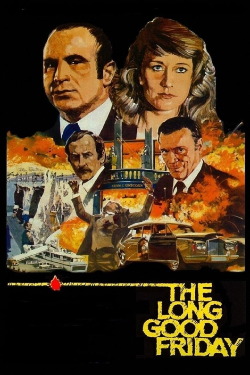
Review of The Long Good Friday (1980) by Mark B — 23 Dec 2010
Why Controlling the City Through Crime Never Works.
IMDB is eager to tell me that Pierce Brosnan was supposed to be completely silent as "1st Irishman" in this. It then tells me that he ad-libbed a single line. What it does not tell me is what that line is. Nobody will tell me what that line is. Having found this out, I am now skimming the only two scenes he's in, and if he says anything other than "Hi," I'm not finding it. Which I have to tell you does not, for me, much count as a line. It's more just sort of a noise on his part. A near-silent acknowledgment that another person is coming up to him with illicit intentions. It almost seems a simple act of courtesy. Acknowledge your victim before the murder. After all, this isn't personal. It's not as though he has to give some kind of lengthy speech. It's why the role was intended to be silent in the first place.
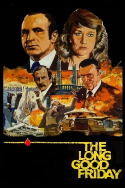
Harold Shand (Bob Hoskins) runs himself quite a little criminal empire in London. Oh, he's got a couple of legitimate businesses, but they're fronts and everyone knows it. Probably including the police. He is in the middle of setting up a transatlantic deal with some Americans when various of his businesses start blowing up. Which is decidedly bad for business, you know. He goes with the cover story that it's a couple of gas explosions which just happen to get him personally, not anyone else in the entire city, but no one is much fooled. Thing is, though, he can't figure out why anyone is going after him just now. He doesn't much figure he's got any enemies with the wherewithal to set bombs. And then he finds out that the bombs hold distinct similarities to ones set by the IRA, beyond chance, and so he must figure out what the IRA has against him.
Hence Irishmen, of course. We get a very nice shot of young Pierce in a very small swimsuit, which is extremely appealing to me. (Matched for the guys by a lot of Helen Mirren cleavage, I suppose. She was in her mid-thirties at the time but still awfully hot.) It was the man from County Meath's first film role. Which makes several later [i]Remington Steele[/i] references all the more amusing. If they ever mention the movie on the show, I don't remember it and IMDB doesn't list it, but the fact is, "Mr. Steele" plays a character who could, if we knew anything about 1st Irishman, and if 1st Irishman weren't IRA, be the fate of the character here. Certainly he could have worked for Harry Shand. Though I don't think he would have been happy about it, given Harry's apparent attitude toward the Irish.
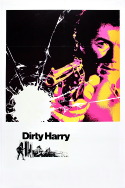
It seems popular to have movies about men who just want to be left alone to run their criminal empires. It's said that yesterday's movie was influenced by this one, and I guess I can see it. Certainly there is a character named Harry in both. A nice pub, too. I guess it's even arguable that the Harrys are both interested in the same thing. It's not an argument I would make, however. The one from this movie wouldn't play silly games with stupid boys in order to get much of anything. It wouldn't be worth his time and effort. If he had a grudge against someone, he wouldn't go through some byzantine scheme. He'd have them killed. And that would be about the only reason to have such a passion for any specific pub. There are pubs all over London in nice locations and with historic feel. Why go through all that effort unless you're really trying to humiliate someone? And there are so many easier ways of humiliating people.
There are more crime thrillers to come, though not for the rest of the week. "Long" is such a good word to use in the title of a crime thriller, after all. I will say, though, that I don't think this is really a gangster film as Americans believe it. Yes, these men can be violent and ruthless when necessary, but I think that would feel too difficult and pointless to them. There are so many simpler and more efficient ways to carve out a criminal empire. This is the reason the characters in these two movies feel so different, I think. Harry wants to take the simplest course. He doesn't seem much of a point not to, and of course he's right. If you keep things simple, they're less likely to go wrong for you. But of course, if things don't go wrong for these men, we have no plot left.
This review of The Long Good Friday (1980) was written by Mark B on 23 Dec 2010.
The Long Good Friday has generally received very positive reviews.
Was this review helpful?