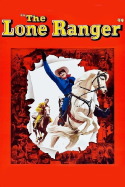
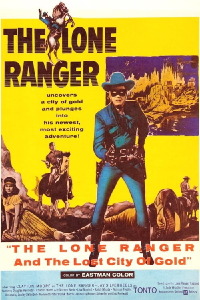
Review of The Lone Ranger and the Lost City of Gold (1958) by Van R — 29 Aug 2009
Clayton Moore made his last official appearance on screen as the Masked Man in director Lesley Selanderâ??s epic adventure THE LONE RANGER AND THE LOST CITY OF GOLD, co-starring Jay Silverheels as his faithful Indian scout Tonto. Selander was an old hand at helming westerns during his 40 years in films and television with over a 100 westerns to his directorial credit. This fast-paced horse opera embraced a revisionist perspective in its depiction of Native Americans that had been gradually gaining acceptance since 1950 in Hollywood oaters after director Delmar Daves blazed the trail with the James Stewart western BROKEN ARROW. Racial intolerance figures as the primary theme in the Robert Schaefer and Eric Freiwald screenplay. Having written 13 episodes of THE LONE RANGER television series, Schaefer and Freiwald each were thoroughly familiar with the formula, but they raised the stakes for this theatrical outing. Our vigilante heroes ride to the rescue of Indians who are being murdered by hooded white hombres for no apparent reason. The mystery about the identities of these assassins and the reason behind their homicidal behavior is revealed fairly early so that you donâ??t have to guess what is happening.
Despite its concise 83-minute running time, THE LONE RANGER AND THE LOST CITY OF GOLD lacks neither excitement nor surprises. Selander keeps the action moving ahead at a full gallop. The dialogue is largely expository rather than memorable as Schaefer and Freiwald push the plot ahead more often than spring surprises, but there is one major surprise that ties in with the good Indian theme. There is also a scene where the Lone Ranger pushes his own credo about justice available for everybody under the law at a time when Supreme Court Chief Justice Earl Warren had embarked on the high courtâ??s landmark decisions that recognized and mitigated against the conditions surrounding racial segregation, civil rights, separation of church and state, and police arrest procedure in the United States. One thing that differentiates THE LONE RANGER AND THE LOST CITY OF GOLD from its predecessor is its epic scale with flashbacks to the age of the Spanish conquistadors with a slight bit of science fiction involved in the form of a destructive meteor. Generally, Lone Ranger stories confined themselves to the 19th century without dragging in European history. No, the Lone Ranger wasnâ??t the first movie to deal with Spanish conquistadors. Robert D. Webbâ??s THE SEVEN CITIES OF GOLD (1955) concerned the Spanish searching the southwest for the eponymous places, but Selanderâ??s western beat Gordon Douglasâ?? GOLD OF THE SEVEN SAINTS (1961) to the screen.
This review of The Lone Ranger and the Lost City of Gold (1958) was written by Van R on 29 Aug 2009.
The Lone Ranger and the Lost City of Gold has generally received positive reviews.
Was this review helpful?