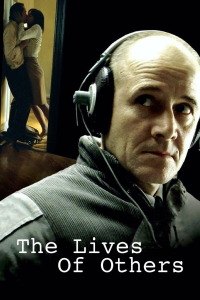
Review of The Lives of Others (2006) by Tim M — 11 Mar 2010
I had to write an analysis of this for a class so here it is (spoilers may be present - read at own discretion):
The Lives of Others follows two characters in West Germany during the eighties. The main character is a state security officer, or Stasi, named Captain Gerd Weisler while the other is the German writer Georg Dreyman who Weisler is told to spy on. The film follows the two devoted GDR citizens as they affect each otherâ??s lives and realize, as A.O. Scott said, that â??the only way Weisler and Georg can express their loyalty is by committing treason.â?? There could be several themes within the movie. The theme of faithfulness to what you believe even if it goes against what the people in charge who say they believe the same thing tell you is a large one. There is also the theme that not everyone is who they appear to be as seen in the character of Weisler who at first appears to be cold, heartless, and dedicated to his work but then we see that he too has emotions, concerns, and the desire to help others. Weisler seems like the bad guy at first despite being the protagonist but by the end we like him and appreciate all he has done and realize that he truly is a good man. Another theme is that of the good man seen in both Weisler and Dreyman. The two characters have a lot brought upon themselves and life isnâ??t the best for them but they continue on defying the bad and proving themselves to be good men. The Bible says that a good name is rather to be chosen than great riches and that could very well be the tagline of the film.
The thing that struck me most about the film was that the person I thought was the bad guy turned into the guy I was hoping would help the author and do the right thing. I believe it was a very powerful movie showing that you never can know a person until you spend time with them and actually get to know them through seeing them in their element. It was also powerful in that it shows that sometimes doing the right thing can cost you a lot but that it will not always go unnoticed or unrewarded.
The sounds within the film definitely enhanced the experience. The sounds of the typewriters, the cars, the silences, the music all worked together in a very real and relatable way to where it didnâ??t feel as though we were hearing sounds or music but experiencing it within real life. The sounds were subtle but appropriate to give the mood and sense of our surroundings without taking away from the events we are watching. The cinematography captured the mood well also, such as shots of what the characters are seeing to help clue us in. I especially enjoyed the shot where the writer notices the red ink he gets on the paper he is writing and how it is coupled with the later shot of him reading the Stasiâ??s reports and finding a red ink print on the last page showing that Weisler took and hid the typewriter. The suspenseful parts were very good in that we saw what the Stasi were searching through and looking at and as each knew item came up â?? a book, a couch pillow, a bed â?? we kept thinking that the floorboard would be next. The close ups on peoples faces also greatly enhanced the viewing experience as we could see up close and personal their emotions and thoughts and feel as if we were momentarily inside their head seeing them trying to think of what next. The actors were picked perfectly and both Weisler and Dreyman were played by men who fit the parts well and who were both likable for the audience to want to cheer for. The production design likewise ads to the film immensely. We see the gray, drab, seemingly cold and lonely environment of the GDR and then the warm, colorful, cozy environment of Dreyman and the way they exist in stark contrast to each other. We see the GDR as a lonely and colorless world because we understand that the Stasi monitor everything and that there is really no freedom or self-living in this world. Dreymanâ??s apartment is colorful and cozy, full of books, to show that he lives his life and that it is good and untampered with and that life exists within it.
This film says a lot about art since it deals with a writer and performer characters in the film. The Stasi, in doing there job, quench art and freedom of expression, (which is art), by spying and controlling all that goes on. We see an actress who has to chose between acting and being cast aside into nothing and a writer who wants to write about something outside of whatâ??s aloud but would be a traitor to do so. These decisions determine their lives and only the intervention of the changing Weisler is able to prevent the â??safeâ?? life of the actress and the potentially ruined life of the writer. Art is very instrumental in culture in that it can sway the thoughts of people and counter what the government is saying (especially since a lot of people donâ??t trust the government anyway). The Stasi see art as the biggest threat â?? especially writing â?? since it can spread bad word outside of the GDR and spread dissention within.
These thoughts of art and prevention tie in directly with thoughts on ethics and oppression. When you hinder what people can do, spy on them without their knowing, and determine what happens do them you are breaking every ethical code there is. Communism says society should work together in unison yet sine they have to control the people so severely it is not peace but oppression. I have been to Romania on a mission trip and have heard first hand from people who lived during the communist time that they would never go back to that living because it was so restricted and oppressive. People cannot live in peace and prosperity when there is someone controlling what they do and capable of changing their lives completely.
The film does show that people can change and that sometimes the right thing to do is not also the legally allowed thing to do. A good name is rather to be chosen than great riches and both the characters end up deciding to be good men and do what they see as right even though it goes against what is allowed. Jesus offers freedom to the oppressed which often means that they will have to go against the norm or allowed to follow Him and that they could suffer for it but that they will be better off with themselves and life for doing it. Likewise this film shows the same thing when Weisler and Dreyman choose to leave the oppressive order to be free and be able to live as good men. A good name is better to be chosen than great riches and we can see this when we look into the lives of others.
This review of The Lives of Others (2006) was written by Tim M on 11 Mar 2010.
The Lives of Others has generally received very positive reviews.
Was this review helpful?