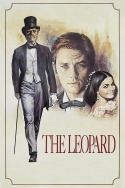
Review of The Leopard (1963) by S. G — 08 Dec 2004
[size=3][font=Times New Roman][color=darkorange][font=Arial][i]The Dark Crystal[/i] (Jim Henson/Frank Oz, 1982)[/font] [/color][/font][/size].
[size=3][font=Times New Roman][color=darkorange]At the screening of [i]The Dark Crystal[/i] I attended a couple of weeks ago, Jim Henson?s daughter Cheryl was there to talk about the process of the film?s creation, along with Robbie Barnett, a body puppeteer who played several of the creatures in the film. She emphasized that for Henson, [i]The Dark Crystal[/i] was largely about the creation of a completely new and utterly different place; a broad and sweeping vision of a fantastic world populated by dying races, yet teeming with with life (even the rocks can get up and stroll around). [/color][/font][/size].
[font=Times New Roman][size=3][color=darkorange] [/color][/size][/font].
[font=Times New Roman][size=3][color=darkorange]And, in that respect at least, he succeeds. The world of [i]The Dark Crystal[/i] is indeed impressive; the pure delight with which Henson took in creating it down to the smallest details permeates the screen. The home of the Gelfling Kira is alive with flora, fauna, and, yeah, minerals. The castle of the Skeksis is creepy and forbidding. They really do look like places, not sets. Henson poured himself into the film, and it shows (according to Cheryl Henson, her father began working on it in 1977).[/color][/size][/font].
[font=Times New Roman][size=3][color=darkorange] [/color][/size][/font].
[font=Times New Roman][size=3][color=darkorange]Unfortunately, and it pains me to say this because of the respect I have for Henson, the result is a beautiful ballroom with no dancers. The story is slight and Fantasy 101: Two races, the Skeksis and Mystics, split apart by the shattering of the Dark Crystal 1,000 years before, have reached a tipping point: either the crystal will be restored and life will return to the planet, or it will remain split and the evil Skeksis will rule forever. Only the Gelfling Jen can restore the Dark Crystal and set things right. The story unfolds pretty much as you?d expect, subservient to the admittedly impressive puppetry. There is one important exception to that: while the Skeksis and Mystics are fully realized and fascinating to watch, the Gelflings ? well, they look like puppets, with limited facial expressions. Their presence is jarring, and that the film never fully resolves just who are the real protagonists?is it the Skeksis/Mystics, who are really the dominant species, or the time-filling but seemingly less significant Gelflings??only further muddies the waters. [/color][/size][/font].
[font=Times New Roman][size=3][color=darkorange] [/color][/size][/font].
[size=3][font=Times New Roman][color=darkorange][i]The Dark Crystal[/i] ends up being the cinematic equivalent of Antarctica: beautiful to look at and filled with strange creatures, but what?s the point of sticking around?[/color][/font][/size].
[font=Times New Roman][size=3][color=darkorange] [/color][/size][/font].
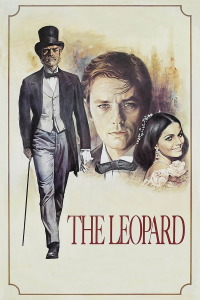
[size=3][font=Times New Roman][color=darkorange][font=Arial][i]The Leopard[/i] (Luchino Visconti, 1963)[/font] [/color][/font][/size].
[size=3][font=Times New Roman][color=darkorange]In a similar vein we have [i]The Leopard[/i] (yes, I do intend to compare [i]The Dark Crystal[/i] to [i]The Leopard[/i]. Deal), Visconti?s long (very long) portrait of a man standing at the cusp of two worlds: the Italian aristocrat Prince Salina (Burt Lancaster), who is seeing the centuries-old aristocratic system founder under the tide of revolution. He knows he cannot stop it, so he makes the most of it, manipulating and engineering events to favor his more vacuous, voluptuous nephew Tancredi (Alain Delon, or possibly Cary Elwes). [/color][/font][/size].
[font=Times New Roman][size=3][color=darkorange] [/color][/size][/font].
[size=3][font=Times New Roman][color=darkorange][i]The Leopard[/i] is lushly photographed and (like, hey!, [i]The Dark Crystal[/i]) creates a genuine sense of place in late-19th century Sicily?one can almost taste the dust kicked up from the horse-drawn wagons. But it lingers too long and, aside from the Prince himself and to a lesser extent his amusing priest sidekick, the characters are banal. The love triangle between Tancredi, the Prince?s daughter and the politically connected Angelica Sedara (the also voluptuous Claudia Cardinale) plays out in a distressingly uninteresting fashion, which is a pity because it takes up a lot of screen time.[/color][/font][/size].
[font=Times New Roman][size=3][color=darkorange] [/color][/size][/font].
[font=Times New Roman][size=3][color=darkorange]It is really the psychological study of the Prince that saves the film?he is fully self-aware, and his knowingly futile dance with the forces of history is, in its own way, heartbreaking to watch. That Visconti himself was an avid leftist makes his rather sympathetic portrayal of the death of aristocracy all the more intriguing.[/color][/size][/font].
This review of The Leopard (1963) was written by S. G on 08 Dec 2004.
The Leopard has generally received very positive reviews.
Was this review helpful?