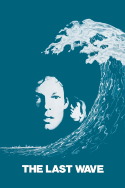
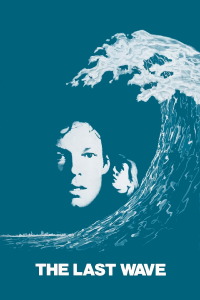
Review of The Last Wave (1977) by Tonypolito — 18 Dec 2010
Act III of the "Mystic Outback" trilogy out of the 1970s Australian Film Renaissance, following up after "Walkabout" (1971) and "Picnic at Hanging Rock" (1975).
A Sydney tax lawyer (Richard Chamberlain) finds himself defending some urban aborigines accused of murder. As his involvement with them deepens, he increasingly experiences strange dreams and visions. At first all the pieces make little sense (ie, during the first 40 minutes of the film all these oddities just utterly confuse the viewer). But slowly the meaning of his collage of visions meld into a clarity - of sorts. And that meaning reveals to Chamberlain that he has supernatural and ancient ties to the Australia that existed long before his present life and the urban jungle where he lives today. One example: The aboriginal high priest sits worshiping on the floor of a tenement apartment, then later it reveals that the tenement sits atop what was once sacred ground; it is the tenement that is the interloper, not the seemingly out-of-place priest. Throughout the film, it is "what Australia was," the Australia almost forgotten, that rules - and it rules Chamberlain as well.
The director of this film, Peter Weir, also directed "Picnic at Hanging Rock" and it shows. In both films, Weir employs indigenous artifacts to lead the viewer to appreciate all that is Australia. In "Picnic," he's celebrating that Australia developed it's own unique culture, that it broke away from its Victorian cultural ties to Britain ... and for the better. Here, he's warning viewers that Australia is beginning to lose touch with itself, developing into just another metropolitan geography, forgetting its roots and what makes it uniquely Australian. He does so in an engaging manner, by having tribal aborigines subtly invade and commandeer urban Sydney life. Weir taps directly into true-enough aboriginal folklore such as "dream time" and, by the end of the film, the viewer will be craving more knowledge of it.
Surprisingly, Chamberlain's acting is bland and irrelevant; any number of other decent actors could have delivered this much of a role. Other work by Chamberlain such as "Shogun" reveals him to be a much better actor than this. The moving and captivating deliveries come from the aborigines themselves, who actually have little to no dialogue. But the mere vision of their speechless, stoic presence on the screen mesmerizes. So it's not a huge surprise to find out that they were indeed actual tribal aborigines from the Outback, recruited for this film. (The lead aboriginal role, Chris, is delivered by David Gulpilil, who also starred in "Walkabout," but he too was reared tribal aborigine. All the other aborigines seen here are cinematic neophytes.).
RECOMMENDATION: See the other two films first. They are both stronger works. But if you like them, you should probably queue this one up for the triple play.
This review of The Last Wave (1977) was written by Tonypolito on 18 Dec 2010.
The Last Wave has generally received positive reviews.
Was this review helpful?