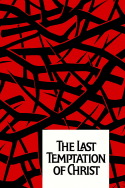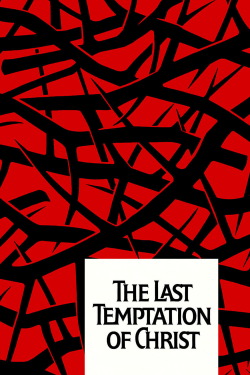
Review of The Last Temptation of Christ (1988) by Edith N — 27 Jul 2010
Two Thousand Years of Debate Starring Willem Dafoe.
In checking to see just how far out the age difference is between Willem Dafoe, our Jesus, and Andre Gregory, our John the Baptist (about twenty years, and if I'd realized he was [i]that[/i] Andre, I wouldn't have looked so closely), I discovered that Willem Dafoe was actually thirty-three when this movie was released, the age Jesus supposedly was during the main events of this movie. Though of course the chronology is all messed up; here, Jesus raises someone from the dead before the Wedding at Cana, which everyone who knows the New Testament knows is His first miracle. The Money-Lenders scene is before the entry into Jerusalem. It's funny, really. This would be the one story you'd think people would work really hard to get right--and I don't just mean this version--and yet there are inevitably really obvious flaws in every film version I've seen. Though perhaps [i]Jesus Christ Superstar[/i] doesn't count.
Jesus is just this guy, you know? He makes crosses for the Romans, which makes his neighbours despise him as a traitor to his people. He fights against these visions he has, the voices in his head. And then one day, after talking to Judas Iscariot (Harvey Keitel), he just gives in. Yes. He will speak for and to God. He goes to John the Baptist--who remember is supposed to be his cousin, and their mothers were pregnant at the same time--for baptism, and he begins his ministry. There is of course the exotic Mary Magdalene (Barbara Hershey), who in this version is the woman taken in adultery and saved from stoning. She is very much a prostitute. Jesus goes into the desert and is tempted by Satan (Leo Marks), but he resists temptation and goes out to start his ministry. He does this knowing where it must end, but he does it anyway. "Nothing good can come out of Nazareth," and many reject his message. But some listen, enough to make him dangerous. And then, he is crucified.
Which let's talk about before we get to an examination of the actual filming. The Big Controversy. Satan in the guise of a guardian angel (Juliette Caton) comes to Jesus and tells him that God has let him end it, step down off the cross and live the life of a man. God spared Isaac and let Abraham sacrifice a ram God sent in his place, and would not God do as much for his own son? And so we enter the sequence which is the title. Jesus begins a life as an ordinary Jewish man of his day. He marries Mary Magdalene, and they talk about children. And, yes, there is a sex scene, albeit a blink-and-you'll-miss-it one. And then she dies, and he marries Mary Sister of Lazarus. They have children. They grow old. Jesus has rejected the mantle of Godhood and is living his human aspect. How strong that aspect is has been controversial pretty much since Jesus walked the Earth (and I believe he did), but what counts here is that, when Jesus recognizes this for a temptation from the Devil, he rejects it. He follows the Path of God, because it is what is right for him and for the world.
Dafoe looks and doesn't look the way we picture Jesus. He's got the hair and the beard, per spec. He wears the robes, though so does everyone else. However, he almost never has that look of purity and serenity which exemplifies the modern conception of him. Indeed, it calls, sometimes, on the more medieval portrayals of the Crucifixion, the ones where the agony is plain on the face of Jesus. There are moments, when he is teaching, where there is a glow to him, and when he is declaring what will happen, there is a manic energy to him. Jesus wants the results, but he doesn't want the path which leads to it. (Read your Gospels.) Dafoe plays the human Jesus in ways few actors could. It is not just his age which makes his casting as perfect as I think Scorsese could get. When he is in touch with his Godhood, you see it on his face. When he is in touch with his humanity, you see it on his face. And my, what an expressive face.
The film is stark in its beauty. It was filmed in Morocco, the decision to film it on location's having been rejected. And how much more controversial might it have been if they had? There are moments from it which glow; Scorsese knows how to use light, after all. There is something fuzzy and nostalgic to the filming of that imagined, illusory life which could be had for the price of giving up what he was there for in the first place. While he is actually on the cross, the light is harsh, sharp. We do not get the darkness of which the Gospels speak, just light. Hot, hurtful light. This is not the perversely lush Jerusalem some people imagine, a Jerusalem which makes no climatological sense. This is a land of sun and wind and sand, where there is the temptation of water in the reality of desert. The illusion is lush, which is one of the things which makes it a temptation. How hard it must be to step back into that world and that agony, and how great the sacrifice that He does so willingly.
This review of The Last Temptation of Christ (1988) was written by Edith N on 27 Jul 2010.
The Last Temptation of Christ has generally received very positive reviews.
Was this review helpful?