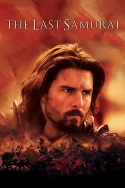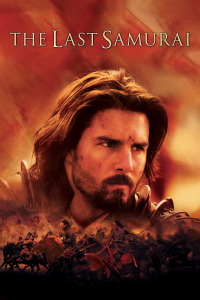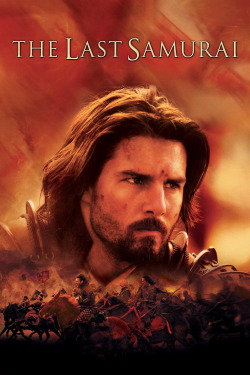
Review of The Last Samurai (2003) by Adrian W — 26 Feb 2013
Starring:
Tom Cruise,.
Ken Watanabe,.
Koyuki,.
Timothy Spall,.
Billy Connolly.
Directed by: Edward Zwick.
In dubbing this film 'Dances with Samurai', Tom Cruise's latest attempt to score himself an Oscar at last, I feel the critics have sold The Last Samurai short. Instead of the self-indulgent, testosterone fuelled, one man show I was expecting, I found myself gripped by a moving, intelligent and deeply heartfelt film.
This is quite exciting. All year, I've taken up 2-3 hours of my time to devote to Japanese cinema. Most of the movies that I've watched circled around the 1950s and 1960s. I've encountered various Samurai films and I'm very fond of the Japanese culture, richness and depth. This would mean that I'm going to be very critical and analytical while watching The Last Samurai. I've seen it once, about 10 years ago, in theatres with my mother and I remember the movie being extremely long and it being a drag back then. Times have changed. I've begun to appreciate cinema differently. I can now recognize and be grateful to the poems and melodies that are sung in a foreign language, the complexity of a particular culture or society and most importantly, the beauty that lies between action and silence.
I cannot begin to describe how great a job Edward Zwick has done by directing this film. The Last Samurai turned out much better than I expected it to be. There is no one or two things that stood out to me during the film. Normally, I'd applaud amazing direction, the story telling or the likes of the great actors blessed to our generation. This movie has 'feeling'. At 1st, I wondered how Hollywood would take on something so big! It obviously isn't a minuscule task, replicating a culture of another country, cinema or caste. I remember Danny Boyle made my city seem to be after watching Slumdog Millionaire. There's a heavy risk, wouldn't you agree? So, I was a bit sceptical at 1st but after the first few scenes, I decided to go about an open mind and enjoy the film. I was overwhelmed by the detailing put forward in this film. There is so much attention given to the 1st half of the film. Many would believe how the film doesn't speak much about the 'samurai' culture, rather an American man dumped in regions of Japan. You'll be shocked with how much the film has ended up covering. I've watched a lot of Japanese cinema over the year; hence the film obviously shown as the late 1800s, portrays how the samurai clan were battled upon by gunmen. The Last Samurai sparks up the honour which lies beneath every samurai's heart dealing with all sorts of difficulties yet never forsaking his clan. There's obviously tremendous hatred against 'arms' [guns]. A true samurai would never prefer dying by the hands of a gunman. We've seen this so often in modern Samurai films - The Twilight Samurai [2002] one being. The team has kept in mind the appearance of the ways in which these warriors [samurais] presented themselves; with their heavy armour during war and lose kimonos when home.
There are scenes with regard to seppuku [or hara-kiri as many term it]. It was quite fascinating in the ways in which the storyteller explained to his audience the meaning behind Japanese culture and tradition. Nathan Algren [played by Tom Cruise] was the tool [medium] to pass on this message across. Tom Cruise, by the way has played an exceptional role. You give any kind of role to this man and he'll act his heart out to you. He seems like a perfectionist to me, at least that's how he's appeared in the films that I've seen him be a part of. His character was rather interesting. He starts of as a drunk retired Captain who seemed to be very snobbish, egocentric and offensive to his surroundings; later following the 'nothing to live for/nothing to die for' attitude. His character shifts majorly after finding his spiritual path through the Japanese [Samurai] traditions and art of fighting. He falls in love with the people, children, art and lifestyle; where he decides that he needs nothing to seek any further retribution or any form of redemption. His past was a haunting one - similar to nearly any solder in any film. He takes a while, but eventually breaks past this pain and suffering; lifts himself up once again and turns against the evils of war.
I'll be taking back a handful of scenes with me as I'll, occasionally recall playing them in my head over and over again for years to come. There's obviously some sort of real excitement watching a samurai film in colour to begin with!! Do you know how amazing it felt watching those swords cut open necks and backs of those coward gunmen!? I was already excited knowing that The Last Samurai was a Warner Brothers development. I knew for a fact that we'd be expecting a cracker of a film. I wasn't wrong at all. One of the most impactful scenes for any film maker would be an entry and exit stages of a character, right? The scene in which the samurais 1st enter battle - did you not feel your pulses ringing? The armour, bows and arrows, battle helmet [along with the mask] and blood dripping off their swords pumped up my adrenaline for a minute or two. It was a delight. Alright, I think it's time I get passed this scene, don't you think?
Did anyone feel the pain, the way in which I did after young Nobutada had his hair cut off? To a samurai, his hair is most sacred and the man must endure maximum shame once it had been cut off. In this case, the filmmakers seemed a little generous, but it applies differently, as far as I understand. I couldn't witness that scene. In a way, it seemed as if a blade cut through my skin, slowly but painfully. I wouldn't want to be next to a samurai while I'd be watching that scene.
It's strange how much we've learnt already from this film. Would it be weird to know about how samurais don't fear death? Some say that they welcome it, fight alongside it; but I believe that a true samurai values and most importantly respects his death. We learn this from the film as well. I'm glad that we were on the same page there. It's always best when one connects with a film, right? We also learn how the meaning of Samurai is 'To Serve'. If you've noticed in the legendary film - Schichinin no Samurai [Seven Samurai], the peasants share an extremely strong bond with the Samurais pleading them to save them from the bandits of the city. Does it seem a bit familiar? Only, in this case, the movie ends with the heritage clan falling to dust by the hands of an almost wise emperor. It was a shame, the way in which the film ended. I wouldn't have seen an alternative ending though; this had to be it. Al though, I loved the ass kicking sword play and those mouth-watering action packed choreographed scenes towards the end of the film. Bravo! The tactics were played out well, weren't they? Once again, it reminded me a lot of Seven Samurai and a recently watched film '13 Assassins'. The widow, Taka played a genuine simple role, nearly similar to almost every Japanese widow/wife in any film I've seen of late - her silence and her beauty spoke many words.
Was it me, or did you too recognise the early works of Hans Zimmers' genius? Halfway through the film, dialogues kept mum because all I could hear were the orchestras passing into my ears. It sounded a lot familiar during a heavy or impactful scene. I don't know how the man does it over and over again. Normally, Japanese films are a lot silent, comparatively, with the biwa [Japanese instrument] playing a few notes in the background every now and then. There's never an experience of a complete orchestra favoured by a samurai battle - I'd never see it happening to be honest. So, it was a little weird at the start, but it did a good job; that's what matters.
I enjoyed the film more than most others would. Many would probably find it a drag. I remember how I did 10 years ago; when I had no clue about what I was actually looking for. The film played its cards perfectly to me. Always remember that 'the sword is considered to be the soul of a true samurai.' If Akira Kurosawa was still alive, he'd be proud of this Hollywood effort and attempt to share this spectacle.
This review of The Last Samurai (2003) was written by Adrian W on 26 Feb 2013.
The Last Samurai has generally received positive reviews.
Was this review helpful?