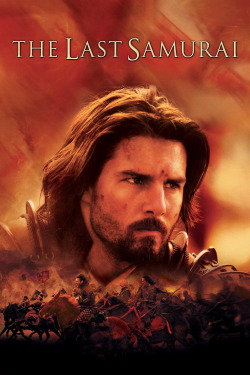
Review of The Last Samurai (2003) by Ola G — 31 Jan 2016
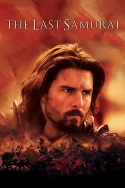
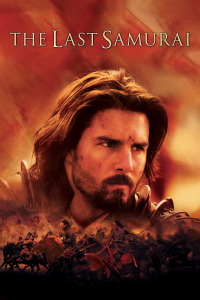
After the Indian Wars, U.S. Army captain Nathan Algren (Tom Cruise) is traumatized by the atrocities he committed and becomes an alcoholic. Colonel Bagley (Tony Goldwyn), his former commanding officer, approaches him with an offer. Japanese businessman Omura wishes to hire distinguished U.S. soldiers to train the Imperial Japanese Army to suppress a samurai rebellion. In exchange, Japan would grant the U.S. exclusive rights to supply arms to the Japanese army. Needing money, Algren accepts the job, despite his personal hatred of Bagley. Most of the soldiers being trained are little more than peasants and farmers. When the samurai rebels attack a railroad, Bagley orders the regiment to mobilize, despite Algren's objections. The samurai horsemen quickly slaughter the undisciplined and intimidated soldiers. Algren kills several samurai, but is knocked from his horse and eventually collapses from exhaustion. As a warrior named Hirotaro prepares to execute him, he kills Hirotaro with a flagstaff. Seeing Algren's ferocity and the white tiger on the flag he wields, rebel leader Katsumoto Moritsugu (Ken Watanabe) is reminded of a recurring dream. He spares Algren's life and takes him to the rebels' village. Under supervision, Algren explores the village and interacts with its inhabitants. He meets with Katsumoto, who converses with him for mutual understanding. Algren grows to respect the lifestyle of the samurai and their families. As time passes, he learns more of the Japanese culture and language. He learns that Katsumoto initiates the rebellion to oppose the speed westernization, and that he believes they are acting in the best interest of Japan. Algren must now choose to honor his loyalty and take sides in this act of rebellion...
The film achieved higher box office receipts in Japan than in the United States. Critical reception in Japan was generally positive. Tomomi Katsuta of The Mainichi Shinbun thought that the film was "a vast improvement over previous American attempts to portray Japan", noting that director Edward Zwick "had researched Japanese history, cast well-known Japanese actors and consulted dialogue coaches to make sure he didn't confuse the casual and formal categories of Japanese speech." However, Katsuta still found fault with the film's idealistic, "storybook" portrayal of the samurai, stating: "Our image of samurai is that they were more corrupt." As such, he said, the noble samurai leader Katsumoto "set (his) teeth on edge." In the United States, critic Roger Ebert of Chicago Sun-Times gave the film three-and-a-half stars out of four, saying it was "beautifully designed, intelligently written, acted with conviction, it's an uncommonly thoughtful epic." Edward Zwick is a skillful director in terms of epic historical costume dramas, and here he has beautiful environments, big scale fighting scenes, an intriguing storyline that does carry connections to Kevin Costner´s "Dances with Wolves" and solid actors in the main roles. In general it´s exciting, thought provoking, touching and the cultural differences between West and East has a great foundation for a story. However, the movie ends up quite quickly in the land of predictability and it becomes one long wait to reach the end you know all so well before you even have seen it. It´s a shame as I do like the foundation of the story, but the execution and development of the story on the screen becomes not as good as it could´ve been as a deeper substance is lacking from it.
This review of The Last Samurai (2003) was written by Ola G on 31 Jan 2016.
The Last Samurai has generally received positive reviews.
Was this review helpful?