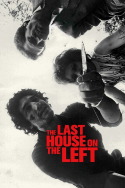
Review of The Last House on the Left (1972) by Everett J — 27 Mar 2009
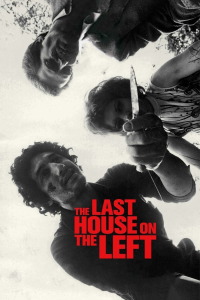
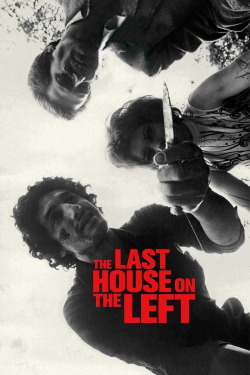
The Last House on the Left.
Written and directed by Wes Craven.
Starring Sandra Cassel, Lucy Grantham, David Hess, Fred J. Lincoln, Jeramie Rain, Marc Sheffler, Richard Towers, Cynthia Carr, Ada Washington, Marshall Anker, Martin Kove, Ray Edwards.
An innocent night out turns deadly for two friends who stumble into the lair of escaped convicts.
In this 1972 horror comedy film director Wes Craven employs incongruous uses of sound and music to create a legitimate exercise in terror. There are many scenes featuring upbeat almost jaunty musical numbers that add a comedic element to the violence. The severity of certain scenes is lessened through the use of bluegrass motifs as well as sentimental romantic music during a key nightmarish scene.
The story involves two young women, Mari Collingwood (Cassel) and her friend Phyllis Stone (Grantham) who are on their way to see the band Blood Lust in a ?bad? part of town. Beforehand they decide to try and score some weed which they attempt to procure from a young man named Junior (Sheffler) who leads them into a house. Once inside they are ambushed and become captives of Krug Stillo (Hess), Fred ?Weasel Podowski (Lincoln) and Sadie (Rain) who have all been involved in a recent prison break. Phyllis is raped, beaten and eventually the two girls are tossed in a trunk and driven to the woods.
The film?s violence is certainly tame by today?s standards. There is blood and some gore but for the most part the horror is conveyed psychologically. The band of thugs subject each girl to humiliating ordeals and take great fun in having taken possession of them. Each girl is raped by Krug and during Mari?s rape the soundtrack plays a dripping sweet love song that suggests a very strange relationship between rape and love. Perhaps the music in intended as a sort of ironic statement or maybe it originates from the violator who may view his act as a form of love. Regardless, it?s a comical scene because the music just doesn?t fit with what we?ve seen. This is the case throughout the film. The action on screen and the soundtrack are at odds with one another and the result is often comedic whether intentionally or not.
Phyllis tries to escape and her run through the woods is fraught with incredible tension. One desires nothing more to see her escape although we know the odds are exceedingly slim. Indeed, once she is caught she is stabbed repeatedly and disemboweled. Her arm is removed and taken to where Mari is being held by Junior. Marie is then raped after Krug carves his initials into her chest. She leads the group to the lake where she calmly walks in and is shot repeatedly by Krug.
The gang clean up and visit the nearest home posing as salesmen. It just so happens that the house they pick belongs to Mari?s parents who gladly invite them in and let them bed down for the night. Estelle Collingwood becomes suspicious of the group and by the morning she and her husband John (Towers), a doctor, set forth on a course of action to defeat Krug?s band.
The film has a Keystone Cops quality as two law enforcement officers bumble about failing to notice what?s right beneath their noses. They repeatedly find themselves near the killers but are unable to take advantage of their position due to gross idiocy. The film uses them for maximum comedic effect and their foolishness proves to lend levity to whatever else is occurring on screen.
The sexual aspect of this film, wholly terrible and disturbing, nevertheless lends the film a dark eroticism that is maintained throughout. The raped and battered woman is presented as a shock to our humane sensibilities because she is so readily tossed about as a plaything for the amusement of the clearly defined villain of the piece. The first rape, off screen, is particularly horrific for the very reason that it is not shown. One is left to conjure up images that correlate to what is perceived as rape. The second rape is almost comical due to the sheer lack of sympathy between the music and the menacing act that has just taken place.
Indeed, the strange contrasts between the soundtrack and the severity of the tale are succinctly off putting. The upbeat fiddle music perhaps creates a more disturbing effect because it proves to be so cheery in the light of so much atrocity. It forces the viewer into a tight position; on one hand the music is uplifting and positive whereas the psychological and physical torment is decidedly harsh, bitter and cruel.
The dynamic between the killers and the Collingwoods is handled deftly. The trickery of the clan are revealed in slight moments such as when Sadie gulps down glass after glass of wine revealing herself not to be the couth person she is claiming to be. Estelle finds enough reasons to suspect her guests and takes a rather amusing tack in handling one of the killers. Certainly, its horrific but again the sounds lend it a comedic edge. Normally such a scene would make every man in the audience wince in horror but here its screamingly funny. Strangely the same can be said for the rape scenes and others featuring torture and torment. It?s just impossible to get beyond the music as it puts those damn melodies in the heads of the film?s audience and every scene is colored by those songs.
Overall, this film is far funnier than I?m sure Wes Craven intended. The laughs are relentless and the horror doesn?t have the impact the film makers were most assuredly going for. Granted in 1972 this sort of thing was decidedly uncommon and audiences certainly were not too prepared for such brutality expressed on screen. It is barbaric and there are moments where one is stricken with terror but for the most part the effect is disturbed with the music and the way the film is edited including its use of sound. Ultimately, it?s a highly entertaining film that offers a keen insight into the inner workings of criminal gangs. The villains in this film are a salty bunch who play off each other again with great comedy which lasts until the final act.
This review of The Last House on the Left (1972) was written by Everett J on 27 Mar 2009.
The Last House on the Left has generally received mixed reviews.
Was this review helpful?