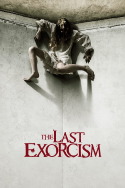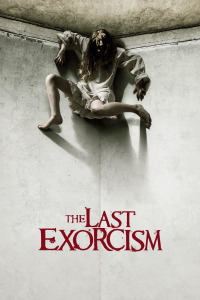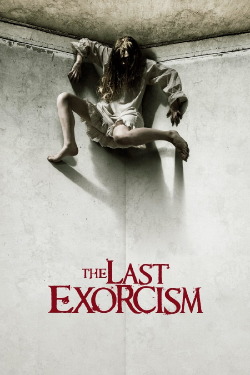
Review of The Last Exorcism (2010) by Shiira — 30 Aug 2010
As "found films" go, the horror sub-genre's "Citizen Kane", hands down, is not "The Blair Witch Project", the 1999 digital marketing sensation that first alerted Hollywood to the power of the Internet, while scaring technology-addled moviegoers with the power of suggestion, or last year's overrated "Paranormal Activity", an underwhelming digital video shocker of which its attempts to jolt you with disturbed baby powder and bed sheet blowings in a haunted suburban home, couldn't begin to compete with the classic black of the Maryland woods.
(In this day and age of CGI effects, you could say that "The Blair Witch Project" reinvented the dark.) As found films go, though, nothing compares to the infamous "Man Bites Dog", the 1992 Belgian production about a serial killer and his complicit crew who shoot a documentary about killing, that undoubtedly inspired Daniel Myrick and Eduardo Sanchez to simulate reality by abstracting the cover art for the Spinal Tap album "Smell the Glove" in Rob Reiner's 1984 mockumentary "This is Spinal Tap".
As found films go, however, "The Last Exorcism" differs in one important aspect; whereas "The Blair Witch Project" and "Paranormal Activity" went without an original score, this latest self-reflexive movie experience does.
The seemingly improper utilization of music seemingly demythologizes the conceit that the doc-in-the-making was discovered at a presupposed crime scene, since a soundtrack breaks the reality of "reality".
Like its aforementioned predecessors, "The Last Exorcism" ends with a death, a closed ending that really isn't closed at all, because such pseudo-amateur movies invite the moviegoer to imagine the document's journey from the police evidence room to the screen.
The music creates in your mind an awareness of the post-production; a hypothetical person in the editing bay who, rather than preserve the integrity of the "found footage", made the creative decision to sensationalize death by commissioning a soundtrack, making what would become "The Last Exorcism" a more commercially viable property.
What if that hypothetical person turned out to be the reverend himself? The last time we saw Cotton(Patrick Fabian), he was approaching the apocalyptic-looking bonfire with his cross, just before the producer and cameraman run for their lives.
How do we know he died? We don't. In the film's final moments, the desperate fleeing of the overwhelmed crew finally ends when Caleb(Caleb Landry Jones) strikes Gerad(Tony Bentley) dead, so consequently, the farmer's son is first on the scene to recover the incriminating footage.
Now why would Caleb implicate himself as an accessory and first-hand participant to these cultist murders by delivering the doc-in-the-making to the proper authorities? After all, we're watching the whole ordeal that went down in that small Louisiana town.
Would Caleb really out his fellow satanic church parishioners, witnesses to the unholy birth of Nell's child, who could all be identified when Gerad pans across the crowd gathered in the field leading up to the platform where Nell lies prostrate with the kindly old, local preacher and his rotund wife.
All these filmic ambiguities help invent a postscript that can be conjectured through what we learn about Cotton. Mainly, the man has no scruples. His agenda, the exposing of fundamentalist Christianity as a fraud, in which the son of a preacher man wants to come clean as a longtime charlatan, will come at a cost: his father's reputation.
Secondly, the man is an "entertainer"(his wife's words) who didn't believe in demons. Ever the showman, for the sake of preserving character arc, the music that accompanies Nell's possession would reflect Cotton's previous skepticism about supernatural occurrences(the music bolsters the case for demonic possession at a time when the preacher wasn't a true believer in the devil, and most likely, God), and his natural-born instinct to manipulate an audience.
Arguably, Cotton lives; he killed Caleb and desecrated the memory of the fallen film crew by dumbing down the "documentary" with subjectivity. Why? He has no health insurance.
This review of The Last Exorcism (2010) was written by Shiira on 30 Aug 2010.
The Last Exorcism has generally received mixed reviews.
Was this review helpful?