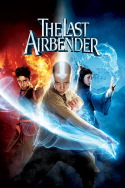
Review of The Last Airbender (2010) by Electronick — 31 May 2016
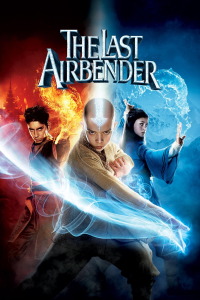
The Last Airbender directed by the now-infamous M. Night Shyamalan is considered by many fans of the original show to be one of the worst if not the worst adaptation of all time. The film performed poorly at the box office and was had plenty of negative reviews upon its release. Those who have greatly enjoyed the original source material quite often show their distaste for the adaptation of their favorite show. The film has poor editing, cinematography, and horrid acting but the main problem with the film reflects a deeper issue. The film oversimplifies plot points from the show and it fails to go into depth with the show’s influences in Eastern philosophies and it even has some implicit message in racism due to the casting and the portrayal of those who are people of color. There are even some changes from the source material that added to the overall detriment of the film.
As mentioned before, some of the character portrayals in this film are a clear downgrade from their original counterparts in an attempt to appeal to a wider audience. The character Sokka was the comedy relief in the original show. He was used as a way to get some comedic antics to take a break from the action set pieces and heavier moments in the narrative. On top of that he was also the team strategist as he is the one who usually creates the plans that makes the team become triumphant in certain moments of the show. He goes through a character arc when he overcomes his sexism and some of the jokes that revolve around him parody the notion of the tough guy. In the beginning of the show he starts to believe that physical strength is everything but later realizes that strength is not the only thing that defines a man and he starts to have a growing respect for femininity. In the film though, the character noticeably lacks his trademark humor and is mostly stoic throughout most of the story. He does have a sarcastic comment every now and then but he remains serious throughout the majority of the film. He is even angry throughout most of the film which is in clear contrast to his original counterpart. This seems to be an attempt to appeal to the demographic who are attracted to the “bad boy” archetype. This promotes masculinity as he is never challenged for his ideas on real manhood in the film and supports the ideals that the original character was a parody of. Aang has also changed from his original version as he is changed to appeal to a wider western audience. In the original show he was influenced by the Tibetan Buddhist Monks as he teaches himself balance and he has tattoos of arrows all over his body as representation of enlightenment. Throughout the storyline he was conflicted about his role as the avatar. He spends his time not being sure if he could handle the responsibility until the end of the show when he reaches true enlightenment as he finds balance in his personal life and in his role as the Avatar. In the Film version though, Aang is noticeably white and his tattoos are shaped like a cross instead of an arrow and he never questions his position as the Avatar. This makes Aang an allegory for the life of Jesus Christ. It disregarded the character’s eastern influence in order to be the chosen one to save people from their sins. This does appeal more to an American audience since the dominant religion in America is Christianity but this not only undermines the point of Aang’s character but it also disregards the main philosophies that the show promotes through the Buddhist influences. The Fire Lord who is the main villain of the film is out in the open and lacks the menace he had in the show. Most of the menace was lost as he is shown in full view while the show had his face hidden until the final season. By removing the menace it makes the villain less of a threat and less engaging in an attempt to appeal to younger children. The one character who had the biggest disservice was Kitaria. Her character arc in the original show involved her overcoming the sexism of her culture. She was nurturing but she also had a quick temper. She valued her friends but she was also ambitious and wanted to be a great warrior. Her film counterpart on the other hand seems to be defined by her gender and nothing else. She is nurturing but she never evolves from the role that society has given to her. She doesn’t join in the battle and is even incompetent in battle. Kitaria in this film makes mistakes that her original version would never do such as charging into battle without a plan. The character in the film is hardly recognizable from the show as she merely accepts the role of only being a healer instead of being a capable fighter and even a feminist icon for younger children.
Aside from the changes in the character portrayals the depiction of other races in this film has a xenophobic essence to it which sends some questionable- implied messages. All of the member of the fire nation are Indian or middle eastern which heavily contrasts the show’s Japanese influence for them. The Fire Nation in the show was inspired by Japanese imperialism during World War II and they were motivated by desperation and through political prowess much like Nazi Germany. The film’s version though dismisses the political intrigue outside of the portrayal of the banished Prince Zuko in favor of making them purely irredeemable. According to the film’s narrative the Fire Nation wanted to conquer the world to fight against the spirit world. This gives the message that the noticeably darker skinned soldiers are heretic barbarians who could not be bargained with. There is barely any depth to the fire nation as they are nothing more than mindless barbarians as opposed to the show when the viewer starts to learn more about how their totalitarian society worked. It is strange considering that the director himself is Indian but it seems to be a casting decision by the studio. The only sensible member of the fire nation army is General Iroh who is Caucasian. The earth benders are depicted as incompetent as they cannot fathom the idea of bending the earth to their will in a prison when they are surrounded by Earth. The prison in the original show was on a metal ship in the middle of the ocean which was a deliberate choice since no earth bending was possible and they only raised up when they had the motivation by Kitaria. In this film though they had given up immediately until they are inspired by a white hero to give them the motivation they need. Unlike the fire nation the Earth Kingdom keep their Asian influence (mostly Chinese) but they are still less competent than the white heroes. The Water Tribe are based off of the Sioux and other Eskimo tribes but the two supporting characters are cast as white heroes. This gives the implication that Americans would rather have a white protagonist instead of one that is part of an ethnic minority even if the original influence was based off of a culture outside of white America. One of the biggest ways the representation of other races is problematic in this postmodern film was the introduction of a monk who was a creation purely for the film. This Monk in question betrays Aang in order to get more gold. This does complete the Christ like narrative that would be more accessible for an American audience but it betrays the Buddhist philopshy that the show was going for. The Monk’s reasoning for betraying Aang was that he was in a life of poverty but the main Buddhist philosophes is to get rid of your desires of the material world.
The biggest problem with this adaptation in regards to United States cinema is the overreliance on exposition. The majority of the dialogue is nothing more than to give background information without any regards for world building or character development. The film has a heavy reliance on the “tell don’t show” mantra even though one of the basic rules of storytelling is to take the exact opposite approach. The once scene that ultimately illustrates this was when the main character Aang discovered his destiny of being the Avatar. The animated serial went into great lengths to show the turmoil he went through. He was the designated chosen one but he was only a child and thus he couldn’t handle the pressure of being the hero of both worlds. His main character arc was accepting his responsibility of the avatar while also finding the right balance in his personal life. The film on the other hand has Aang stand in one room and merely tell the audience his backstory instead of giving the audience a chance to fully experience the character’s turmoil. Another example was when the audience learns why the banished Prince Zuko is trying to capture Aang. The show used a storm as a symbolic gesture about Zuko and Aangs relationship as both of their back stories are told simultaneously. In his cinematic version, Shyamalan made the choice to have Zuko’s backstory told by a child who just happened to be in the same room as the disguised prince. The film doesn’t seem to trust the audience enough to analyze the subtle character interactions and their relationships like in the show. Instead they are simply told what the characters are feeling and their inner emotions without any room for the audience to come to those conclusions themselves.
The Last Airbender is a perfect example of the worst case scenario for an adaption of a beloved storyline in order to appeal to a wider audience. Fortunately the attempt backfired on the studio as audiences realized that the quality of a film is not always based on the amount of special effects or attractive white actors one can put in a film. Modern audiences are starting to catch onto the trends of postmodern Hollywood and are demanding better films to occupy their time. The rise in popularity of online reviews makes it easier to spread the word about the quality and the artistic merit of a film. Peoples’ voices are being heard by Hollywood that modern audiences demand better writing and more effort in smart storytelling instead of only being reliant on the traditional block buster formula.
This review of The Last Airbender (2010) was written by Electronick on 31 May 2016.
The Last Airbender has generally received negative reviews.
Was this review helpful?