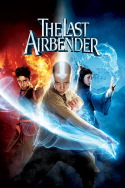
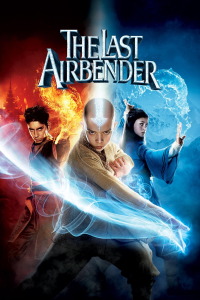
Review of The Last Airbender (2010) by Paul E — 29 Apr 2015
Oh M. Night Shymalan. Tsk tsk tsk. Why must you continue to give the haters so much ammunition with which to poo poo your undeniable talent? You wowed us with the Sixth Sense, and though it is mostly remembered for its final act twist, what it is actually noteworthy for is its haunting atmosphere, its understated acting, and your beautiful eye for cinematography and tension. You repeated this for the superior Unbreakable, proving that it wasn't a fluke. Even in the ever-so-slightly inferior Signs and the not-so-slightly inferior Village (squandering a promising first hour with a twist just because, well, I'm M Night Symalan!), your obvious eye for both tension and believable interaction between adults and children still shone through the plot holes and the silliness. Even the mass-suicide at the beginning of the Happening showed such creepy promise. Now comes The Last Airbender, and one feels that perhaps it might have been more aptly titled "The Last Time M N. Shymalan Will Ever Get Any Of My Hard-Earned Money.".
The plot for (such as it is), revolves around four kingdoms, each of which can manipulate one of the elements, who live together in peace under the watchful eye of a little monk named Aaaang (a sound you might make while watching this film), who happens to be a link between this world and the spirit world. Unfortunately, Aang disappears for 100 years ("there was a storm", is the only explanation we ever get), in which time the Fire Kingdom decide that peace is boring, and as they have the best power of the lot, hell, why shouldn't they be in charge? Their plans hit a stumbling block when Aang comes back from the frozen dead and takes umbrage with them pushing around the little folks.
This is where our problems begin- after all we've paid actual cash money to be shut in a dark room with only this film for company, and we've still got 100 minutes left to go. With all the simpering that goes on in the Water and Earth kingdoms, you'll almost immediately begin to wonder why the Fire Kingdom didn't just raze the whole bloody thing to the ground. Earth people are subdued by Fire soldiers surrounded by Earth, and the people of the Water Kingdom seem oblivious to the fact that Water beats Fire. Surely the Fire Kingdom has this in the bag? Instead they use their destructive fire power to... slap people about a bit.
In fact, logic is defied so consistently, one wonders if Shymalan wasn't deliberately daring someone to defy him back. It certainly seems long past time for someone to save M Night Shymalan from himself, either with a critical word in his ear or just by pulling funding. Alas, by now the fire is self-sufficient, and therefore all the harder to put out. As his creative control had increased, MNS has become ever more indulgent of his own less-admirable qualities. Where perhaps before he was reined in by budget constraints, studio control and maybe even a little self doubt, he seems to have shaken all of these off and decided that he's going to do what he wants, everyone else be damned. He wouldn't be the first director to do so- check out Richard Kelly's godawful Southland Tales, and of course, George Lucas's prequel trilogy. Still, few directors seem as doggedly determined to define the law of diminishing return as MNS.
Then there's the acting, with most of the young cast exhibiting the kind of camera-shock you might see when a camera crew enters a tribal village for the first time; they read their lines as if Shymalan is holding their cue cards just off camera. Formerly the guy who discovered such young talents as Haley Joel Osment, Abigail Breslin and Spencer Treat Clark, Shymalan now apparently picks his leads based entirely on the head shots they send him, which is fine if you're making a catalogue, not so fine if you want an audience to invest in your film. Slumdog Millionaire's Dev Patel appears determined to throw away every last drop of goodwill with a character so far from Slumdog's Jamal, it seems he was desperate to show us he can be bad. He fails, at least in the way he intended. "BRING ME YOUR ELDERLY!" he yells in a tantrum-faced, "I'll tell my daddy if you don't" kind of way. Then there's Aang, who bends not just air, but does a good job with credibility too. His abilities have their limits it seems, because he's so hell-bent on nailing the complex choreography required to blow someone over, he forgets that a little emotion goes a long way. He goes for innocent, he absolutely nails brain-dead. If you're expecting a haunting Haley Joel Osment-style turn from anybody in this film- forget it. By now, it seems that Shymalan has forgotten all about his original nuanced approach to camera work and emphasis on his actors' performance. He's always had one foot on this path (especially in his own terribly acted cameos); in the Crappening (in which Mark Whalberg played a science teacher who was out-acted by a plant) he began to walk on it with both feet. In Airbender he dances down the path screaming "I don't care anymore!" It's horrible to realise that no one has misunderstood the reasons for his fame quite as much as Shymalan himself.
By the end of the film, the action itself is so ridiculous it would hurt, if only you still cared. A scene that David Yates wisely excised from the final Harry Potter film (in which Snape is held captive in a floating bubble), is brought to life in the finale, and it's just as forehead-slappingly-bad as you'd expect. After this, perhaps the only way forward for Shymalan is to stop guzzling his own cool aid, and to try directing a film which was written by someone else, because the words "written and directed by M Night Shymalan" now inspire fear for all the wrong reasons. The best twist next time would be a good film with those words attached. After this, I don't think anyone would see that coming.
This review of The Last Airbender (2010) was written by Paul E on 29 Apr 2015.
The Last Airbender has generally received negative reviews.
Was this review helpful?