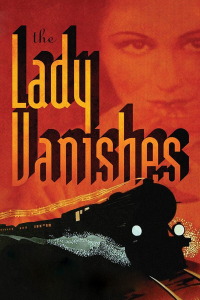
Review of The Lady Vanishes (1938) by Monsieur R — 27 Feb 2011
The Lady Vanishes was the first Hitchcock film I ever watched, although at the time I was not aware of who he was. The plot involves Iris Henderson, (Magaret Lockwood) a young woman travelling across Central Europe on a train and meeting a fellow Englishwoman only for her to disappear unexpectedly. As Iris investigates the sudden disappearance, the other passengers deny the lady's existence and only the caddish Gilbert Redman (Michael Redgrave) offers to help. With an unfortunate bump to the head Iris begins to doubt ever meeting the lady but not everything seems to be in order.
Hitchcock successfully manages to blend the mystery drama with large helpings of humour and of course suspense, which was his trademark. The pairing of Lockwood and Redgrave is a delight as they banter with each other whilst trying to figure out the mystery. The dialogue is witty and amusing. The funniest scene is where Redgrave finds himself in a tussle, wrestling with an Italian magician! As he struggles against his opponent he calls upon Lockwood to help him only to have her flouncing around like a balloon. Lockwood is not the best back up to have in a fight although a bite on the magician's hand does sway the balance. The scene is a good example of Hitchcocks lightness of touch.
Comic relief is also provided by Caldicot and Charters (Naughton Wayne and Basil Radford) two cricket loving English twits whose main concern is to return to England for the remainder of a Test Match. Their funny double act was so successful that they would appear in several films together as the same characters such as the similar Night Train To Munich (1940) and Dead Of Night (1945). Much is made of the different nationalities and the stereotypes that come with them. The 'foreigners' are mainly mysterious and untrustworthy where as the English are shown to be nice but dim. A show of bravery and the stiff upper lip is called upon when needed.
The main setting of The Lady Vanishes is on a train which was a common mode of transport in many of Hitchcock's films. Here a lack of space for the characters to move helps create a claustrophobic atmosphere added on to the general light heartedness. The editing and pacing are pitch perfect.
Along with The 39 Steps (1935), The Lady Vanishes is the most popular of Hitchcocks films during 1930's before he went to Hollywood and is a good place to start for those who have not seen his earlier British films. In other words a classic.
Question. What was your first Hitchcock film?
This review of The Lady Vanishes (1938) was written by Monsieur R on 27 Feb 2011.
The Lady Vanishes has generally received very positive reviews.
Was this review helpful?