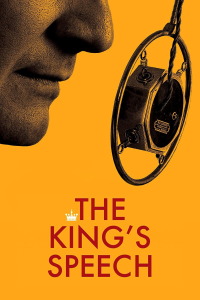
Review of The King's Speech (2010) by Pendragon — 01 Feb 2011
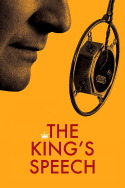
A certain dramatic and comedic license was adopted for the outstanding film, "The King's Speech", with Mr Logue's grandchildren remarking that the King's unorthodox but highly effective speech therapist never swore in front of the King or ever addressed him by his intimate family name of "Bertie." Geoffrey Rush brilliantly portrays a brash, irreverently witty and staunchly egalitarian Australian healer, unabashed by the elevated status of his patient, sympathetically and convincingly rendered by Colin Firth, as the tormented and acutely shy Duke of York, who stood at the apex of the British aristocracy. The film is engrossing, compelling, poignant and enjoyable.
The actual historical facts, though, also bear some objective examination. The real Lionel George Logue (1880-1953) was born in Adelaide, South Australia, and, after leaving School, studied elocution, music and theatrical acting. He even worked for a time in a gold mine in Kalgoorlie. A Christian Scientist, with some Methodist influences, he devoted himself to healing - treating World War One returned soldiers suffering from shell-shock induced speech impediments. From 1924, he practised speech therapy in Harley Street, London, using fees paid by wealthy clients to accept poorer patients free of charge.
In 1926, the Duke of York consulted him about the Duke's painfully severe stammer. Logue diagnosed poor coordination between larynx and diaphragm, giving the Duke rigorous exercises for one hour's duration each day. Using tongue-twisters, Logue helped the Duke to rehearse his major speeches and coached him for his Coronation in 1937, following the enormously disruptive abdication of Edward VII the previous year, a crisis which almost brought down the British Monarchy itself.
King George VI, as the former Duke became, made Logue a Member of the Royal Victorian Order (MVO) in 1937 and elevated him to the rank of Commander (CVO) in 1944. Logue attended the King for the V E Day broadcast on 8 May 1945. Both men retained a friendship for the rest of their lives - with Lionel Logue dying in London on 12 April 1953 (being survived by his three sons) and with the King dying a little more than a year earlier on 6 February 1952 (being survived by his widow and two daughters, one of whom being the present Queen Elizabeth II.).
The totally unexpected accession to the throne by King George VI, who never saw himself as being King in the place of his brother, "David" or Edward VII, depicted the ethical differences between the two brothers. The Duke of Windsor, as he became, was something of a self-indulgent, willful and shallow playboy, who threw everything away for Mrs Wallis Simpson, an American divorcee with a talent for collecting wealthy husbands and who was detested for the rest of her life by the remaining House of Windsor. The Duke of Windsor's hope of an eventual reconciliation with his own family was never realized and he was to spend the rest of his life, aimlessly wandering Europe with his domineering paramour, until his death. His brother, King George VI, resolutely shouldered the burden of ruling Britain during the darkest days of World War Two and accepted his elevation to the Monarchy with a courageous sense of duty, however much he dreaded the responsibilities he was expected to discharge. A heavy smoker, his death was caused by a lung cancer related heart attack. His heiress and successor, Queen Elizabeth II, throughout the five decades and more of her own reign, has drawn upon the example of selfless duty and hard work set for her by her late father.
Much of the King's effective implementation of his role is perhaps due to the unconventional but healing practices of his Australian rescuer who took on perhaps the most important task any citizen of the British Dominions could perform during the 1930s and 1940s - that of encouraging the King to encourage his subjects. This film celebrates that commitment and that accomplishment.
This review of The King's Speech (2010) was written by Pendragon on 01 Feb 2011.
The King's Speech has generally received very positive reviews.
Was this review helpful?