Review of The King's Speech (2010) by Shiira — 05 Jan 2011
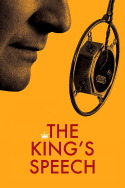
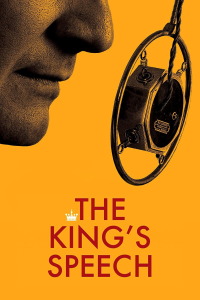
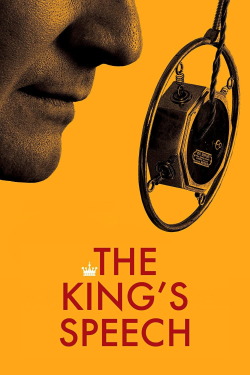
The man in the top hat looks so doleful. He has the aspect of somebody who's just been handed down a death sentence by his physician. Crazy as this may sound, but if you were to propose a litany of hypotheticals toward the man in the top hat, he would probably choose cancer and an ordinary life, as he slowly approaches the mic.
Unfortunately for him, appearances to the contrary, the doleful man is fit as a fiddle, and because of his birthright, slated to live a quotidian-free life, without his ever asking. After all, he's the Duke of York, and the words in those royal hands compose not a prescription for pills, but a keynote speech, one that would live in infamy, as the words would get stuck in his throat before a capacity crowd gathered at Wembley Stadum for the Empire Exhibition of 1932.
Adding insult to injury, the duke's implosion is being broadcasted over the wireless, in which his oratorical impotence, no doubt, will make him a laughingstock all across the UK. No longer can he get away with remaining silent like his predecessors, stoic monarchs who lived during the age when simply being was enough.
Stammering in the fog, the duke is literally turning green. Similar to Stanley Donen's "Singin' in the Rain", in which "The Jazz Singer" forced the conversion of "The Dueling Cavaliers" into a talkie, here too, the advent of sound changes the game the game for all the royal players consecrated around their means of subsistence.
Much to the duke's great consternation, a speech impediment, thanks to the emerging technology, is now a matter of public record, and as a result, the future king's ability to "perform" his role, is put into question by his British subjects who are no longer mere subjects, but instead, comprise of an audience.
His father, George V, suggests the basis behind the analogy between these two films, when he tells his younger son that the halcyon days of waving from moving carriages are over, in which the hand gesture, the simple execution of a purely unadulterated kinetic act, can no longer compete with the human voice.
Like Norma Talmadge, the alleged inspiration behind Jean Hagen's character Lina Lamont, an idiosyncratic voice could have ended his career. Lucky for George V, god saved the republic by blessing him with an instrument that's positively stentorian.
The outgoing king goes on to complain about having been transformed into an actor, and therefore, obligated to make a connection with his people. The king is wrong, of course, since radio or no radio, he already was a performer, a silent one.
His success at mastering the new medium puts him in the same league as Greta Garbo and Marlene Dietrich, just to name a few. Verbal communication merely raises the stakes on the royal acting racket. Too bad for the duke that his job wasn't a simply a matter of hiring Debbie Reynolds to stand behind a camera have her read lines in-sync with his moving mouth.
The sudden foregrounding of the voice over gesture put the future king on notice. Comparably speaking, soon after Al Jolson uttered the line, "You ain't heard nothing yet," not a peep was heard out of countless leading lights from the silent film era, most notably, Gloria Swanson, who played Norma Desmond in Billy Wilder's "Sunset Boulevard", the ultimate poison-pen letter to all things Hollywood.
At Westminster Abbey, on the eve of his coronation, the duke brings up the unfortunate case of George the third, the king, who like the fictional siren, went mad, and as he relays his worries over being abdicated from the throne like his ancestor was to the Australian, the speech therapist Lionel Logue, the method to the unlicensed doctor's madness comes into sharp focus.
Perceived to be anti-establishment, due to the quack's insistence that he be considered an equal of the duke's throughout their sessions, "The King's Speech", with its echoes of the anarchy-minded "Queen(The)", diverges from the Stephen Frears film with an agenda that belies the outward appearance of irreverence towards the crown.
Largely because the speech therapist takes the liberty of using the duke's informal name, likewise, the audience, being privy to Birdie's Achilles Heel, considers themselves to be the king's equal, as well, implicated as such through the shared experience of public speaking, a bane to many, which unites the rich and famous with the anonymous.
As Birdie frets over his public image and public opinion, Lionel stealthily seizes and occupies St. Edward's chair; we're there too, represented by the names carved into the wood, but then Lionel, speaking for himself, and on behalf of us(the metaphoric interlopers who crashed the seat), incites the king to kick out the Aussie and the transplanted moviegoer out of his rightful place on the coronation chair.
In effect, the audience participates in their own marginalization, as they cheer on Birdie's self-realization that he's better than the common man.
This review of The King's Speech (2010) was written by Shiira on 05 Jan 2011.
The King's Speech has generally received very positive reviews.
Was this review helpful?