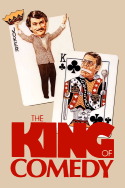
Review of The King of Comedy (1982) by Jonathan G — 17 Dec 2007
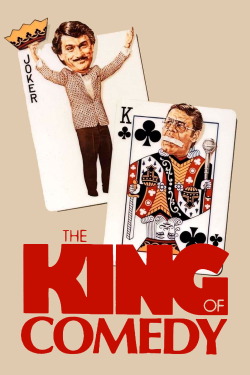
Robert De Niro and Martin Scorsese team up again for what would be the last time until 1990's Goodfellas for The King of comedy, what some have called Taxi Driver played for laughs. Scorsese is not known for his comedy, and rightly so. I don't know if he could ever be particularly light or banal enough to make a broad comedy. The story is actually more disturbing than it looks at first glance.
De Niro plays Rupert Pupkin, an autograph hound and aspiring comic who hangs around the backstage door of The Jerry Langford show, waiting for the talk show host to come out so that he can get some face time with him. When Pupkin finally meets Jerry (played grumpily by Jerry Lewis), the talk show host tells him what he needs to hear to get rid of him. Now Pupkin thinks he has made a life long friend and resorts to stalking him to get a spot on his talk show.
Anyone familiar with Letterman, Leno or Carson will be able to picture one of them in the Jerry Lewis role and realise that through all the seemingly comic goings on, this kind of thing could and does happen. De Niro plays Pupkin with obvious relish, a meaty role of a talentless hack who spends most of his time trying desperately too hard. The script has a wonderful realistic sense of the excruciating, when you can sense that what Pupkin has to say next will be ill-conceived, making him a supremely dislikeable character but one that you inexplicably stick with. He has a similar gab as Travis Bickle, his cab driver counterpart, talking all the time but not always entirely aware of the complete garbage he spews.
One of the more frightening aspects is that his delusions are palpable, almost relateable. Who hasn't day dreamed of all their hopes and wishes coming true in the most direct and almost twisted way we can dream? He understands the pathology so well, that he literally, uncomfortably becomes it. Jerry Lewis' quiet rage lends the film it's grounding, proving once again that comedians are dramatic actors at heart.
This is Scorsese's most restrained work, although his presence behind the camera is still constantly felt, if not for some of the wonderfully creative devices he uses to help us empathise with Rupert, then for the trademark off the cuff, almost improvisational delivery of his actors. Scorsese gives us HIS New York and it's a different view every time. The people, the perspective, all reflective of the characters involved and their standings in society. The most fascinating move made is the constant shifting of perception, subjective character point of views and dream sequences. Can we really believe what we're seeing or is it some twisted Rupert Pupkin fantasy? The ending is deliberately ambiguous in this regard and will leave you turning it over in your mind.
Overall, the film is below par for Scorsese. The uncomfortable meshing of comedy and pathology is not as deft as it could have been which probably explains why this is one of Scorsese's least talked about films. Anyway, if a good Scorsese film is gold, then a below par Scorsese film is silver. Definitely worth a look, especially for two terrific performances from De Niro and Lewis.
This review of The King of Comedy (1982) was written by Jonathan G on 17 Dec 2007.
The King of Comedy has generally received very positive reviews.
Was this review helpful?