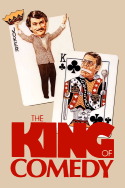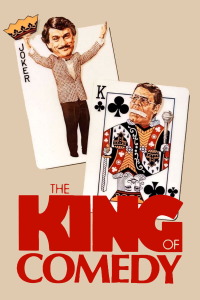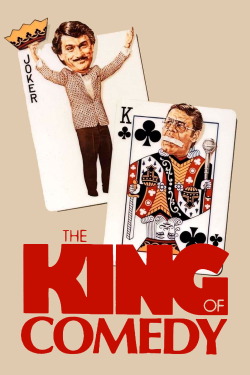
Review of The King of Comedy (1982) by John B — 14 Jul 2008
What keeps this movie from the heights of critical acclaim is not the lack of talent, itâ??s the omission of pathos. Scorcese crafts these vagabonds of the social periphery, unhinges them from reality and sets them adrift among a sea of rational anonymity.
The contrast is always striking, and obvious. We see the disconnect, the startling plunge into psychosis and irrationality. Itâ??s a conduit that must always end in tragedy. You see it in Taxi Driver, and others.
But the King of Comedy, instead of giving us the fall into delusion, sets the delusion as the starting point and then gives us the thin (purposefully?) band-aid of a crappy good ending. Deniroâ??s state starts at the nadir.
His character cannot unravel further, but instead amplifies his already unreliable actions until colliding with other characters. That is what you see here. It severs the bond between viewer and empathy, as we cannot relate to anything said or done by the character.
Who cares? He starts out as unsympathetic and crazy, and he stays that way. What you notice first, is how humorously (and dryly ironic) inappropriate the title is. There are few laughs to hold the film together here, what you get is a blanket of awkward unease wrapped tightly around the film.
Its unsettling to watch delusional people beat their hopes and dreams down peoples throats. But the clever trick is that Scorcese never severs the bond between fantasy and reality. Thereâ??s no clean break between the two.
There is only the seamless stitching, the jarring juxtaposition of the two side by side, leaving the viewer off kilter as to what is reliably transpiring onscreen (is he actually talking to Jerry Langford? Is he actually on stage performing?) The ending though, has heightened irony, as deniros charcacter finally maneuvers his way onto television to perform his mediorcre standup routine, gushing facetiously about childhood abuse and physical trauma that gives the viewer the sinking feeling that the explanation for his psychotic break is hiding within his own stand up routine.
Itâ??s a subtle tactic to explain the unexplainable behavior.
This review of The King of Comedy (1982) was written by John B on 14 Jul 2008.
The King of Comedy has generally received very positive reviews.
Was this review helpful?