Review of The Jazz Singer (1927) by Daniel K — 08 Nov 2007
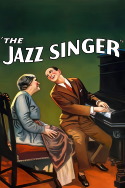
"The Jazz Singer" is widely cited as the first full-length sound film and the film that led to the decline of the silent film era. The story focuses on a Jewish man, Jakie Rabinowitz, who wants to pursue a career as a jazz singer despite his father's wish that he become a Cantor following family tradition.
This film has value beyond its significance as a historical piece. Tension and a touching story are effectively developed around an inner-conflict between honoring family tradition related to his faith and his career aspirations. However, some well-placed humor is injected into the story as well, particularly involving a number of people purchasing someone the same birthday gift. There are also three interesting effects in the film that enhance it involving editing footage into a shot, an example being the editing of footage onto a mirror.
It should be noted that despite this film's role as the first full-length sound film, most of the dialogue is presented in the conventional silent film format of showing the characters mouthing the dialogue without sound and then showing the dialogue text. The dialogue itself is well-written and the characters are all expressive and believable though we don't hear them most of the time. The film's sound comes in the form of several songs and some spoken lines prior to and following the songs. Al Jolson has a strong singing voice and the songs he has to work with are for the most part quite good, especially "Mammy". "The Jazz Singer" is known for its historical role in film, but it is a solid film in its own right.
This review of The Jazz Singer (1927) was written by Daniel K on 08 Nov 2007.
The Jazz Singer has generally received mixed reviews.
Was this review helpful?