Review of The Jazz Singer (1927) by Edith N — 16 Apr 2009
I have to say, I am perplexed by the title. The thing is, this does not sound like jazz. Like, at all. Granted, what was going on in jazz in 1927 was not exactly what we think of when we think of jazz. However, Louis Armstrong's career had begun. Gershwin had written "Rhapsody in Blue." I mean, certain of the traditions of jazz music were well established, and this did not actually fit any of them. It doesn't have the pronounced syncopation. It's played by an orchestra--and not in the sense that any large jazz band got referred to as an orchestra, but an actual by-Gods string section. No saxophone. No clarinet. No horn section at all. No [i]drums[/i], ye Gods. Compare to [i]Chicago[/i], set three years earlier. It's not an entirely accurate jazz sound of the era, but it's a heck of a lot closer than this. Frankly, they're just trying to cash in on the name.
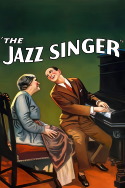
If you've seen the [i]Simpsons[/i] episode "Like Father, Like Clown," you pretty much know the plot of this movie. Jakie Robinowitz (as a child, Robert Gordon; as an adult, Al Jolson), son of Cantor Rabinowitz (Warner Oland), does not want to follow in his father's footsteps. He wants to go into the exciting world of modern entertainment. He wants to be a "jazz" singer. Despite the cajoling of his mother, Sara (Eugenie Besserer), Jakie runs away from home to pursue a career in vaudeville--oh, those happy days! He changes his name to Jack Robin, as people throughout the entertainment industry changed too-ethnic names. Heck, Jolson himself was born Asa Yoelson! Anyway, Cantor Rabinowitz Has No Son. Jack returns to New York, having gotten a chance at a Broadway debut, and goes to see his mother. She tries to reconcile father and son, but to no avail. And then Cantor Rabinowitz falls ill, and Sara begs Jack to come sing for Yom Kippur.
So here's my question--what kind of show opens on Yom Kippur? I mean, it's not as though our Jack is the only Jew in the entertainment industry. There are some days you just don't open a show. It's just a fact. I mean, I get the dramatic effect we're looking for--Jack must, as they say about fifteen times, choose between his career and his God. I get that. It's supposed to be dramatic tension. I just had a problem with the probability of the whole thing. And it's also kind of perplexing that no one even considers that it might be a bad day for some of the cast. I mean, I guess you aren't allowed to be a secular artist but still religious in Jolson's world.
This is not the first sound picture. Not really. The concept had been brought forth a couple of times before--and it isn't all in sound anyway. There are a handful of songs and a few minutes' worth of dialogue, and that's pretty much it. There are still plenty of title cards. What it is, in fact, is the first feature-length movie with dialogue--not to mention an embedded soundtrack and those songs. It did begin the sound revolution, which took longer than people think. Heck, the cartoon shown in [i]Sullivan's Travels[/i] is played on a silent projector. After all, changing theatres over to sound was expensive. Still, once [i]The Jazz Singer[/i] hit the theatres, there was no turning back.
So let's talk about that blackface. Apparently, Jolson worked very hard for the equality of black performers, trying to get better careers for both musicians and playwrights, and even songwriters. Some say that he was to jazz was Elvis was to rock 'n' roll. And yet there was that blackface. Well, at the time, it was just a thing that he did. There were even a few black performers who wore blackface in those days. By the time we get to [i]Holiday Inn[/i], it's awfully damn offensive, and everyone should have known that. But here . . . well, Jolson doesn't even remotely look black. Not by a longshot. Not even with the wig. I think it's one of those benign things that people just didn't know could be offensive to anyone. There is, however, no excuse for Robert Downey, Jr.
This review of The Jazz Singer (1927) was written by Edith N on 16 Apr 2009.
The Jazz Singer has generally received mixed reviews.
Was this review helpful?