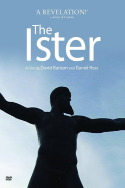
Review of The Ister (2004) by Bayard B — 18 Jul 2008
The film is structured as a journey from the mouth of the Danube back to its source, offsetting occasional material that is the serendipitous product of travel against three long conversations with philosophers and a rather shorter exchange with the German artistic Hans-Jürgen Syberberg. The philosophers, Philippe Lacoue-Labarthe, Jean-Luc Nancy, and Bernard Stiegler are three prominent French students of Martin Heidegger, whose involvement with National Socialism is the film's point of departure.
These three philosophers came out of a tradition of reading Heidegger that was long aware of his involvement with Nazism yet does not discount him as a thinker on account of this political commitment. The film attempts to understand at once why Heidegger remains an important and influential thinker, in part because of a political involvement that was at once deeply naïve, disturbingly calculated, and profoundly convinced . Heidegger never appears to have fully parted ways with his beliefs of that time and instead, after following from grace within the Nazi leadership and apparatus, worked through a sort of a reckoning with Nazism that amounted to something like a profound distancing without a complete break, what might be thought of as a tentative and incomplete deconstruction of National Socialism, which in that sense deeply informed the work of Lacoue-Labarthe in particular.
The Ister is the title of a poem by Hölderlin that Heidegger made the subject of one of his courses in 1942, as it was becoming apparent that the Third Reich would not survive and quite some years after Heidegger realised that the Party would not follow anything like the path he would have liked to set for it.
This review of The Ister (2004) was written by Bayard B on 18 Jul 2008.
The Ister has generally received positive reviews.
Was this review helpful?