Review of The Invisible Woman (2013) by John S — 06 Feb 2014
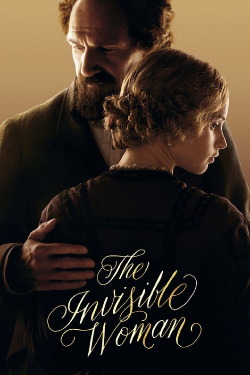
Ralph Fiennes' directorial debut was with the well-handled - if hard work - Coriolanus, a gritty modern re-imagining of the Shakespeare text. He has again turned to a literary figure for his next film The Invisible Woman, but here he takes Charles Dickens as his subject rather than his scribe. Adapted from Claire Tomalin's book of the same name the film chronicles the height of Dickens' fame and his illicit relationship with an actress, the much younger Nelly Ternan (Felicity Jones). With divorce out of the question in Victorian England, Charles is locked into his functional loveless marriage. He and Nelly are aware there can never be a public future for them - but they are unable to tame their hearts. Their slightly awkward, blossoming relationship is recounted in flashbacks while a present-day reinvented Nelly attempts to move on with her life many years after Charles' death.
This impressively constructed telling of a little heard story has all the brooding anguish (and sharp wit) of the author's work, but enough restraint is shown by Fiennes to allow it to flow as a transfixing piece of narrative cinema. Never becoming melodramatic or hammy it's a thoroughly human, natural piece of work more concerned with atmosphere. Dialogue and exposition are stripped to the bare bones, leaving an engrossing poetic ambiguity that allows us to be drawn elegantly into their tender relationship.
His Dickens is solid, conflicted between his overwhelming fame and honest charitable nature and the allure of the young, vital Nelly. But his role is very much secondary to hers and Jones produces an incredibly quiet, nuanced performance, but one of real power and distress. Perhaps by separating himself from the lead part Fiennes has begun to discover himself as a real director. Jones (who previously shone in Like Crazy and Breath In) is a sensational actress and one of the most promising of the current British generation. With this performance she has truly arrived. Oscillating between her heady youth with Charles and her mournful troubled present, Jones demonstrates her impressive range, clearly defining the heart-wrenching change Nelly has suffered.
Period dramas are often adapted from well-worn literary works. Here, with its basis in reality - albeit presumably stretched - The Invisible Woman has a more passionate air and something more honest at its backbone. It avoids big overwrought emotional moments and the obvious focus on the scandal of Charles and Nelly's relationship, instead placing the young actress's emotional turmoil at its centre. She is painted as a complex, living, breathing person, not simply a devoted Dickens groupie but an intelligent, principled woman at odds with her sex's limited standing in the world. Aspiring to be more than a wife or hidden mistress but deeply enchanted by his prose and aura, she is perpetually torn. Far from shy in his presence, it is instead Dickens who is left as the bumbling awkward mess in front of Nelly.
In lesser hands The Invisible Woman could have been a dry, televisual piece of fluff but under Fiennes' stewardship is a wholly captivating piece of cinema with a palpable broken heart beneath its surface.
This review of The Invisible Woman (2013) was written by John S on 06 Feb 2014.
The Invisible Woman has generally received positive reviews.
Was this review helpful?