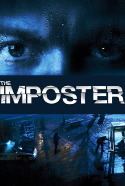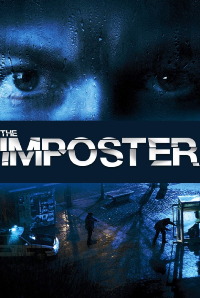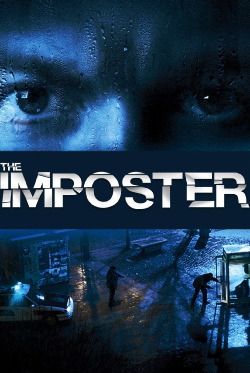
Review of The Imposter (2012) by Edith N — 30 Jun 2013
Once Again, an Interesting Story Badly Told.
This happens to me every once in a while. I'll be reading a book or watching a movie, and the subject matter will fascinate me. Often, it will be something I care about a great deal. Elizabethan history or some such, even. And then, as the work progresses, it's just so badly made that I'm not interested even a little. The writing style is bad, if it's a book; I can list a dozen or more things that can go wrong in a documentary. Much as I care about the subject matter, much as I want to learn about the thing in question, I won't be able to make myself care enough to finish whatever-it-is. That didn't quite happen here; I could finish the documentary. Though at least part of that was that it felt like so much effort to find something else to watch instead. Unless the subject matter is particularly dense, I can usually get through documentaries no matter what the weather.
In 1994, thirteen-year-old Nicholas Barclay disappeared without a trace from San Antonio, Texas. His family knew that he would probably never be seen again, that the longer they went without seeing him, the less likely it would be that he would ever turn up. And then, one day in 1997, the family got a phone call from Spain. Someone claiming to be the long-lost Nicholas had surfaced, and he was asking to be returned home. Okay, he was starting to bald a little. And, yeah, his beard was coming in heavy and dark; he had bleached his hair, though Nicholas had been blonde. Yes, it's even true that his blue eyes were now brown. But you know, he'd been kidnapped by a child prostitution ring, and they'd injected something into his eyes to change the colour. You know, to make him harder to recognize. And the family accepted this and brought the man claiming to be Nicholas home with him, and it was only the investigations of local private eye Charlie Parker and FBI agent Nancy Fisher that uncovered that the man was not Nicholas.
I know, right? And it only gets weirder from there. He was, in fact, Frédéric Bourdin of France. Who was seven years older than Nicholas and looked it, who had brown hair and eyes, who spoke with a French accent. The family not only accepted Bourdin as Nicholas, but they made all the arrangements to bring him back to the US, enrolled him in high school, and attempted to go back to their normal lives. This sounds like it ought to be fascinating, and it probably is. The more you know about Bourdin, the more interesting the whole thing sounds. There is always, too, the lingering question of how . . . or if . . . he managed to fool the Barclay family. It seems impossible that he could have done so, but Nicholas's sister left Texas, flew to Spain, and immediately agreed that Bourdin was her long-lost brother. She said he had the same nose, but there was so much other evidence that this was a different person that it's odd to think that a nose was good enough.
So if it sounds that interesting, why isn't it? Well, let's start with the fact that it's suffering from a persistent problem in documentaries. It doesn't want to be just another talking-heads, archive-footage, old-photos documentary. It wants to catch our attention. And instead of relying on the fact that he has an absolutely insane story to start from, filmmaker Bart Layton has done that thing where he casts actors and presents a bunch of flashbacks. But sometimes, the actors are lip-synching along with the interviews of the real, historical figures, and when he's showing the interviews, sometimes, it's the real people and not the actors. To the extent that I'm still not entirely sure who some of these people really were. Which I guess ties in with his theme but doesn't work for me. He also, in my opinion, fails to delve even a little into much of why anyone did anything. Parker claims he saw the TV interview with "Nicholas," worked out in two seconds that he was an impostor, and decided he must be a spy. But does that make sense?
Okay, the "worked it out in two seconds" part. But what spy would pose as a teenaged boy in San Antonio? Come to that, why did Bourdin? I'm not even entirely sure [i]how[/i] he managed it, though that may have been my fault and not that of the film. I don't mean the fooling the family bit, though there is the lingering suggestion that members of the family knew exactly where Nicholas was and that he wasn't coming back and didn't out Bourdin because that might draw attention to their own culpability. But that doesn't make sense, either; he was so obviously not Nicholas that they could have pointed out a dozen or more ways it was impossible without raising suspicion. But what I meant was more that I'm not sure how Bourdin even found out about Nicholas in the first place. Very little of the story made sense, even the parts which aren't human motivations and therefore always difficult to fathom, and clearing those up would have made a much better film.
This review of The Imposter (2012) was written by Edith N on 30 Jun 2013.
The Imposter has generally received very positive reviews.
Was this review helpful?