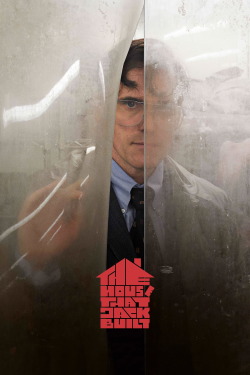
Review of The House That Jack Built (2018) by Bertaut1 — 30 Dec 2018
Self-indulgent, disturbing, and hilarious.
Ostensibly a serial killer film, in reality, the latest from provocateur Lars von Trier is more an interrogation of his own psychology and an "up yours" to his detractors, daring you to be offended by the violence done to a duckling, the cold-blooded murder of children, the verbal degradation of a woman, the celebration of Albert Speer, or the mockery of American gun culture. Although far too long and tending towards self-indulgence, House is nowhere near von Trier's best - films like Breaking the Waves (1996), Dancer in the Dark (2000), Dogville (2003), and Melancholia (2011). However, love it or hate it, you will react to it.
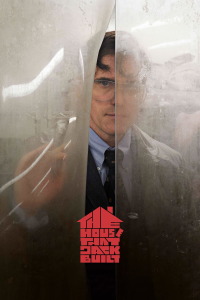
The plot follows a serial-killer named Jack (an emotionless Matt Dillon) as he relates five of his most meaningful murders to the mysterious "Verge" (Bruno Ganz). A wannabe architect whose mother forced him to be an engineer, Jack, who suffers from OCD, contends that his murders are literal works of art, and has thus given himself the moniker "Mr Sophistication".
Originally developed as a TV miniseries by von Trier and Jenle Hallund, who has a "Story By" credit, the film premièred out of competition at Cannes 2018, where it was the first film in Cannes history to feature a warning on the tickets (for "scènes violentes"), and at the much-publicised première, over one-hundred people walked out, although those that stayed gave it a ten-minute standing ovation.
Although Jack is not a 1:1 surrogate for von Trier, it's hard to deny the analogy of how Jack feels the need to one-up himself with each murder, becoming more and more sadistic as he goes. This, of course, has become a common criticism of von Trier's recent filmography. He has also been accused of misogyny and of exploiting the psychological (and often physical) suffering of his actors, just as Jack is a misogynist who exploits the suffering of his victims. And this isn't subtext; von Trier himself makes the connection explicit when a discussion of genocide and tyranny features a montage of scenes from his own filmography.
As with Nymph()maniac, the film is structured around a conversation with frequent digressions. But instead of fly-fishing, parallel parking, and the Fibonacci sequence, we here see topics such as viticulture, the oak tree in Buchenwald, cathedral architecture, and the poetry of William Blake. One especially interesting digression is a monologue where Jack laments the fact that men are the defacto villains of every situation. Coming across like a slightly more unhinged Jordan Peterson, Jack has no time for debates concerning gender fluidity or sexual misconduct, even going so far as to suggest that women are more cooperative murder victims because they're "easier to work with.".
Aside from the scene in which a duckling is tortured, by far the most disturbing scene involves Jacqueline (Riley Keough), whom Jack has been dating for a while. What's most distressing is not how Jack kills her, but what precedes her murder, as Jack mercilessly verbally belittles her, calling her "Simple", because he believes she is so unintelligent. He then takes great delight in revealing to her that he is Mr Sophistication, suggesting that she scream; the futility of which he demonstrates by shouting out an open window, "no one will help you." It's a devastating scene, far more emotionally upsetting than it is physically violent, and because of that, it's one of the best scenes in the film, provoking a genuine emotional response.
As unsettling as this scene is, the film can also be extremely funny, with the entire second murder playing out like an extended Key and Peele sketch featuring calamity on top of mishap, Jack's OCD firmly getting the best of him, and finally a fortuitous act of God!
However, things are far from perfect. For starters, it can be incredibly self-indulgent and is unnecessarily long. I'm also not sure a clip reel of von Trier's own films was the wisest choice. Additionally, the female characters, by the very nature of the narrative, are empty shells who exist only to be murdered. Some of the digressions concerning art and its relationship to love and hate are also (perhaps intentionally) intellectually vapid.
Whilst it could be argued that House is about a desensitised world indifferent to suffering, it seems to be more about Lars von Trier and the criticisms that have been levelled against him over the years. More an apologia than an apology, von Trier is attempting to use the depiction of violence so as to facilitate introspection, reflecting on the importance (or lack thereof) of morality and culpability in artistic creation. House is an especially self-reflexive and somewhat self-disdainful film, which Von Trier has intimated may be his last, and if that is so, it certainly makes for a fittingly provocative and confrontational final word.
This review of The House That Jack Built (2018) was written by Bertaut1 on 30 Dec 2018.
The House That Jack Built has generally received positive reviews.
Was this review helpful?